




Etiquette of Social Interaction
Âdâb-ı muâşeret refers to the rules that enable people to get along harmoniously with one another, encouraging them to be polite and respectful. It is like a guide that teaches us how to behave in daily life. Let us explore this concept more closely!
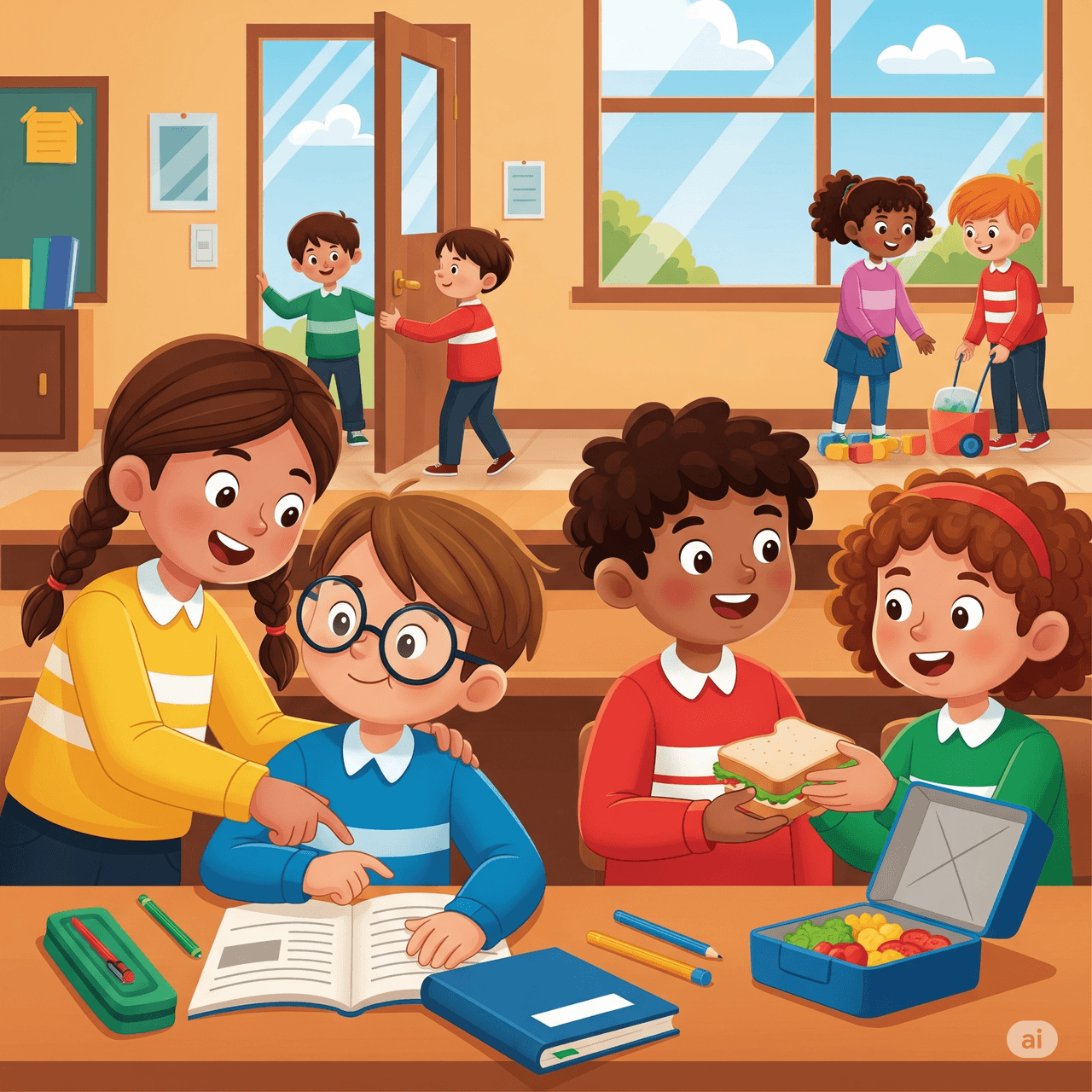
Âdâb-ı Muâşeret (Generated by Artificial Intelligence.)
What Does Âdâb-ı Muâşeret Mean?
Âdâb-ı muâşeret is an Arabic term. The word “Âdâb” means “etiquette” or good manners, while “muâşeret” means “harmonious coexistence.” Thus, these rules teach us how to be polite, courteous, and respectful toward our family, friends, neighbors, or even strangers. For example, smiling when saying “Hello,” remembering to thank someone, or waiting our turn in line are all examples of these principles.
Where Do These Rules Come From?
These rules have existed since ancient times. As people lived together in communities, they learned how to behave toward one another. In our culture, particularly within the Turkish-Islamic tradition, these rules hold great importance. The Qur’an and the sayings of our Prophet (peace be upon him) teach us how to be courteous, show respect to others, and cultivate good character. For instance, in a hadith, our Prophet said, “The best among you are those with the best character.” This shows that the more courteous and virtuous we are, the more noble we become as individuals.
Moreover, every society has its own unique set of Âdâb-ı muâşeret rules. For example, in our culture, offering hospitality to guests is of great importance. In another country, a different custom may be more significant. What matters most is that, wherever we are, we never forget to show respect to others!
Where Are Âdâb-ı Muâşeret Applied?
These rules are useful in every moment of our lives. Here are some examples:
- Greeting: Saying “Hello” or “Peace be upon you” is a kind beginning. Never forget to smile!
- Table Manners: Not smacking your lips while eating, taking small bites, or saying “Elinize sağlık” (May your hands be well) are acts of politeness.
- Neighborhood Etiquette: Helping your neighbors, avoiding noise, and respecting their private lives are essential.
- Respect: Showing respect to elders, not teasing friends, and avoiding hurting anyone are all part of these rules.
- Waiting in Line: Waiting your turn on the bus or in the supermarket means respecting the rights of others.

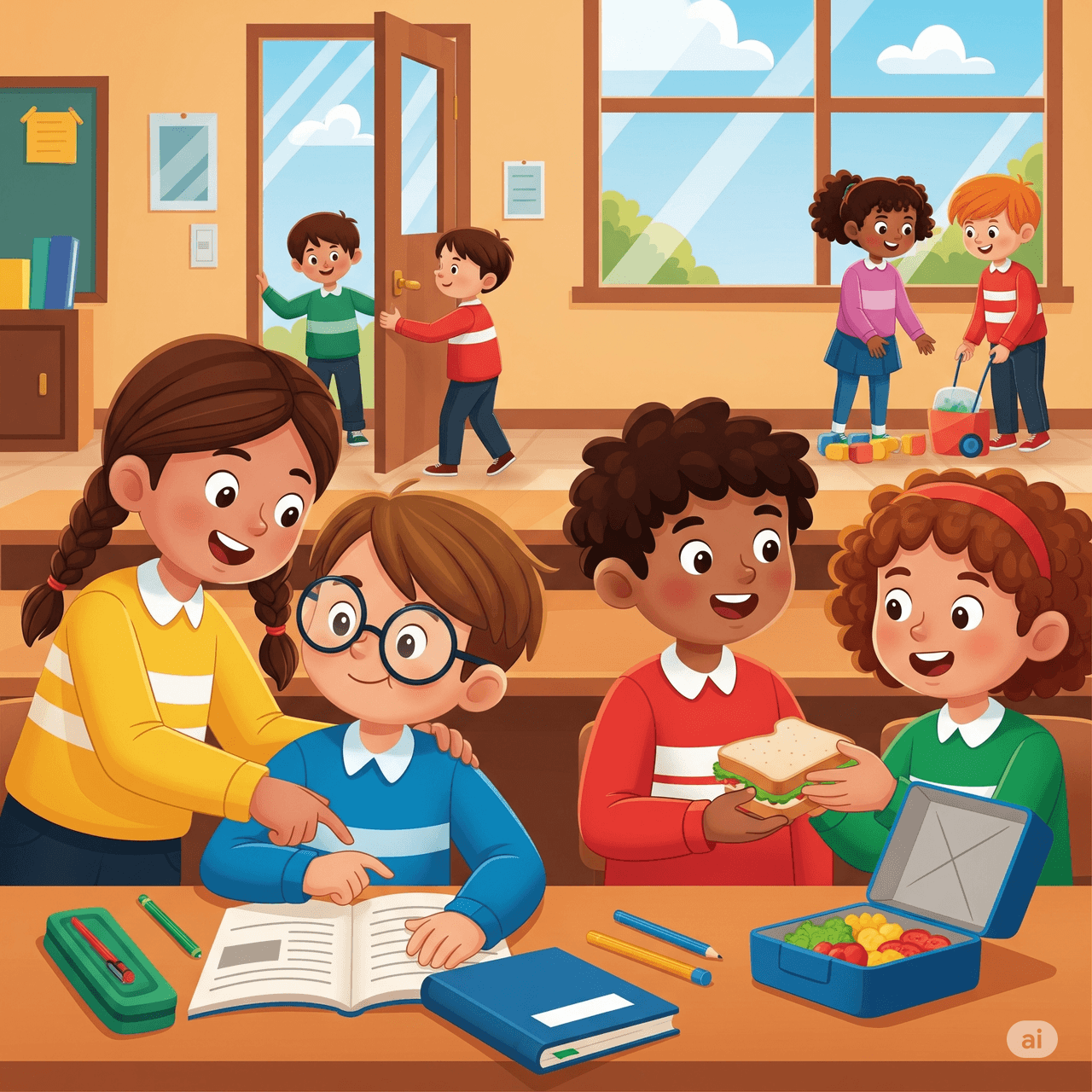
Âdâb-ı Muâşeret (Generated by Artificial Intelligence.)
Âdâb-ı Muâşeret in the Past and Today
In the past, these rules were primarily learned at home or from those around us. During the Ottoman era, many books were written specifically on Âdâb-ı muâşeret. These books explained how to eat, how to speak, and how to treat guests. For example, the Ottoman poet Nâbî, in one of his poems, emphasized the importance of politeness and gently corrected someone’s improper behavior.
Today, these rules have evolved somewhat. Social media, television, and the internet now play a major role in our lives. Therefore, being courteous when messaging someone or avoiding offensive language online has become part of Âdâb-ı muâşeret. Additionally, we now learn these principles in school through subjects such as “Social Conduct and Politeness.”
Why Are They Important?
Âdâb-ı muâşeret is not only about being polite; it is also essential for living more happily and peacefully with those around us. When we are courteous, people love and respect us more. Moreover, these rules teach us to respect others’ rights and to cultivate good character. For example, if you listen attentively when speaking with a friend, they will listen to you in return, fostering a beautiful friendship.
Be Polite Too!
Remember, Âdâb-ı muâşeret does not mean doing grand gestures. It begins with small but meaningful actions. Simply saying “Please” or “Thank you,” offering help, or smiling are enough!