+2 More

Population | 19211 | ||||||||
|---|---|---|---|---|---|---|---|---|---|
Surface Area | 456 km² | ||||||||
District Governor | Alperen CELEPCİ | ||||||||
Mayor(s) | Mehmet EROĞLU | ||||||||
Distance to City Center | 20 km | ||||||||
Number of Towns, Villages, Neighborhoods | 2 towns, 10 villages , 8 neighborhoods | ||||||||
Acıgöl is a district of Nevşehir province, located in Türkiye’s Central Anatolia Region. It is approximately 20 km from Nevşehir. It gained district status with the Official Gazette decision numbered 19507, published on July 4, 1987, and official institutions and the district governorship began functioning effectively as of August 1988. Throughout its history, the district has been a settlement and transit area for major civilizations and is a place of cultural and geopolitical significance.

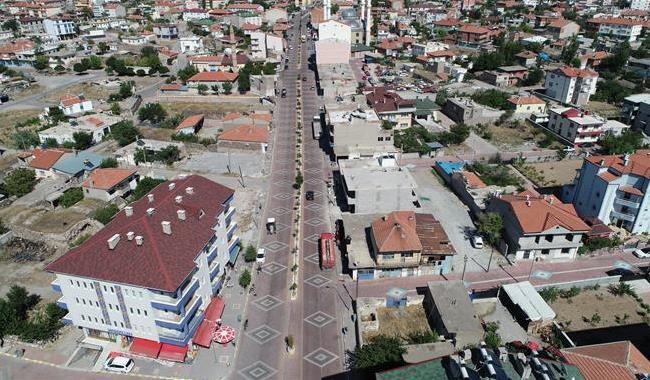
General View of Acıgöl (Acıgöl Municipality)
The history of Acıgöl largely parallels that of Nevşehir province. The region contains traces of settlement dating back to 3000 BC. During the Hittite period, it was inhabited by local peoples. Between 2000–1800 BC, it changed hands among the Hittites, Phrygians, and Lydians, and later became part of the Roman Empire with the conquests of Alexander the Great.
During the period when Christianity began spreading in Anatolia, the local population took refuge in underground cities to protect themselves from religious persecution, building tunnels, caves, and churches to worship in secret. When Roman Emperor Constantine legalized Christianity in 330 AD, the people of the region began practicing their faith openly. After the division of the Roman Empire, the region came under Eastern Roman (Byzantine) rule. Although it suffered pressure from the Sassanids in the 7th century, Byzantine dominance continued for a long time.
From the 8th and 9th centuries onward, conflicts occurred between Muslim Arabs and the Byzantines, and the region gradually came under Islamic influence. During this period, underground cities were actively used for protection. Although part of the underground city beneath the center of Acıgöl has been unearthed, a significant portion still awaits discovery. It is known that the passages extend to Yuva village, İğdeli area, and Karapınar town.
After the Battle of Manzikert in 1071, the Turks sent reconnaissance units and dervishes to the region. With the spiritual leadership of figures like Hacı Bektaş-ı Veli from the Horasan saints, emotional bonds were established with the local people, facilitating the Islamization and Turkification of Anatolia.
After the weakening of the Anatolian Seljuk State, the region came under the rule of the Karamanids and then the Dulkadirids. It was incorporated into Ottoman lands in 1515 during Yavuz Sultan Selim’s Egypt Campaign.
Acıgöl was founded in 1525 by Karamanli Turkmens of the Kaçar tribe of the Oghuz. Among the first settlers was Piri Bey and his tribe, who descended from Hıdır Işık, a sheikh who had a lodge on the Işıklar Plateau in Konya. The Hıdırlılar (Hındır Uşağı) lineage of today descends from Piri Bey.
According to local lore, a water dispute between Piri Bey and the people of Tatlarin led to the damming of the stream, creating small lakes and islets; thus, the settlement was first called “Topada” and later “Dobada.” Another tale recounts that Piri Bey lost his seven sons one after the other as a spiritual consequence of delaying ablution water to a dervish. Afterwards, he encouraged new migration to the area.
Piri Bey’s visits to the tomb of Hacıbektaş-ı Veli and his spiritual connection to the region are of cultural importance. Additionally, it is said that some families living in the district today are of Karaman origin and were settled in the region during the Ottoman period. The Veziroğulları family, claimed to be relatives of Damat İbrahim Pasha, is noteworthy in this context.
In 1870, Acıgöl was attached to the Kırşehir sub-province, and in 1902, to the Ankara province. During the War of Independence, Dellalzade Osman Bey was sent as a representative to the Sivas Congress on behalf of the Niğde Governorship. After the proclamation of the Republic, the area remained under Niğde’s jurisdiction until Nevşehir became a province in 1954. Acıgöl became a town in 1953 by gaining municipality status and became a district in 1987.
Located within the borders of Yuva village, this structure consists of a mosque, a kitchen, and a tomb. Estimated to be around 800–900 years old, the tomb draws attention with its wheel-of-fortune motifs, indigo-blue stonework, and architecture.

Hasan Dede Tomb (Melahat Pamuk)
Located in the town of Tatlarin, the underground city reflects the era when the area was used for shelter and worship. Also located in the same area, Tatlarin Pond is now used as a recreational site and attracts visitors with its natural beauty.

Tatlarin Pond (State Hydraulic Works 12th Regional Directorate)
Situated near the village of Ağıllı, this monument belongs to the Late Hittite period and is thought to have been written between 738–730 BC. The inscription, written in Hittite hieroglyphs, recounts the struggles of King Wasusarmas of Tabal against his enemies. The inscription is of great historical, artistic, and epigraphic significance.

Inscribed Rock (Melahat Pamuk)
Acıgöl Municipality. "Cultural Characteristics." Official Website of Acıgöl Municipality. Accessed June 25, 2025. https://www.acigol.bel.tr/tr/content/kulturel-ozellikler_192
Acıgöl Municipality. "General View of Acıgöl – Photo Gallery." Official Website of Acıgöl Municipality. Accessed June 25, 2025. https://www.acigol.bel.tr/tr/galeri/acigol-genel_22
Acıgöl Municipality. "History of Acıgöl." Official Website of Acıgöl Municipality. Accessed June 25, 2025. https://www.acigol.bel.tr/tr/content/acigol-tarihcesi_188
Republic of Turkey Acıgöl District Governorship. "Our District." Official Website of Acıgöl District Governorship. Accessed June 25, 2025. http://www.acigol.gov.tr/ilcemiz
Republic of Turkey Nevşehir Governorship. "Acıgöl." Official Website of Nevşehir Governorship. Accessed June 25, 2025. http://www.nevsehir.gov.tr/acigol
State Hydraulic Works, 12th Regional Directorate. "Tatlarin Pond." Official Website of DSİ 12th Regional Directorate. Accessed June 25, 2025. https://bolge12.dsi.gov.tr/Haber/Detay/13376

Population | 19211 | ||||||||
|---|---|---|---|---|---|---|---|---|---|
Surface Area | 456 km² | ||||||||
District Governor | Alperen CELEPCİ | ||||||||
Mayor(s) | Mehmet EROĞLU | ||||||||
Distance to City Center | 20 km | ||||||||
Number of Towns, Villages, Neighborhoods | 2 towns, 10 villages , 8 neighborhoods | ||||||||
History
Foundation and Ottoman Period
Republican Period
Cultural and Historical Sites
Hasan Dede Tomb
Tatlarin Underground City and Pond
Topada Inscribed Rock
This article was created with the support of artificial intelligence.