+2 More

Location | Ahlat Türkiye Bitlis | ||||||||
|---|---|---|---|---|---|---|---|---|---|
Established | 1971 | ||||||||
New Building Opened | 2014 | ||||||||
Exhibition Areas | Archaeology, Memory Hall, Foyer, Garden | ||||||||
Historical Period(s) | Chalcolithic to Ottoman | ||||||||
Collections | Stone Objects, Inscriptions, Wax Statue | ||||||||
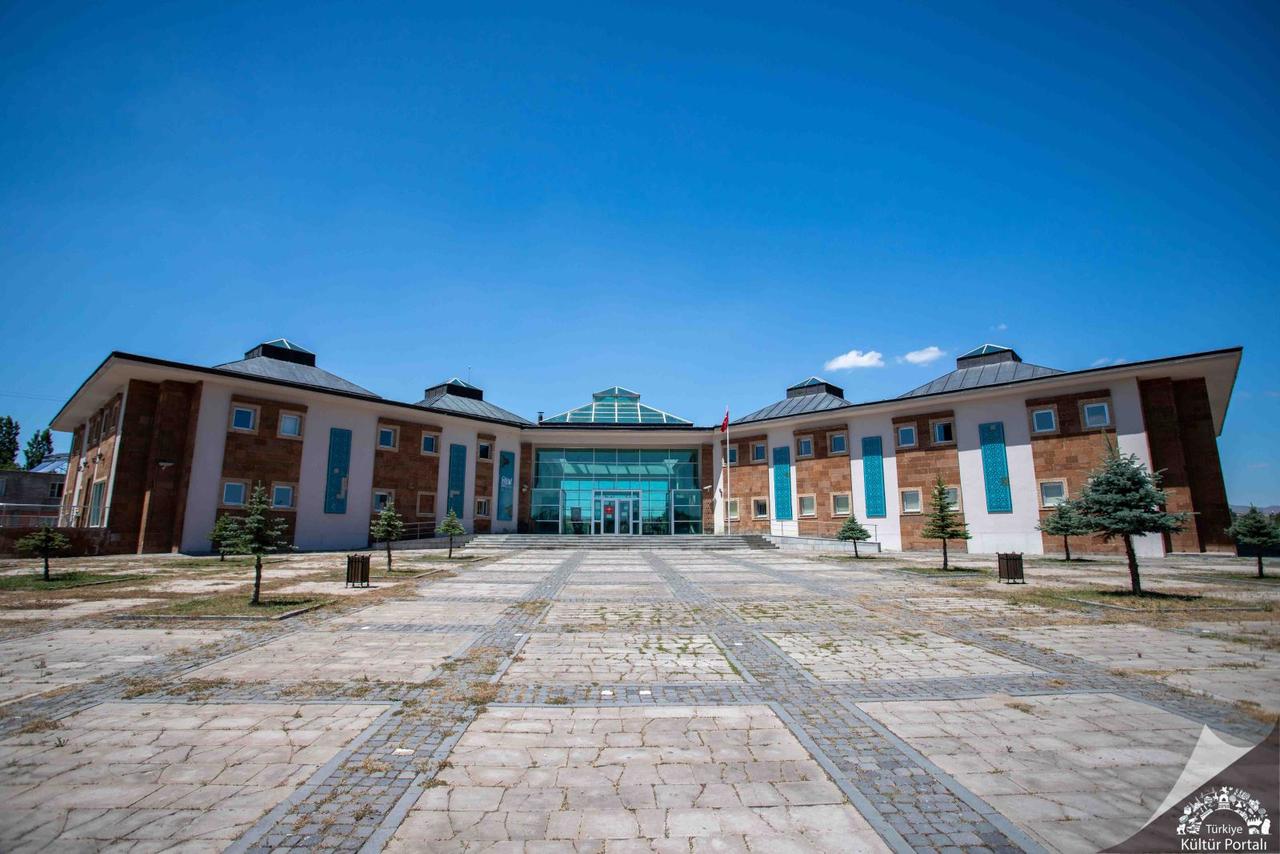
Ahlat Museum, located in the district of Ahlat in Bitlis province, Türkiye, is an important institution documenting the region's archaeological and historical heritage. Initially opened to visitors in 1971, it served as the only museum in the area, providing regional services. Due to increasing visitor numbers and insufficient exhibition space, the museum was reorganized according to contemporary museology principles and reopened in 2014 as the Ahlat Museum and Visitor Center in a new building. The official opening ceremony took place in 2018.
.jpg&w=1280&q=75)
Ahlat Museums (Türkiye Kültür Portalı)
Established in 1971, Ahlat Museum has focused on exhibiting archaeological artifacts acquired through excavations, purchases, confiscations, and donations. Until 2014, the museum operated in the same building, but due to inadequate facilities for modern exhibition and preservation standards, the Ministry of Culture and Tourism constructed a new museum building. This new facility, named the Ahlat Museum and Visitor Center, opened to the public in 2014 and officially began operations in 2018.
.jpg&w=1280&q=75)
Ahlat Museums (Türkiye Kültür Portalı)
Ahlat Museum’s exhibitions are organized into four main sections: Archaeological Hall, Urban Memory Hall, Foyer Area, and Garden Display.
This section exhibits archaeological artifacts spanning from the Chalcolithic Age through the Early Bronze Age, Middle Bronze Age, Late Bronze/Early Iron Age, Middle Iron Age (Urartu), Hellenistic Period, Roman Period, Eastern Roman Period, Seljuk Period, and Ottoman Period. The objects are displayed chronologically to reflect the historical development of the region.
The Urban Memory Hall features panels with brief information about the civilizations that ruled Ahlat, the Ottoman Empire, and the Republic of Turkey. It also includes informational panels on the Seljuk Cemetery and archaeological site, a wax statue of Sultan Alp Arslan, and visual materials related to the Battle of Malazgirt.
The Foyer Area presents information and visuals about Ahlat’s history, the Harabeşehir Caves, Akkoyunlu period ram sarcophagi with explanatory plaques, a map showing the Seljuk Cemetery archaeological site and museum location, examples of tombstones, excerpts about Ahlat from Evliya Çelebi’s Seyahatname, a panel on Oghuz tribal symbols, and a quatrain from a poem about Ahlat. The ceiling features a suspended panel decorated with the Seljuk infinity motif.
The garden area contains Islamic period stone artifacts, inscriptions, architectural fragments, jars, and gravestones. These items are exhibited outdoors for visitor access using open-air display methods.
T.C. Kültür Varlıkları ve Müzeler Genel Müdürlüğü. “Bitlis Ahlat Müze Müdürlüğü.” T.C. Kültür ve Turizm Bakanlığı. Access date 26 Haziran 2025. https://kvmgm.ktb.gov.tr/TR-44073/bitlis-ahlat-muze-mudurlugu.html
Türkiye Cumhuriyeti Kültür ve Turizm Bakanlığı. “Ahlat Müzesi.” Müze.gov.tr. Access date 26 Haziran 2025. https://muze.gov.tr/muze-detay?SectionId=AHM01&DistId=MRK
Türkiye Kültür Portalı. “Ahlat Müzesi.” T.C. Kültür ve Turizm Bakanlığı. Access date 26 Haziran 2025. https://www.kulturportali.gov.tr/turkiye/bitlis/gezilecekyer/ahlat-muzesi

Location | Ahlat Türkiye Bitlis | ||||||||
|---|---|---|---|---|---|---|---|---|---|
Established | 1971 | ||||||||
New Building Opened | 2014 | ||||||||
Exhibition Areas | Archaeology, Memory Hall, Foyer, Garden | ||||||||
Historical Period(s) | Chalcolithic to Ottoman | ||||||||
Collections | Stone Objects, Inscriptions, Wax Statue | ||||||||
History
Exhibition Areas
Archaeological Hall
Urban Memory Hall
Foyer Area
Garden Display
This article was created with the support of artificial intelligence.