

Type of Geographical Indication | Protected Designation of Origin | ||||||||
|---|---|---|---|---|---|---|---|---|---|
Registration Number | 165 | ||||||||
Registration Date | 13.12.2012 | ||||||||
Product / Product Group(s) | Processed and Unprocessed Fruits and Vegetables and Mushrooms | ||||||||
Province(s) | Manisa | ||||||||
Applicant/Registrant(s) | Akhisar Chamber of Commerce and Industry | ||||||||
Akhisar uslu olive is a variety of olive registered as a protected designation of origin, grown in the Akhisar district of Manisa province, Türkiye, and certain surrounding areas (Gölmarmara, Salihli, Turgutlu, Saruhanlı, Kırkağaç). This product was registered as a geographical indication on 13 December 2012 and is protected under the application of the Akhisar Chamber of Commerce and Industry. Its registration number is 165.
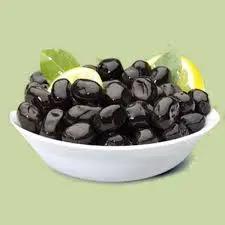
Akhisar uslu olive fruits come from grafted plants belonging to the Oleaceae family. The main feature that distinguishes this olive from other varieties is that it is harvested and processed exclusively from uslu-type olive saplings grown in the Akhisar region. This variety, evaluated as a black table olive, stands out for its shiny dark black color and superior taste characteristics at full maturity.
Planting distances in olive groves are set at 6×8 m or 7×7 m. Saplings are planted between November and April; in cold climates, this period may shift to March–April. Post-planting care includes irrigation, weed control, fertilization, and pest management. Harvest is done manually, and olives are collected in crates.
Processing varies by product type. Black natural and confit olives undergo oxidation, alkali treatment, brining, and pasteurization. Kalamata-type products may include additional steps such as cracking, slicing, and pitting. Packaging is done in glass, plastic, or tin containers; brine composition must comply with the Turkish Food Codex.
The tree’s soft wood makes it sensitive to olive tree cancer and Zeuzera pest. Sensitive to cold; in regions exposed to early frost, harvesting before full maturity is recommended. Fruit flesh is soft, requiring careful handling during harvest and processing.
Producers wishing to use the Akhisar uslu olive geographical indication must apply to the Akhisar Chamber of Commerce and Industry. The product must be obtained exclusively from olives grown within the defined geographical boundaries. Inspection is carried out by a three-member expert commission specialized in olives. The commission convenes during the harvest period and as needed for urgent checks, conducting physical and chemical compliance assessments.
Türk Patent ve Marka Kurumu. "Akhisar Uslu Zeytini Coğrafi İşaret Sicil Belgesi." Accessed October 25, 2025. https://ci.turkpatent.gov.tr/Files/GeographicalSigns/165.pdf
Türk Patent ve Marka Kurumu. "Akhisar Uslu Zeytini." Coğrafi İşaretler Portalı. Accessed October 25, 2025. https://ci.turkpatent.gov.tr/cografi-isaretler/detay/38036

Type of Geographical Indication | Protected Designation of Origin | ||||||||
|---|---|---|---|---|---|---|---|---|---|
Registration Number | 165 | ||||||||
Registration Date | 13.12.2012 | ||||||||
Product / Product Group(s) | Processed and Unprocessed Fruits and Vegetables and Mushrooms | ||||||||
Province(s) | Manisa | ||||||||
Applicant/Registrant(s) | Akhisar Chamber of Commerce and Industry | ||||||||
No Discussion Added Yet
Start discussion for "Akhisar Uslu Olive " article
Description and Distinctive Features
Morphological Characteristics
Fruit Characteristics
Physiological Features
Production and Processing
Sensory and Chemical Properties
Susceptibility Factors
Inspection and Geographical Indication Use
This article was created with the support of artificial intelligence.