


Type of Geographical Indication | Protected Geographical Indication | ||||||||
|---|---|---|---|---|---|---|---|---|---|
Registration Number | 1492 | ||||||||
Registration Date | November 3, 2023 | ||||||||
Product / Product Group(s) | Processed and unprocessed fruits and mushrooms vegetables | ||||||||
Province(s) | Aksaray | ||||||||
Applicant/Registrant(s) | Aksaray Commodity Exchange | ||||||||
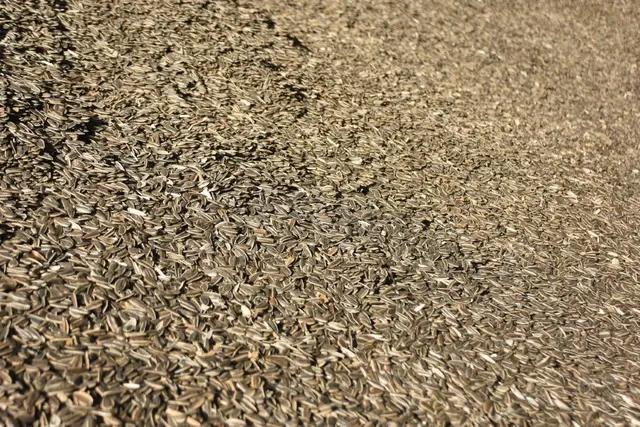
Aksaray snack sunflower seeds are a traditional agricultural product grown in Aksaray province, located in Türkiye’s Central Anatolia Region. Registered with a Protected Geographical Indication on November 3, 2023, under the Industrial Property Law No. 6769, the product is characterized by its black-and-gray striped shell and large, plump, crisp inner seed. When dried, it retains a crunchy texture, making it ideal for snack consumption.
The registration was carried out by the Aksaray Commodity Exchange. The product falls under the category of processed and unprocessed fruits, vegetables, and mushrooms, with its geographical boundary limited to Aksaray province.
Aksaray snack sunflower seeds are derived from the Helianthus annuus species, cultivated in the Tuz Gölü (Salt Lake) Basin since the 1960s. The region’s characteristic winds—air currents from Hasandağı and Ekecik Mountain combined with breezes around Tuz Gölü—and soil composition create a favorable microclimate for sunflower cultivation. These natural conditions directly enhance the product’s yield and quality, contributing to the growth of sunflower production in Aksaray over the years.
Aksaray snack sunflower seeds are renowned for their connection to the region and their significance in the local economy. The seeds are distinguished by their physical properties and the specific production process, setting them apart from other sunflower seed varieties. The product or its packaging must bear the “Aksaray Snack Sunflower Seeds” label and the sign of origin emblem; otherwise, the label and emblem must be visibly displayed at the production facility.
The production of Aksaray snack sunflower seeds follows region-specific agricultural practices. In autumn, stubble fields are plowed to a depth of 20–25 cm to store winter rainfall, allowing crop residues like stalks and straw to decompose into organic matter. In spring, when the soil reaches optimal tilth, it is tilled with a chisel or cultivator, and fertilizer or weed control may be applied to prepare the seedbed.
Fertilization occurs in three stages: at sowing, during hoeing, and during the growth period, using elements like potassium, nitrogen, and magnesium applied via drip irrigation. Sowing takes place in April–May, with 70 cm between rows and 25–40 cm within rows, depending on soil fertility and plant height. The sowing depth is 5–7.5 cm, adjusted based on soil moisture.
To prevent soil exhaustion, sunflower cultivation is rotated with fibrous-rooted crops like wheat, barley, or oats. Irrigation is applied at 15–20-day intervals during emergence and when plants show signs of wilting. The most critical irrigation periods are at the start of flowering and during the milky stage. Early-stage irrigation uses sprinklers, while furrow irrigation is preferred after the stem elongation phase.
Harvest occurs in August–September when the plants are fully dried, and the heads turn brown, with a moisture content not exceeding 9.5%. Manual harvesting involves cutting the heads with a sickle and transporting them to threshing areas, where they are threshed by beating with sticks or using specialized machines. For combine harvesting, cylinder speed, concave clearance, fan, and sieve settings are carefully adjusted.
Drying involves spreading the separated seeds on food-safe surfaces under the sun for approximately two weeks, with daily stirring to ensure even drying. For storage, the seed moisture content must not exceed 9.5%, and pile heights should not exceed 1–1.5 meters. To prevent overheating or spoilage, the seeds may be stirred as needed. The dried seeds can be stored in dry, cool, odor-free environments for up to one year.
The final product is marketed in bulk or in compliant packaging, labeled according to food regulations.
The inspection process is coordinated by the Aksaray Commodity Exchange, with participation from experts of the Aksaray Provincial Directorate of Agriculture and Forestry and the Aksaray Chamber of Agriculture. Inspections, conducted at least once a year, verify compliance with the production method and proper use of the sign of origin. Expert support from public or private institutions may be sought when necessary. The registering institution is authorized to manage legal processes to protect the product’s rights.
Türk Patent ve Marka Kurumu. "Aksaray Çerezlik Ayçekirdeği." Coğrafi İşaretler Portalı. Accessed October 25, 2025. https://ci.turkpatent.gov.tr/cografi-isaretler/detay/7383
Türk Patent ve Marka Kurumu. Aksaray Çerezlik Ayçekirdeği Coğrafi İşaret Sicil Belgesi. Accessed October 25, 2025. https://ci.turkpatent.gov.tr/Files/GeographicalSigns/0fee3b2b-24ef-4273-a6e8-bde4fb4b540b.pdf

Type of Geographical Indication | Protected Geographical Indication | ||||||||
|---|---|---|---|---|---|---|---|---|---|
Registration Number | 1492 | ||||||||
Registration Date | November 3, 2023 | ||||||||
Product / Product Group(s) | Processed and unprocessed fruits and mushrooms vegetables | ||||||||
Province(s) | Aksaray | ||||||||
Applicant/Registrant(s) | Aksaray Commodity Exchange | ||||||||
No Discussion Added Yet
Start discussion for "Aksaray Snack Sunflower Seeds" article
Geographical and Ecological Characteristics
Distinctive Characteristics
Production Process
Inspection and Protection
This article was created with the support of artificial intelligence.