


Ankara Palas
Location | Ulus Ankara Türkiye | ||||||||
|---|---|---|---|---|---|---|---|---|---|
Construction Year | 1924-1927 | ||||||||
Architect(s) | Mimar Kemalettin Bey Vedat Tek | ||||||||
Opening | 2024 (Museum) 1983 (State Guesthouse) 1928 (Hotel) | ||||||||
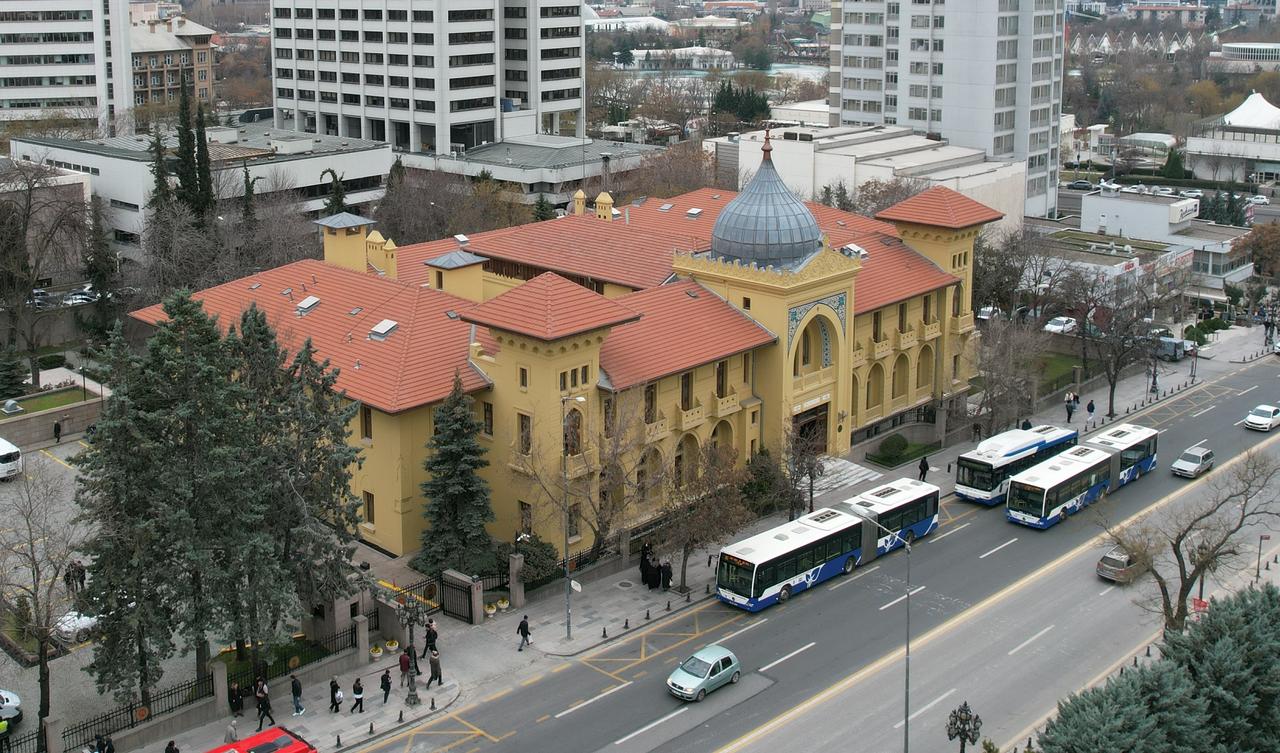
Ankara Palas is an accommodation and cultural event center built during the early years of the Republic of Türkiye and is one of Ankara’s historical landmarks. Initially designed as a social facility for parliament members and a guesthouse for official visitors, it has served various functions over time. Today, it operates as a museum.
Ankara Palas - Türkiye Cumhuriyeti Cumhurbaşkanlığı Milli Saraylar Başkanlığı
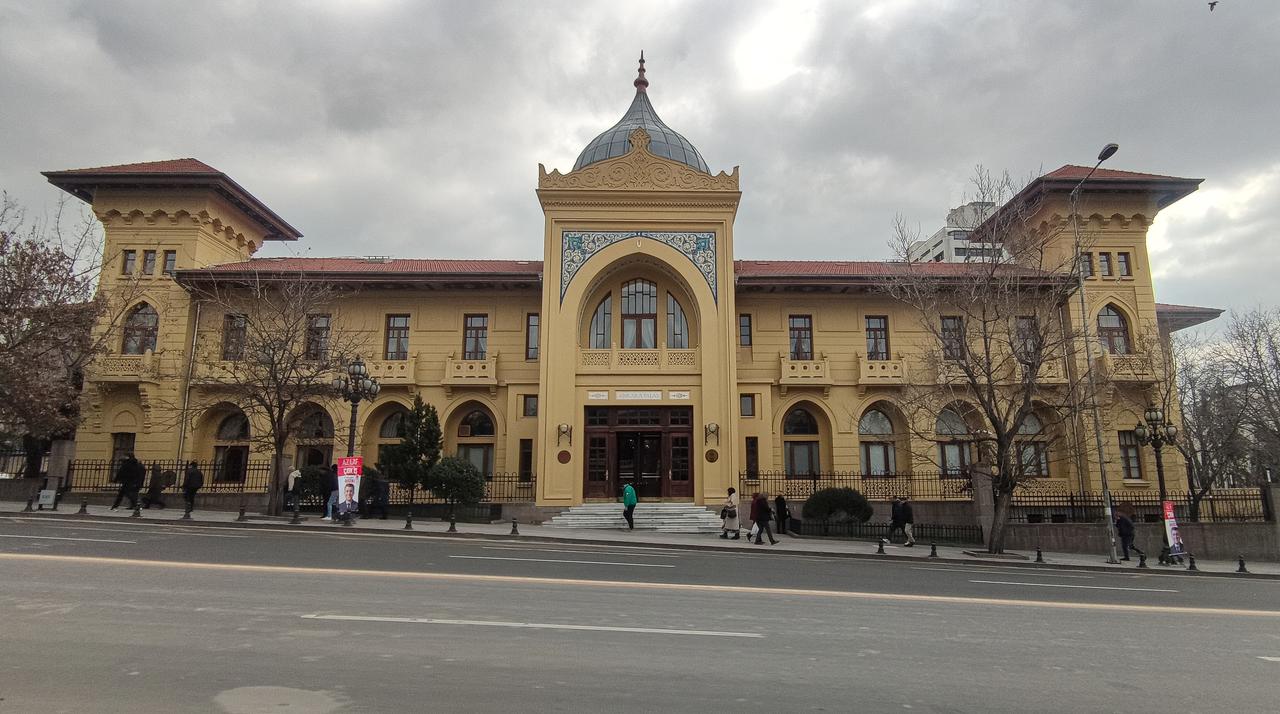
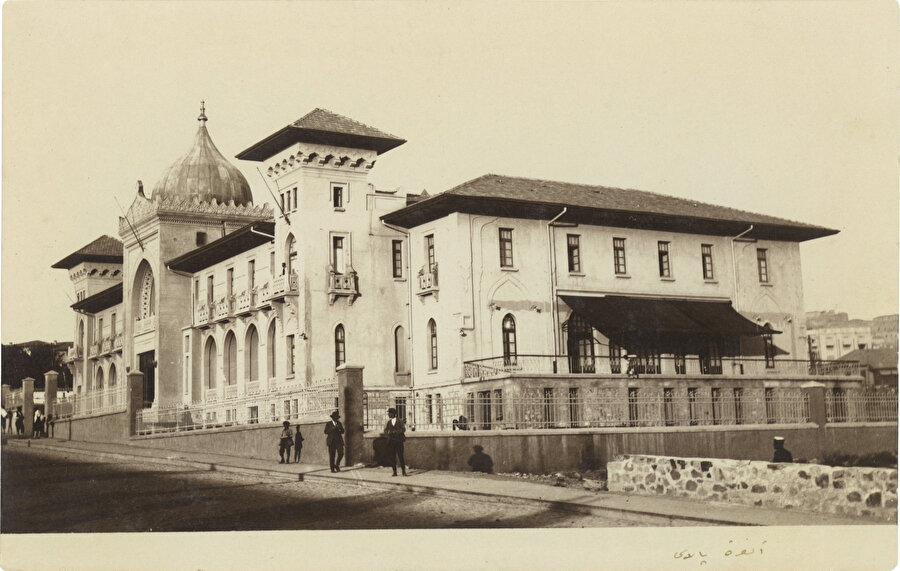
The foundation of Ankara Palas was laid in 1924; however, it was left incomplete as the original architect, Vedat Tek, abandoned the project. Later, it was redesigned by architect Kemalettin Bey and was completed in 1927. Due to an oversight during construction, the building’s entrance stairs were initially forgotten and added later.
Originally known as Ankara Vakıf Hotel, the building hosted high-ranking state officials, foreign delegations, and international meetings for many years. By the 1930s, it had become a significant hub for political, social, and cultural life, serving as a gathering place for parliament members, journalists, and artists.
Until 1975, Ankara Palas functioned as a hotel. Between 1976 and 1982, it was repurposed as an office and exhibition space under the Ministry of Industry and Trade. In 1982, the Ministry of Foreign Affairs undertook a comprehensive restoration, and on October 29, 1983, it was reopened as the Ankara Palas State Guesthouse. In 2018, it was transferred to the National Palaces Administration under the Presidency, and after restoration work, it was reopened as a museum on February 21, 2024.
Ankara Palas - Salt Araştırma
Ankara Palas is one of the significant examples of the First National Architectural Movement, which was influential in early 20th-century Türkiye. The initial project was designed by Vedat Tek, but the building took its final form based on the design by Kemalettin Bey.
The building has a rectangular plan and consists of three floors, including a basement. At its center is a spacious ballroom illuminated from above, surrounded by rooms opening into corridors. The lower-floor rooms are positioned towards the north and east, while the upper-floor rooms are spread across the entire building, including the central area. The ground floor also features a tea and game lounge, a dining hall, and a sitting area with a terrace. While the upper floor has a simpler design, the entrance level is adorned with elaborate decorative elements.
The exterior features traditional decorative elements such as ceramic panels, Ottoman-style relief decorations, and muqarnas-style column capitals. The interior is enriched with plaster ceiling ornaments, ceramic panels, and details reflecting classical Ottoman architecture.
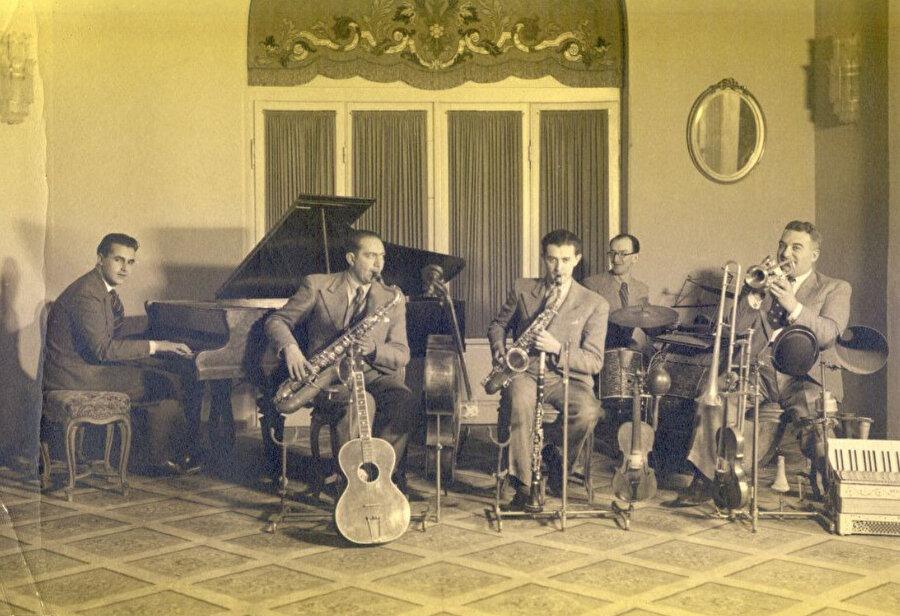
Ankara Palas played a vital role in the early years of the Republic of Türkiye, hosting political, diplomatic, and social events in the newly established capital. Mustafa Kemal Atatürk frequently visited Ankara Palas after parliamentary sessions. Notably, he held the wedding of his adopted daughter, Nebile Hanım, at this venue, leaving a lasting historical moment with his dance during the event.
Throughout the 20th century, Ankara Palas accommodated numerous prominent state leaders and foreign delegations. Among its distinguished guests were Reza Shah of Iran, King Amanullah of Afghanistan, King Faisal of Iraq, Greek Prime Minister Eleftherios Venizelos, and U.S. President Dwight Eisenhower.
Ankara Palas orchestra - Othmar Pferschy, Koç University Digital Collections
During the social transformation of the 1930s in Türkiye, Ankara Palas became an essential venue for cultural and social events, including the famous Republic Ball. Following the end of its use as a hotel in 1975, the building was repurposed for various institutional functions. In 1983, it regained its status as the State Guesthouse. After being transferred to National Palaces in 2018, a decision was made to transform it into a museum.
On February 21, 2024, Ankara Palas opened its doors as a museum. Spanning an indoor area of 1,000 square meters, the museum houses five main exhibition halls displaying valuable artifacts from the Ottoman and Republican periods.
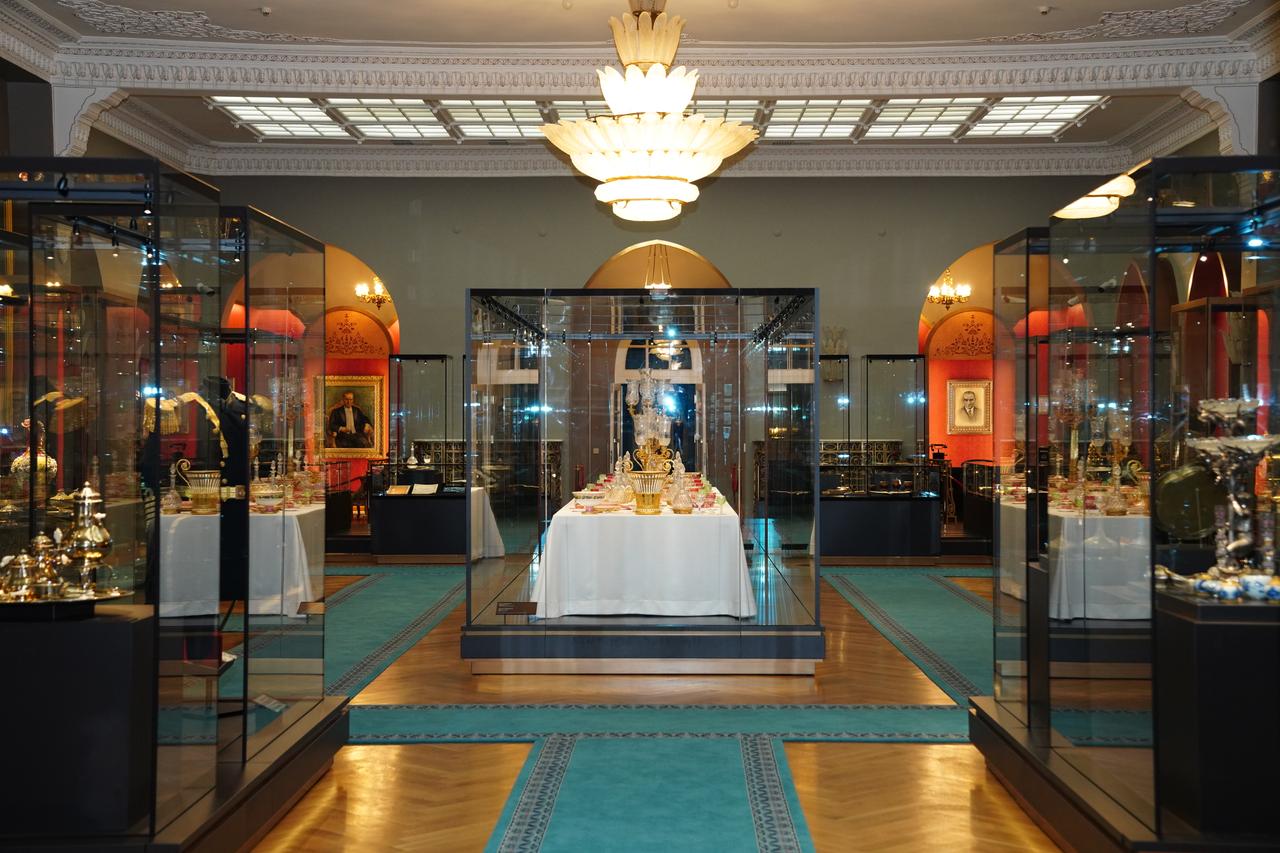
Ankara Palas - Türkiye Cumhuriyeti Cumhurbaşkanlığı Milli Saraylar Başkanlığı
The museum's collection includes:
As of 2024, Ankara Palas Museum has also become a key venue for cultural activities through its monthly “Ankara Palas Conferences.” Since its opening, it has attracted over 209,000 visitors as of February 2025, contributing significantly to historical and cultural heritage due to its central location and remarkable collection.
The museum is open daily from 09:00 to 17:00, except on Mondays, and offers an audio guide service for visitors seeking detailed information.
Anadolu Ajansı. "Ankara Palas Müzesi Ziyarete Açıldı." Anadolu Ajansı, 21 February 2024. Accessed February 19, 2025. https://www.aa.com.tr/tr/kultur/ankara-palas-muzesi-ziyarete-acildi/3144837.
Anadolu Ajansı. "Ankara Palas Müzesi, Bir Yılda 209 Bin’in Üzerinde Ziyaretçi Ağırladı." Anadolu Ajansı, 18 February 2025. Accessed February 19, 2025. https://www.aa.com.tr/tr/kultur/ankara-palas-muzesi-bir-yilda-209-binin-uzerinde-ziyaretci-agirladi/3485532.
Ankara Palas Resmi Web Sitesi. "Ankara Palas." Ankara Palas, 2025. Accessed February 19, 2025. https://ankarapalas.com.tr/.
Fibu.la. "Ankara Palas Müzesi." Fibu.la Proje Tanıtımı, 2025. Accessed February 19, 2025. https://fibu.la/proje/ankara-palas-muzesi.html.
Milli Saraylar İdaresi Başkanlığı. "Ankara Palas Müzesi Açıldı." Milli Saraylar Resmi Sitesi, 21 February 2024. Accessed February 19, 2025. https://www.millisaraylar.gov.tr/Kurumsal/HaberDetay/71/ankara-palas-muzesi-acildi.
Milli Saraylar İdaresi Başkanlığı. "Ankara Palas." Milli Saraylar Resmi Sitesi, 2025. Accessed February 19, 2025. https://www.millisaraylar.gov.tr/Lokasyon/17/Ankara-Palas.
Türkiye Turizm Ansiklopedisi. "Ankara Palas." Türkiye Turizm Ansiklopedisi, 2025. Accessed February 19, 2025. https://turkiyeturizmansiklopedisi.com/ankara-palas.

Ankara Palas
Location | Ulus Ankara Türkiye | ||||||||
|---|---|---|---|---|---|---|---|---|---|
Construction Year | 1924-1927 | ||||||||
Architect(s) | Mimar Kemalettin Bey Vedat Tek | ||||||||
Opening | 2024 (Museum) 1983 (State Guesthouse) 1928 (Hotel) | ||||||||
History
Architectural Structure
Historical Significance and Usage
Ankara Palas Museum
This article was created with the support of artificial intelligence.