+1 More

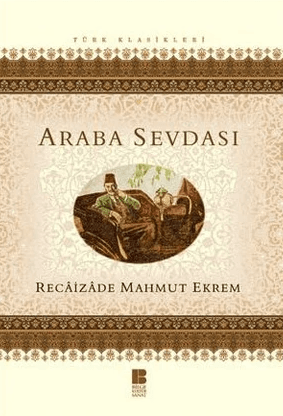
Author(s) | Recaizade Mahmut Ekrem | ||||||||
|---|---|---|---|---|---|---|---|---|---|
Publisher(s) | Bilge Kültür Sanat | ||||||||
Editor | Osman Sevim | ||||||||
First Publication Date(s) | 1898 | ||||||||
Publication Date | 08.10.2021 | ||||||||
Page Count | 272 | ||||||||
Language(s) | Turkish | ||||||||
Dimension(s) | 13.5 x 19.5 cm | ||||||||
Araba Sevdası is a novel written by Recaizade Mahmut Ekrem, one of the prominent authors of the Tanzimat period. It was first serialized with illustrations in the literary magazine Servet-i Fünun in 1895 and was published as a book in 1896. The work examines the cultural transformation of Ottoman society during the Westernization process. It focuses on the lifestyle and value system of the upper-class individuals of the period.
The main character of the novel, Bihruz Bey, represents the new generation of wealthy and urban Ottomans who admire the West in the post-Tanzimat period. After the death of his father, he inherits a considerable fortune and lives with his mother. Although he is considered educated, his knowledge is superficial; he frequently uses French phrases in his speech without fully understanding the language, in an effort to present himself as part of the upper class.
Bihruz Bey's way of life—his clothing choices, style of speech, and desire to be seen in public spaces—reflects his aspiration to appear Westernized. He often strolls in popular leisure areas such as Tophane and Çamlıca in a horse-drawn carriage, which he considers a symbol of social status. During one of these outings, he encounters a woman named Periveş Hanım and instantly falls in love with her.
Bihruz Bey develops this relationship in a romantic context, believing it to be sincere and mutual. However, the relationship is based solely on his personal perceptions. Periveş Hanım appears to reciprocate his feelings but is in fact only interested in Bihruz's financial means. Bihruz builds future expectations around what he assumes to be a real love affair. Periveş's sudden disappearance causes deep emotional disappointment for him.
Eventually, Bihruz learns that Periveş was only involved with him for material benefit. This realization leads to a rupture in both his perception of society and his emotional stability. The inner conflict he experiences forces him to confront reality. The novel concludes with Bihruz Bey's emotional collapse and disillusionment.
In the novel, Westernization is portrayed not as a process of internal cultural integration but as a superficial imitation limited to appearance. Bihruz Bey's efforts to speak French, dress in European fashion, and ride in a carriage represent a shallow fascination with Western culture. This leads to an identity void in which the individual distances himself from his own culture without constructing a new, meaningful identity.
The character of Bihruz Bey represents the so-called "alafranga" type—those who try to mimic Westerners only in appearance and behavior. This figure symbolizes the artificiality and intellectual shallowness that pervade social life. Social degeneration is reflected in the way individuals are evaluated more for their form than for their substance. Those around Bihruz are also portrayed as driven by similarly superficial values.
Bihruz Bey’s love for Periveş Hanım is not grounded in reality but in fantasy. He fills the imagined relationship with his own expectations, which are disconnected from actual circumstances. This idealization leads to disappointment and psychological collapse when faced with reality. The contrast between illusion and truth forms the dramatic structure of the novel.
Bihruz Bey’s frequent use of French phrases reflects a linguistic disintegration of the time. Often used incorrectly or out of context, these expressions signify the confusion and cultural alienation experienced by individuals. Language functions not only as a means of communication but also as a marker of social status and identity.
The novel explores the cultural transformation of Ottoman society in the post-Tanzimat era through the lifestyles of its characters. It particularly critiques the Westernization trends of the urban upper class, which conflict with traditional values and lead to identity problems. The critique is presented indirectly, through the behaviors and experiences of the characters.

Mr.Bihruz (Prepared with Artificial Intelligence.)
Ekrem, Recaizade Mahmut. 2021. Araba Sevdası. Derleyen Osman Sevim. İstanbul: Bilge Kültür Sanat.

Author(s) | Recaizade Mahmut Ekrem | ||||||||
|---|---|---|---|---|---|---|---|---|---|
Publisher(s) | Bilge Kültür Sanat | ||||||||
Editor | Osman Sevim | ||||||||
First Publication Date(s) | 1898 | ||||||||
Publication Date | 08.10.2021 | ||||||||
Page Count | 272 | ||||||||
Language(s) | Turkish | ||||||||
Dimension(s) | 13.5 x 19.5 cm | ||||||||
No Discussion Added Yet
Start discussion for "Araba Sevdası (Book)" article
Subject
Themes
Superficial Westernization
The Alafranga Type and Social Degeneration
The Gap Between Romantic Illusion and Reality
Language and Identity Crisis
Social Critique
This article was created with the support of artificial intelligence.