

+1 More

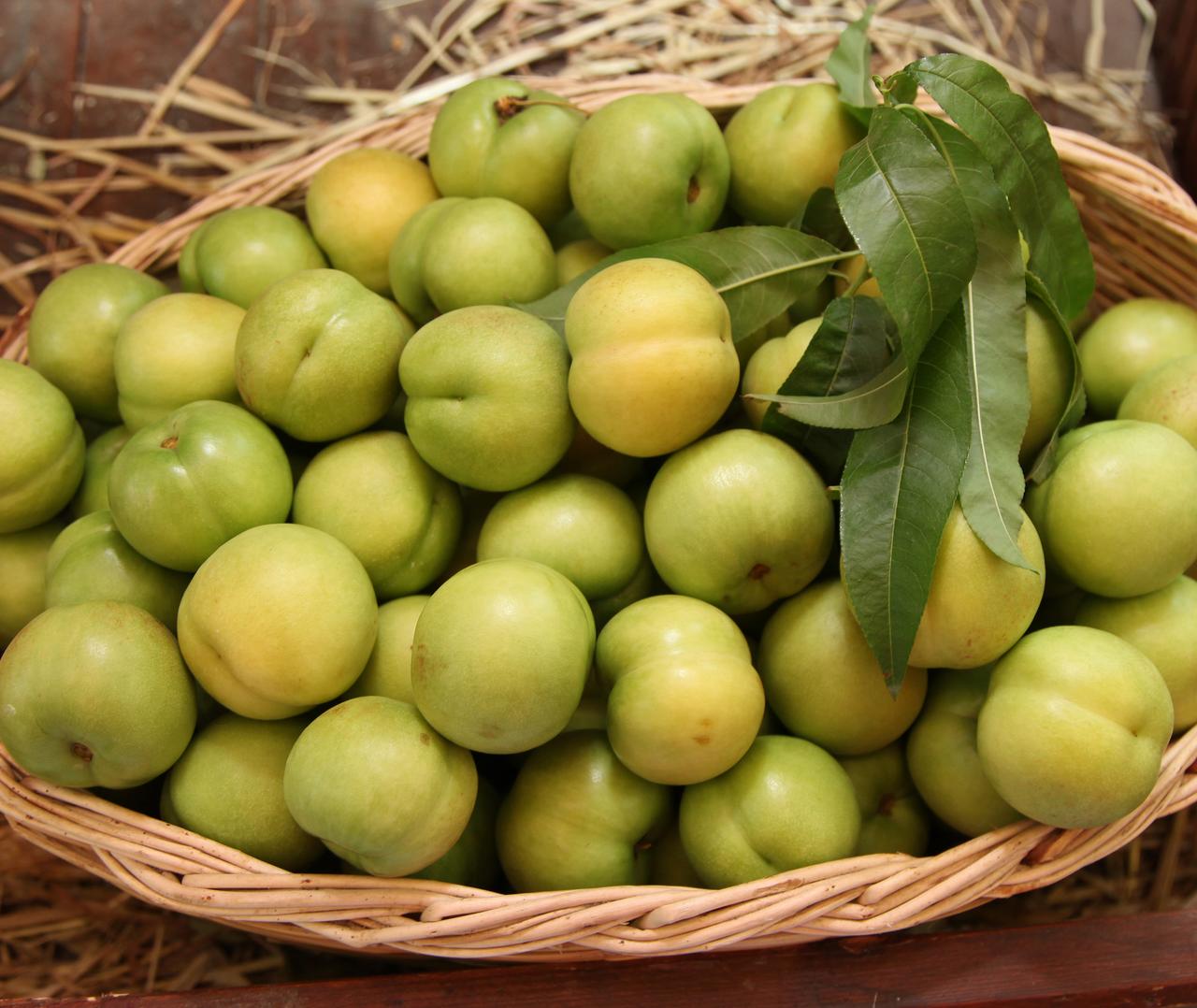
Bayramiç Beyazı
Province of Cultivation | Çanakkale | ||||||||
|---|---|---|---|---|---|---|---|---|---|
Climate Type | Mediterranean Climate | ||||||||
Altitude of Cultivation | 200 – 500 meters | ||||||||
Soil Characteristics | Light loamy Calcareous | ||||||||
Harvest Period | July – August | ||||||||
Bayramiç Beyazı is a summer fruit grown in the Bayramiç district of Çanakkale province, located in northwestern Türkiye. It stands out with its unique aroma, external appearance, and climatic characteristics. This fruit, which has been registered with a geographical indication, is closely linked to the microclimatic conditions of its production area and has been traditionally cultivated in the region for many years. Bayramiç Beyazı attracts attention not only in the local market but also in national and international markets.
Bayramiç Beyazı is cultivated within the borders of Bayramiç district in Çanakkale province, on the northern slopes of Kazdağları (Mount Ida) and around the Bayramiç Plain. The region provides suitable physical conditions with an altitude ranging from 200 to 500 meters above sea level. The soil is calcareous and slightly loamy, with good drainage conditions. This soil structure supports root development and facilitates nutrient uptake for the plant.
In terms of climate, the region displays typical Mediterranean characteristics: hot and dry summers, mild and rainy winters. However, Bayramiç's microclimate, influenced by Kazdağları, has a slightly higher humidity and minimal sudden temperature changes. In summer, average temperatures range between 25–30 °C, while in winter, temperatures rarely fall below 0 °C. These climatic features positively influence the aromatic structure and durability of Bayramiç Beyazı. Additionally, the region’s day-night temperature difference ensures an ideal sugar and acid balance in the fruit.
The production of Bayramiç Beyazı is carried out using a combination of traditional methods passed down through generations and modern techniques by local farmers. Viticulture activities typically begin in May with pruning operations. Pruning is regularly performed to maximize air circulation and sunlight exposure for the plant.
Regarding irrigation, drip irrigation systems are widely used due to the region’s dry summers. These systems enable efficient water use and prevent yield loss due to plant stress. Fertilization is generally supported by organic fertilizers and periodic mineral supplements. The use of chemical pesticides is carefully controlled in the fight against diseases and pests; integrated pest management practices are becoming increasingly common in the area.

Bayramiç Beyazı Harvest (AA)
The harvest of Bayramiç Beyazı usually takes place from the second half of July until early August. Harvesting is done manually depending on the fruit’s ripeness; the sugar content, acid balance, and color of the berries determine the harvest time. It is essential to harvest the fruits carefully in clusters to prevent damage and maintain quality.
After harvesting, the fruits are typically delivered to markets within a short period. Due to the thin skin and high water content of Bayramiç Beyazı, its shelf life is limited; therefore, it cannot be stored for long periods without cold chain conditions. Storage in cold rooms at temperatures between 0 and +2 °C and 85–90% relative humidity helps maintain the freshness and texture of the product. However, this storage period is usually limited to 1–2 weeks. As a result, Bayramiç Beyazı is primarily directed to local markets for fresh consumption.
Bayramiç Beyazı has a large, conical, and sparsely berried cluster structure. The berries are round, thin-skinned, white-yellowish in color, and highly glossy. The flesh is loose and juicy, with a sweet and pleasant aroma. Thanks to these characteristics, it is preferred both as a table fruit and for molasses production. Additionally, the presence of seeds in the berries is one of its distinctive features.
Bayramiç Beyazı is not only an agricultural product for the local people but also an economic livelihood source. This type of nectarine, cultivated on approximately 4,000 decares of land in Bayramiç district, has become a part of the local culture through annual festivals and promotional events. The product also provides significant employment opportunities for women farmers.
Bayramiç Beyazı was registered with the designation of origin by the Turkish Patent and Trademark Office in 2017 and thus placed under legal protection. This registration states that the product can only be grown in the Bayramiç region and that any production outside the area cannot be marketed under this name. The registration process was initiated by the Bayramiç Chamber of Agriculture and supported by detailed technical documentation.
Republic of Türkiye Ministry of Agriculture and Forestry, Çanakkale Provincial Directorate of Agriculture and Forestry. “Bayramiç Beyazı Becomes Our Country’s 7th Product Registered with the European Union Geographical Indication.” Accessed May 29, 2025. https://canakkale.tarimorman.gov.tr/Haber/487/Bayramic-Beyazi-Ulkemizin-Avrupa-Birligi-Cografi-Isaret-Tescili-Alan-7-Urunu-Oldu
Kesmen, Nihal and Kaynaş, Kenan. “Effects of Different Applications on the Storage and Marketing Quality of the Bayramiç Beyazı Nectarine Variety.” Çanakkale Onsekiz Mart University Journal of the Institute of Science and Technology, 2018: 4(2), 46–58. Accessed May 29, 2025. https://dergipark.org.tr/en/download/article-file/584377
Sallama, Sabahattin. “‘Bayramiç Beyazı’ brought a smile to the face of the producer.” Anadolu Agency. Accessed May 29, 2025. https://www.aa.com.tr/tr/ekonomi/bayramic-beyazi-ureticinin-yuzunu-guldurdu/33571#!
Serbes, Elif Betül and Tiryaki, Osman. “Determination of Fungicide Residues in Bayramiç Beyazı Nectarines and Risk Assessment for Consumers.” Çanakkale Onsekiz Mart University Journal of the Faculty of Agriculture, 2023: 11(1), 166–176. Accessed May 29, 2025. https://dergipark.org.tr/en/download/article-file/2968390
Turkish Patent and Trademark Office. “Bayramiç Beyazı.” Turkish Patent and Trademark Office Website. Accessed May 29, 2025. https://ci.turkpatent.gov.tr/Files/GeographicalSigns/43265cae-07aa-4e47-9b46-b0a39ca6ea75.pdf
Republic of Turkey. Canakkale Governorship. "Bayramiç Beyazı". Republic of Turkey. Canakkale Governorship Website. Accessed May 29, 2025. http://www.canakkale.gov.tr/bayramic-beyazi

Bayramiç Beyazı
Province of Cultivation | Çanakkale | ||||||||
|---|---|---|---|---|---|---|---|---|---|
Climate Type | Mediterranean Climate | ||||||||
Altitude of Cultivation | 200 – 500 meters | ||||||||
Soil Characteristics | Light loamy Calcareous | ||||||||
Harvest Period | July – August | ||||||||
Geographical Growing Area and Climatic Characteristics
Production Techniques and Traditional Methods
Harvest Time and Storage Characteristics
Morphological and Sensory Characteristics
Economic and Socio-Cultural Importance
Geographical Indication and Registration Process
This article was created with the support of artificial intelligence.
