+2 More

Registration Number | 1645 | ||||||||
|---|---|---|---|---|---|---|---|---|---|
Registration Date | 03.10.2024 | ||||||||
Applicant/Registrant(s) | Governorship of Hatay | ||||||||
Type of Geographical Indication | Designation of Origin | ||||||||
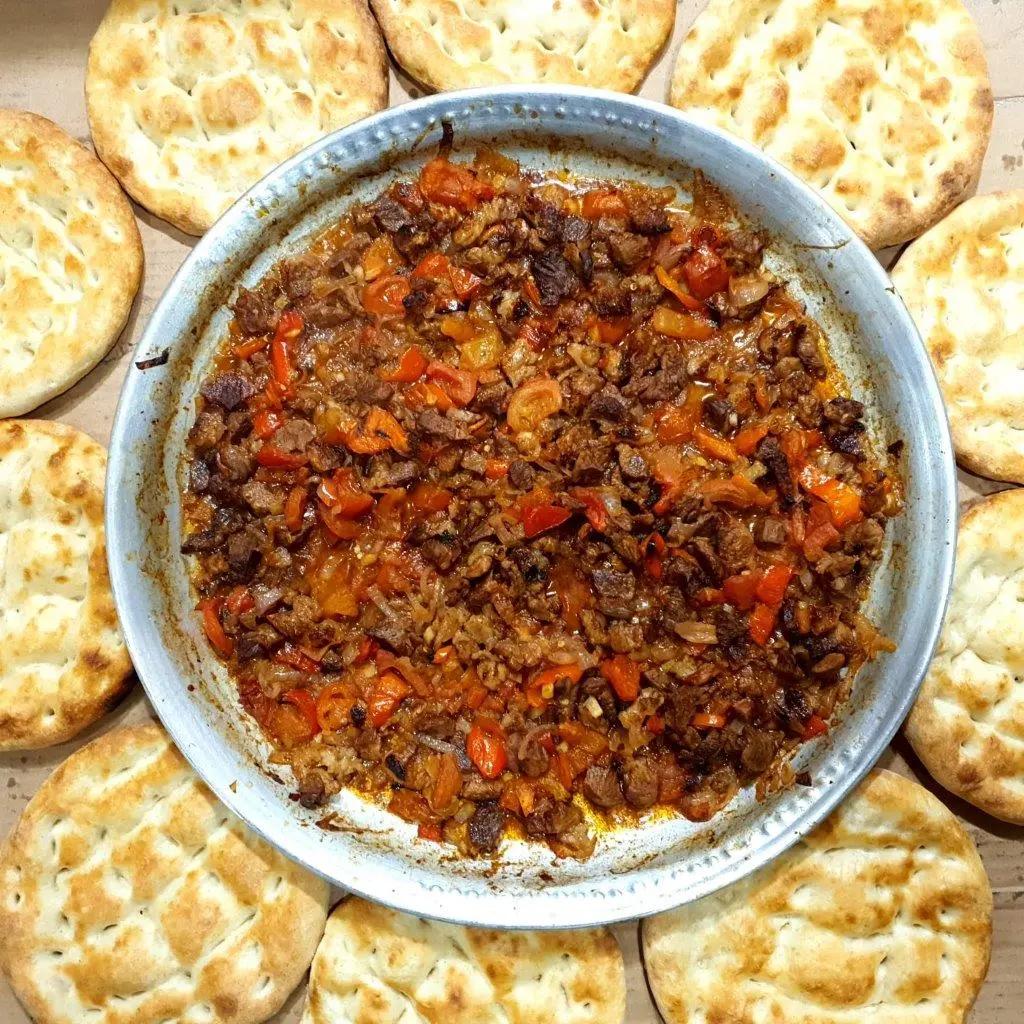
Belen Tava is a traditional dish prepared with large-cut lamb meat, tail fat, tomatoes, peppers, onions, garlic, and a variety of spices, cooked in earthenware pots in stone ovens. Consumed primarily in the district of Belen and across the Hatay region, this dish stands out with its distinctive cooking technique and traditional presentation. Possessing a thick and saucy texture, Belen Tava is an important cultural item, served in everyday meals as well as on special occasions such as weddings, holidays, gatherings, and festivals.
Belen Tava was registered as a designation of origin on October 3, 2024, under the provisions of Industrial Property Law No. 6769. The registration was initiated by the Governorship of Hatay. The product is categorized under the “Meals / Main Dishes and Soups” group, and its geographical indication is valid exclusively within the boundaries of Hatay Province.
Key characteristics that differentiate Belen Tava from similar meat dishes include:
Standard Recipe (Serves 3–4):
Belen Tava is a cornerstone of Hatay’s culinary tradition. It is strongly associated with local identity and holds cultural significance beyond its physical attributes. In addition to being a staple in daily meals, it is prominently served at holiday feasts, weddings, and festivals, reinforcing its regional reputation and cultural memory.
All production stages of Belen Tava must occur within the borders of Hatay Province. This includes procurement of ingredients, preparation, cooking, and presentation. These conditions ensure the sustainability of the product’s traditional knowledge and its cultural reputation.
Inspection activities are coordinated by the Governorship of Hatay. The inspection board consists of:
At least one routine inspection is conducted annually, with additional inspections carried out in response to complaints or as needed. The inspection focuses on:
Turkish Patent and Trademark Office. Belen Tava Geographical Indication Registration Certificate. Accessed July 15, 2025. https://ci.turkpatent.gov.tr/cografi-isaretler/detay/10323
Turkish Patent and Trademark Office. “Belen Tava.” Bulletin of Geographical Indications and Traditional Product Names. Accessed July 15, 2025. https://ci.turkpatent.gov.tr/cografi-isaretler/detay/10323

Registration Number | 1645 | ||||||||
|---|---|---|---|---|---|---|---|---|---|
Registration Date | 03.10.2024 | ||||||||
Applicant/Registrant(s) | Governorship of Hatay | ||||||||
Type of Geographical Indication | Designation of Origin | ||||||||
Geographical Indication Information
Distinctive Features
Ingredients and Production Method
Preparation
Cultural Context and Reputation
Conditions for Production Within Geographical Boundary
Inspection and Protection
This article was created with the support of artificial intelligence.