
+1 More

British Shorthair
Origin(s) | Descended from cats brought to Britain during the Roman period. | ||||||||
|---|---|---|---|---|---|---|---|---|---|
Physical Characteristics | Compact body structure Weight: 6–9 kg for males Weight: 4–6 kg for females Large eyes and a short nose | ||||||||
Temperament | Calm and independent, Forms bonds with family members but does not demand excessive attention, Compatible with other pets | ||||||||
British Shorthair is a domestic cat breed with origins in the United Kingdom, known for its sturdy build and short fur. Recognized for its round head, large eyes, and dense coat, this breed can easily adapt to domestic life thanks to its balanced temperament and harmonious behavior. With a notable historical background, the British Shorthair is today valued both as a pet and in cat shows.
The ancestors of the British Shorthair are believed to be short-haired cats brought to Britain during the Roman Empire. Over time, these cats adapted to the climate conditions of the British Isles, developing thicker coats and becoming more resilient. Towards the end of the 19th century, systematic breeding efforts began with contributions from breeders like Harrison Weir, and the breed was exhibited at the first cat show held at London’s Crystal Palace in 1871.
During World Wars I and II, the British Shorthair population declined significantly. To rebuild the breed, it was crossbred with breeds such as the Persian cat. During this process, the breed developed a dense coat and round facial features; however, later efforts focused on re-purifying the breed to maintain the breed standard.
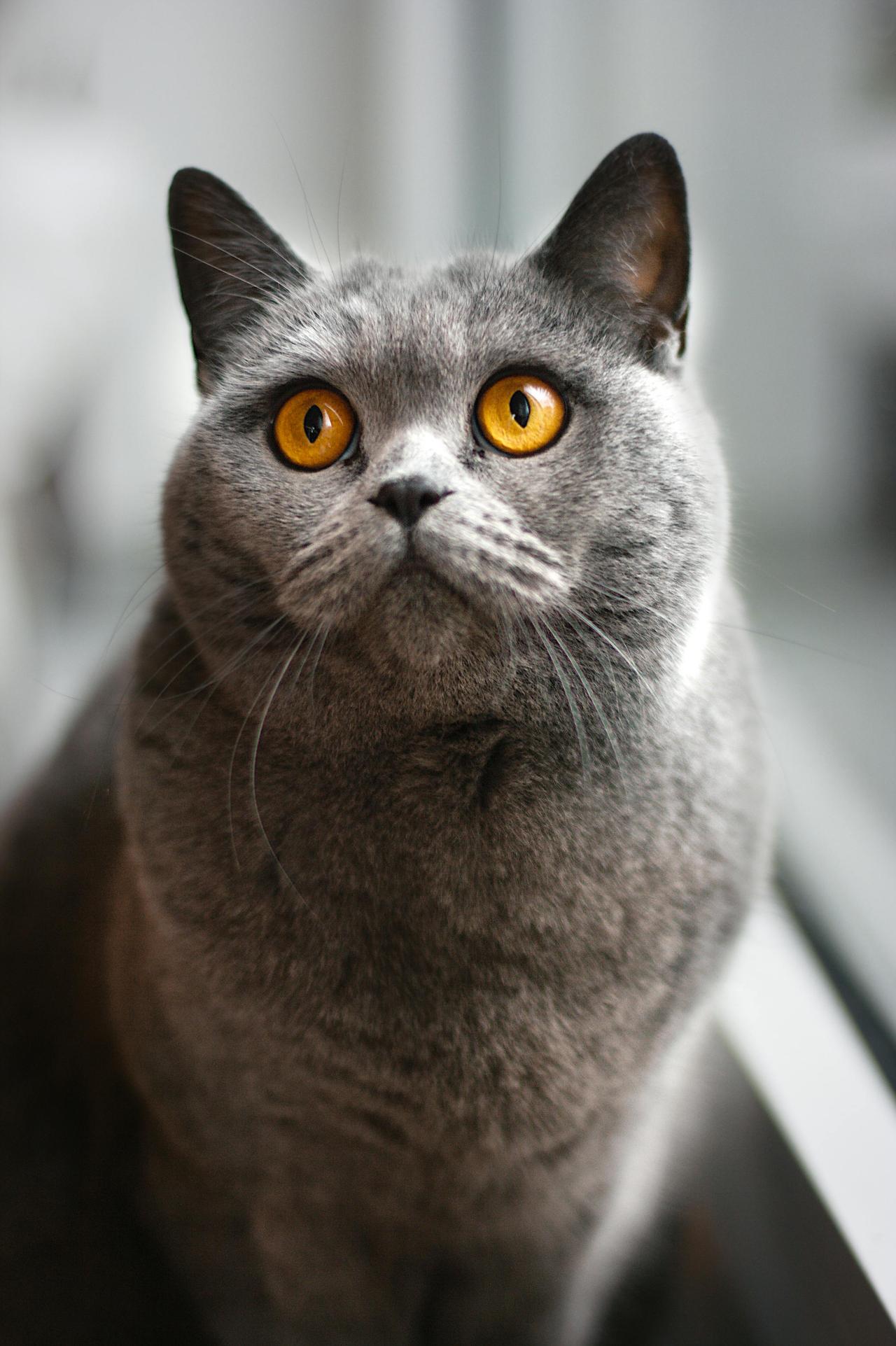
British Shorthair cats are notable for their compact body structure, broad chest, and thick legs. Average weight ranges from 4–6 kg for females and 6–9 kg for males. This breed features a round head with prominent cheeks, a short and straight nose, and medium-sized ears. Their large eyes may appear in shades of copper, gold, or blue.

British Shorthair (Pexels)
The British Shorthair has a short, dense, and velvety coat. Its most well-known color is the gray-blue shade referred to as “British Blue.” However, other solid colors such as black, white, cream, chocolate, lilac, and cinnamon also exist, in addition to patterned varieties like tabby, colorpoint, smoke, and bicolor.
The British Shorthair is generally known for its calm and independent nature. While it can form strong bonds with its owners, it does not typically seek constant attention. It tends to be compatible with other pets and children. With a low energy level, it prefers to spend time on the ground rather than engaging in jumping or climbing.
Thanks to their intelligence, they can adapt to basic training routines. They usually learn litter habits easily and can quickly adjust to regular daily routines. However, if left alone for extended periods, their social needs should be taken into account.

British Shorthair (Pexels)
British Shorthairs are generally a healthy breed but may be prone to some hereditary diseases, including hypertrophic cardiomyopathy (HCM) and polycystic kidney disease (PKD). A balanced diet, regular veterinary checkups, and proper exercise are essential for maintaining their health.
Due to their short but dense coat, weekly brushing is recommended. During seasonal transitions, shedding may increase, and grooming frequency should be adjusted accordingly. Routine care such as nail trimming, ear cleaning, and dental hygiene should also be performed regularly.
Cat Fanciers’ Association. “British Shorthair Breed Profile.” Accessed June 25, 2025. https://cfa.org/breed/british-shorthair.
Pexels. “Portrait of Gray Cat.” Pexels. Accessed June 26, 2025. https://www.pexels.com/photo/portrait-of-gray-cat-20577970/
Pexels. “Selective Focus Photo of Grey Cat.” Pexels. Accessed June 26, 2025. https://www.pexels.com/photo/selective-focus-photo-of-grey-cat-1521304/
Pexels. “Short-Furred Gray Cat on Green Grass.” Pexels. Accessed June 26, 2025. https://www.pexels.com/photo/short-furred-gray-cat-on-green-grass-1521305/
The International Cat Association. “British Shorthair.” Accessed June 25, 2025. https://tica.org/breed/british-shorthair.

British Shorthair
Origin(s) | Descended from cats brought to Britain during the Roman period. | ||||||||
|---|---|---|---|---|---|---|---|---|---|
Physical Characteristics | Compact body structure Weight: 6–9 kg for males Weight: 4–6 kg for females Large eyes and a short nose | ||||||||
Temperament | Calm and independent, Forms bonds with family members but does not demand excessive attention, Compatible with other pets | ||||||||
Origin and Development of the Breed
Rebuilding the Lineage
Physical Characteristics
Coat and Colors
Behavior and Temperament
Adaptability and Training
Health and Care
Coat Care
This article was created with the support of artificial intelligence.