

+1 More


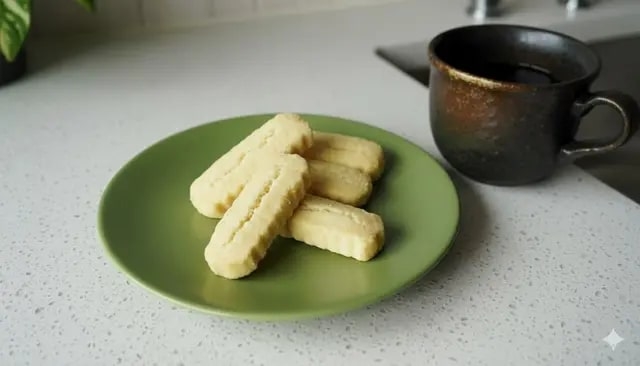
Chinsukou (Generated by Artificial Intelligence)
Chinsukou is a traditional baked confectionery native to Okinawa Prefecture, Japan, and has been registered as a Geographical Indication (GI) under registration number 155.
The origins of Chinsukou trace back to the Ryukyu Kingdom, which ruled the Ryukyu Islands - present-day Okinawa Prefecture - from 1429 to 1879. The confection was inspired by a traditional baked sweet prepared at Shuri Castle by the kingdom’s last court chef, Arakaki Pechin Shukuki.【1】 The modern form of Chinsukou was developed in 1908 by Shukuki’s son, Arakaki Shukukou. Shukukou modified his father’s recipe by shifting from steaming to brick oven baking and marketed the confection in bite-sized pieces, making it accessible to the general public.
The primary ingredients of Chinsukou include wheat flour, sugar, and lard (including rendered and solidified forms derived from pork). The production process involves mixing the ingredients, shaping them into various forms, and baking. In the production region, pig farming has been practiced since ancient times, and the cultural practice of utilizing all parts of the pig has naturally integrated lard as a fundamental ingredient. Due to its high oleic acid content, lard is resistant to oxidation and enriches the flavor of Chinsukou, distinguishing it from standard cookies and biscuits. To diversify the product, additional flavorings such as fruit purées, fruit juices, or chocolate can be incorporated, or the baked confection may be coated or moistened with a flavoring.
Today, Chinsukou is produced in a variety of shapes, including elongated, round, and heart-shaped forms. Variants also exist with dough incorporating fruit juices or pulp, chocolate coatings, or post-baking chocolate dipping. The confection has become an enduring symbol of Okinawa and has gained recognition throughout Japan. Its production area is officially designated as Okinawa Prefecture.
[1]
PD – Japan Geographical Indications Center. “Chinsukou.” PD – Japan Geographical Indications Center. Accessed October 25, 2025. https://pd.jgic.jp/en/register/entry/155.html

Chinsukou (Generated by Artificial Intelligence)
History and Origin
Production and Ingredients
Varieties and Popularity
This article was created with the support of artificial intelligence.