
+2 More

Scientific Name(s) | Origanum onites L. | ||||||||
|---|---|---|---|---|---|---|---|---|---|
Type(s) | Medicinal and Aromatic Plant / Spice | ||||||||
Cultivation Areas | Pamukkale Güney Buldan Çal Bekilli districts (Slopes of Mount Çökelez and Menderes Valley) Denizli | ||||||||
Geographical Indication | Designation of Origin – Registration No: 714 | ||||||||
Distinctive Feature(s) | High Carvacrol Content (71%–94.3%) Essential Oil Content (3.2%–4.4%) Intense Aromatic Profile | ||||||||
Area(s) of Use | Spice Food Additive Essential Oil Production Medicinal/Cosmetic Products | ||||||||
Protection Scope | Protected as a Geographical Indication under Industrial Property Law No. 6769 | ||||||||
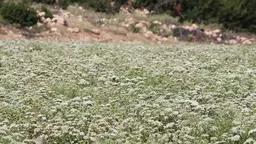
Denizli thyme, scientifically known as Origanum onites L., is a type of aromatic plant native to Denizli, located in Türkiye’s Aegean Region. Noted for its high essential oil content and rich carvacrol levels, this thyme variety is also popularly known as “bilyalı kekik” (ball thyme) among locals. It primarily grows on the southern slopes of Mount Çökelez overlooking the Menderes Valley, within the districts of Pamukkale, Güney, Buldan, Çal, and Bekilli, at altitudes ranging between 600 and 1200 meters.,

Denizli Thyme (Türk Patent Ve Marka Kurumu)
Denizli thyme grows in a semi-shrub form and can reach up to 65 cm in height. It is a hardy, hairy, and highly branched plant. Its leaves range from 3 to 22 mm in length and 2 to 19 mm in width, and are cordate, ovate, or elliptical. Naturally, it thrives on rocky, stony slopes and sometimes in shaded areas, growing up to 1200 meters above sea level.
Denizli thyme stands out for its rich essential oil content, which ranges between 3.2% and 4.4%. The carvacrol content within this oil varies from 71.0% to 94.3%. Carvacrol is the primary component of thyme oil and is known for its antimicrobial and antioxidant properties. These characteristics make Denizli thyme highly valuable for both culinary uses and medicinal/aromatic purposes.
The soils where Denizli thyme grows are typically sandy or sandy-loamy, stony, well-drained, and low in water retention capacity. These soils are non-saline, alkaline, calcareous, and low in organic matter. Climatically, during the summer months, Mount Çökelez blocks the hot southern wind known as "samyeli," preventing heat stress on the plants. Meanwhile, cool air currents from the Menderes Valley help relieve the plant during its flowering period. These unique conditions favor essential oil accumulation in the plant.
The production of Denizli thyme relies on traditional knowledge and local practices. Seeds are sourced from healthy and vigorous plants from the previous season. Due to their small size, seeds cannot be sown directly into fields, so seedlings are first cultivated in seedbeds. Sowing typically occurs between October and December. When seedlings develop 4–6 leaves, they are transplanted into the field around February–March.
During field planting, row spacing is arranged at 40–50 cm, and plant spacing within rows is 20–25 cm. Post-planting, careful irrigation and ventilation are crucial for maintaining seedling health. Operations such as hoeing, fertilizing, and weed control are performed mechanically.
Denizli thyme reaches harvest maturity between late June and early July. Harvesting is done using specialized thyme harvesting machines. The harvested plants are dried in the shade, away from direct sunlight, and spread thinly. To prevent discoloration, the stalks are frequently turned over for better air circulation during drying.
After drying, the thyme is threshed using special sieves to separate stems from leaves. Some grain threshing machines in Denizli have been modified specifically for thyme processing. The final product is packed into 50–60 kg sacks labeled with “Denizli Kekiği” and the geographical indication logo.
Denizli thyme is a registered geographical indication product under the Turkish Industrial Property Law No. 6769. It was registered as a designation of origin by the Pamukkale Municipality, and officially recognized by the Turkish Patent and Trademark Office on April 7, 2021. Registration No: 714, Application No: C2020/028.
Inspections are carried out by an 8-member commission coordinated by the Pamukkale Municipality. This commission includes university academics, agricultural specialists, chamber of commerce representatives, and village headmen. The production process is inspected at least three times annually—during seedling cultivation, transplanting, and harvesting. Additionally, the use of the logo, original name, and compliance with production standards are also monitored.
Approximately 90% of thyme production in Türkiye comes from Denizli, which also holds a significant share in the country’s thyme exports. Denizli thyme is highly sought after in international markets, especially in European countries, due to its superior quality. It is widely used in the food industry, as well as in the pharmaceutical and cosmetic sectors.
Anadolu Ajansı. "Tescilli Denizli kekiğinde hasat sürüyor." Anadolu Ajansı. Erişim 4 Temmuz 2025. https://www.aa.com.tr/tr/ekonomi/tescilli-denizli-kekiginde-hasat-suruyor/2636679
Denizli İhracatçılar Birliği (DENİB). “Dünyanın Kekiği Denizli’den.” Erişim 4 Temmuz 2025. https://www.denib.gov.tr/tr/faaliyetler-neler-yaptik-dunyanin-kekigi-denizliden.html
Denizli İl Tarım ve Orman Müdürlüğü. “Bereketli Topraklarda Yetişen Denizli Kekiği.” Erişim 4 Temmuz 2025. https://denizli.tarimorman.gov.tr/Sayfalar/GormeEngellilerDetay.aspx?OgeId=1082&Liste=Haber
T.C. Tarım ve Orman Bakanlığı. “Coğrafi İşaretli Tıbbi ve Aromatik Bitkilerden Bazıları.” Türk Tarım Orman Tarım ve Orman Dergisi. Erişim 4 Temmuz 2025. https://www.turktarim.gov.tr/Haber/1011/cografi-isaretli-tibbi-ve-aromatik-bitkilerden-bazilari-
Türk Patent ve Marka Kurumu. “Denizli Kekiği – Tescil Belgesi ve Teknik Şartname (No. 714).” Erişim 4 Temmuz 2025. https://ci.turkpatent.gov.tr/Files/GeographicalSigns/1698ce9b-7753-46b9-9627-953598f7be50.pdf
Türk Patent ve Marka Kurumu. “Denizli Kekiği.” Coğrafi İşaretler Bilgi Sistemi. Erişim 4 Temmuz 2025. https://ci.turkpatent.gov.tr/cografi-isaretler/detay/1587

Scientific Name(s) | Origanum onites L. | ||||||||
|---|---|---|---|---|---|---|---|---|---|
Type(s) | Medicinal and Aromatic Plant / Spice | ||||||||
Cultivation Areas | Pamukkale Güney Buldan Çal Bekilli districts (Slopes of Mount Çökelez and Menderes Valley) Denizli | ||||||||
Geographical Indication | Designation of Origin – Registration No: 714 | ||||||||
Distinctive Feature(s) | High Carvacrol Content (71%–94.3%) Essential Oil Content (3.2%–4.4%) Intense Aromatic Profile | ||||||||
Area(s) of Use | Spice Food Additive Essential Oil Production Medicinal/Cosmetic Products | ||||||||
Protection Scope | Protected as a Geographical Indication under Industrial Property Law No. 6769 | ||||||||
Botanical Characteristics
Chemical Composition and Quality Features
Soil and Climate Conditions
Production Process
Harvesting and Drying
Geographical Indication and Registration
Inspection and Protection
Economic and Cultural Significance
This article was created with the support of artificial intelligence.