

+1 More

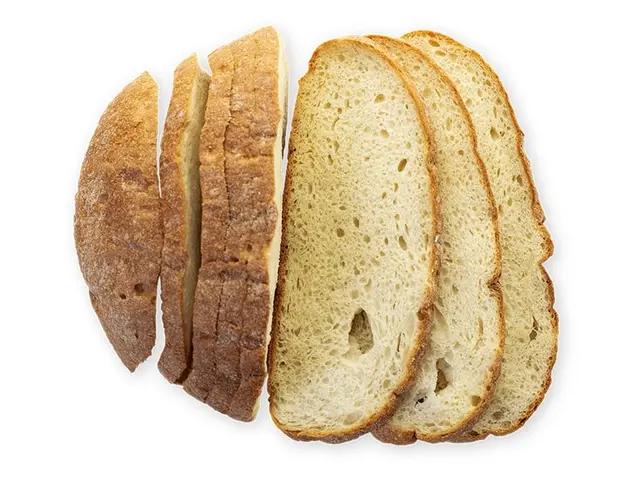
Pagnotta del Dittaino (Created with Artificial Intelligence.)
Product Name | Dittaino's Loaf | ||||||||
|---|---|---|---|---|---|---|---|---|---|
Product Type | Bread with Protected Designation of Origin (DOP) | ||||||||
Main Raw Material | Re-milled Durum Wheat Semolina | ||||||||
Production Area | Enna and Catania | ||||||||
Pagnotta del Dittaino is a protected designation of origin (DOP) bread produced using a special semola obtained by regrinding durum wheat semolina, water, natural yeast, and salt, typical of the Sicily region of Italy.
The origins of Pagnotta del Dittaino lie in the historical and cultural traditions of the area encompassing the provinces of Enna and Catania. The Enna region is considered the cradle of grain cultivation and the center of the cult of Demeter/Ceres, the goddess of the harvest in mythology. Historical evidence suggests that durum wheat was used for breadmaking here, while soft wheat flour was used in other parts of Sicily.
The Pagnotta del Dittaino production area encompasses the municipalities of Agira, Aidone, Assoro, Calascibetta, Enna, Gagliano Castelferrato, Leonforte, Nicosia, Nissoria, Piazza Armerina, Regalbuto, Sperlinga, Valguarnera Caropepe, and Villarosa in the province of Enna, as well as Castel di Iudica, Raddusa, and Ramacca in the province of Catania. The pedoclimatic (soil and climate) conditions of the production area play a role in determining the high-quality characteristics of durum wheat, the main raw material for bread. All planting, harvesting, production, and packaging operations must occur within this defined geographic area.
About Dittaino Loaf ( Pandittaino )
When offered for consumption, it has a traditional round shape and weighs between 500 and 1,100 grams, or it can be sliced into half loaves.
Pagnotta del Dittaino is made using a special processing process using only natural yeast (lievito naturale) and re-milled semola from durum wheat. At least 70% of the semola used must come from specific varieties such as Simeto, Duilio, Arcangelo, Mongibello, Ciccio, Colosseo, Bronte, Iride, or San'Agata.
The seed must be certified, have a minimum hectolitre weight of 78 kg/hl, a minimum protein content of 12%, and a minimum gluten content of 8%. Semolina used in breadmaking must have a maximum moisture content of 15.5% and a minimum protein content of 10.50%. The basic ingredients for 100 kg of semolina are 58-70 liters of water, 15-18 kg of natural yeast, and 1.5-2.0 kg of salt.
Kneading takes approximately 12 minutes with a hand mixer. After kneading, the dough should be 26-27 degrees Celsius and acidic at 5-5.3 pH. After resting for approximately 15 minutes, the dough is shaped into loaves. The proofing phase lasts 120 to 180 minutes at 30-32 degrees Celsius and 58-63% humidity. Finally, when the loaves reach optimal proofing, they are baked in indirect ovens at 230 degrees Celsius for 40 to 60 minutes. Steam is applied to the crust at the beginning of baking to impart color.
Pagnotta del Dittaino is packaged in micro-perforated plastic film or modified atmosphere to ensure a hygienic and sanitary appearance while also allowing the product to breathe. The label must include the "Pagnotta del Dittaino" logo, ingredient list, weight, manufacturer information, expiration date, and the European Union symbol.
MASAF (Ministero dell'agricoltura, della sovranità alimentare e delle foreste). “Pagnotta del Dittaino" DOP.” Accessed February 20, 2025. https://www.masaf.gov.it/flex/cm/pages/ServeAttachment.php/L/IT/D/0%252Fc%252Fd%252FD.c42ae835579a152922c9/P/BLOB%3AID%3D3347/E/pdf?mode=download.
Pandittaino. "Pandittaino - Azienda." YouTube video. February 2, 2012. 02:26. https://www.youtube.com/watch?v=G3q1AI0C-nQ.
Pagnotta del Dittaino (Created with Artificial Intelligence.)
Product Name | Dittaino's Loaf | ||||||||
|---|---|---|---|---|---|---|---|---|---|
Product Type | Bread with Protected Designation of Origin (DOP) | ||||||||
Main Raw Material | Re-milled Durum Wheat Semolina | ||||||||
Production Area | Enna and Catania | ||||||||
Historical Context
Production Area
Product Features
Production Method
Labeling
This article was created with the support of artificial intelligence.