

Type of Geographical Indication | Protected Geographical Indication | ||||||||
|---|---|---|---|---|---|---|---|---|---|
Registration Number | 857 | ||||||||
Registration Date | August 20, 2021 | ||||||||
Product / Product Group(s) | Dishes and Soups | ||||||||
Province(s) | Diyarbakır | ||||||||
Applicant/Registrant(s) | Diyarbakır Chamber of Commerce and Industry | ||||||||
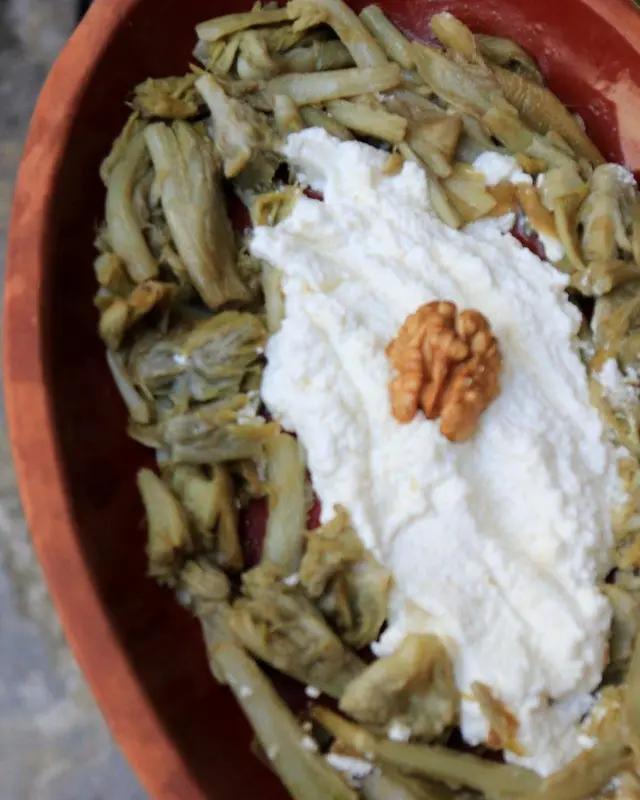
Diyarbakır Kenger Boranisi is a traditional cold dish from Diyarbakır, Türkiye, made with gundelia and served with garlic-flavored strained yogurt. As a Protected Geographical Indication under Industrial Property Law No. 6769, it was registered on August 20, 2021, by the Diyarbakır Chamber of Commerce and Industry, with its reputation tied directly to Diyarbakır province.
The dish is prepared by coating gundelia with flour, frying it with onions, and cooking it with water, then serving it cold with strained yogurt made from Karakaş breed sheep milk and flavored with garlic. The clarified butter is made from Angora goat milk. Gundelia, harvested in spring from high-altitude areas, is used fresh or preserved by freezing or brining. The use of locally sourced ingredients defines the dish’s regional character and nutritional value.
Ingredients (Serves ~6):
Preparation Steps:
The dish’s reputation is tied to Diyarbakır, with all production stages required to occur within the province to maintain its authenticity. The use of local ingredients and traditional methods reinforces this connection.
The Protected Geographical Indication logo and the designation “Diyarbakır Kenger Boranisi” must appear on the product or its packaging. If not feasible, they must be prominently displayed at the place of business.
Inspections are coordinated by the Diyarbakır Chamber of Commerce and Industry, conducted at least annually by a committee verifying ingredient suitability, adherence to the production method, and proper use of the Protected Geographical Indication. Additional inspections may occur as needed or upon complaints, with possible support from public or private experts.
Türk Patent ve Marka Kurumu. "Diyarbakır Kenger Boranisi." Coğrafi İşaretler Portalı. Accessed: October 26, 2025. https://ci.turkpatent.gov.tr/cografi-isaretler/detay/2473.
Türk Patent ve Marka Kurumu. "Diyarbakır Kenger Boranisi: Coğrafi İşaret Sicil Belgesi." Ankara: Türk Patent ve Marka Kurumu. Accessed: October 26, 2025. https://ci.turkpatent.gov.tr/Files/GeographicalSigns/a9d5dfed-e2cf-4dae-89d6-936426644c8d.pdf.

Type of Geographical Indication | Protected Geographical Indication | ||||||||
|---|---|---|---|---|---|---|---|---|---|
Registration Number | 857 | ||||||||
Registration Date | August 20, 2021 | ||||||||
Product / Product Group(s) | Dishes and Soups | ||||||||
Province(s) | Diyarbakır | ||||||||
Applicant/Registrant(s) | Diyarbakır Chamber of Commerce and Industry | ||||||||
No Discussion Added Yet
Start discussion for "Diyarbakır Kenger Boranisi" article
Definition and Distinctive Features
Preparation
Geographical Boundary and Production Conditions
Usage
Inspection Mechanism
This article was created with the support of artificial intelligence.