

Type of Geographical Indication | Protected Designation of Origin | ||||||||
|---|---|---|---|---|---|---|---|---|---|
Registration Number | 1556 | ||||||||
Registration Date | 07.03.2024 | ||||||||
Product / Product Group(s) | Processed and Unprocessed Fruits and Vegetables and Mushrooms | ||||||||
Province(s) | Balıkesir | ||||||||
Applicant / Registrant | Bandırma Chamber of Commerce | ||||||||
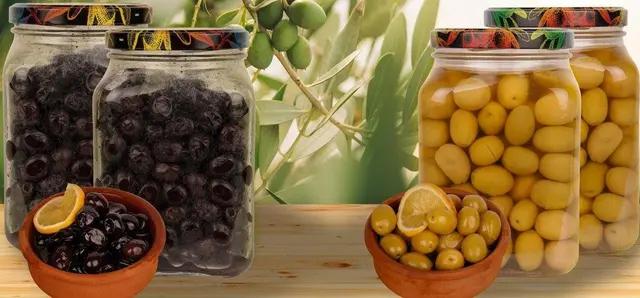
Edincik olive is the fruit of the Edincik Su olive variety belonging to Olea europaea L. This olive is cultivated in the Bandırma and Erdek districts of Balıkesir province, Türkiye. It was registered as a protected designation of origin on March 7, 2024, and placed under geographical indication protection. The registration was carried out by the Bandırma Chamber of Commerce.
The Edincik olive tree grows with medium vigor and has a broad, rounded crown. Branch color changes with age: young branches are green-gray, while older branches show beige-green tones. Leaves are long, narrow, and elliptic; the upper surface is glaucous green-gray, and the underside is slightly hairy gray-green. The midrib is prominently white, and the leaf blade is symmetrical relative to this vein.
Edincik olives have a high water content (50–74%) and low oil content (13–24%), making them suitable for table use. The flesh is soft, while the skin is thin and sensitive to physical impact. Fruit width ranges from 14–21 mm and length from 18–26 mm; 100 fruits weigh between 250–600 grams. These traits distinguish Edincik olives among olives classified as table (high-water) olives.
Flowering occurs between May 12 and June 12. The green ripening period is in October, and the black ripening period is between November 15 and December 15. Harvest is carried out by hand or mechanically, with careful handling due to the fruit’s delicate nature.
Edincik olives are rich in phenolic compounds, including oleuropein (3.5–5.0 mg/kg), tyrosol (4.0–5.0 mg/kg), and hydroxytyrosol (6.0–8.0 mg/kg). Volatile compounds include ethyl acetate (1.5–25.0%), 3-methyl-1-butanol (4.0–14.0%), and mequinol (7.0–18.0%), which define the aroma and flavor profile.
Soils within the geographical boundary are non-saline, clay-loam to loam-clay, with pH ranging from 5.45–7.87. Rocky terrain limits soil warming through sunlight reflection, helping retain moisture and enhance fruit size. Irrigation is usually not applied, but supplemental flood or drip irrigation may be used during droughts.
The production process of Edincik olives is a multi-stage system from establishing olive groves to packaging table olives. Each step preserves the product’s unique characteristics and ensures compliance with geographical indication criteria.
Inspections are coordinated by the Bandırma Chamber of Commerce and carried out by a three-member board consisting of representatives from the Agriculture and Forestry Directorate, Trade Exchange, and Chamber of Agriculture. Criteria include production area, pomological characteristics, production method, chemical analyses, and correct use of the protected designation of origin.
Türk Patent ve Marka Kurumu. "Edincik Zeytini." Coğrafi İşaretler Portalı. Accessed October 25, 2025. https://ci.turkpatent.gov.tr/cografi-isaretler/detay/6004
Türk Patent ve Marka Kurumu. “Edincik Zeytini” Coğrafi İşaret Sicil Belgesi. Accessed October 25, 2025. https://ci.turkpatent.gov.tr/Files/GeographicalSigns/10c5f4cb-95e5-4aa2-a888-9e9a0a23901f.pdf

Type of Geographical Indication | Protected Designation of Origin | ||||||||
|---|---|---|---|---|---|---|---|---|---|
Registration Number | 1556 | ||||||||
Registration Date | 07.03.2024 | ||||||||
Product / Product Group(s) | Processed and Unprocessed Fruits and Vegetables and Mushrooms | ||||||||
Province(s) | Balıkesir | ||||||||
Applicant / Registrant | Bandırma Chamber of Commerce | ||||||||
Botanical Characteristics
Fruit Characteristics
Ripening and Harvest Period
Chemical Composition
Growing Conditions
Production Method
Table Olive Production
Inspection and Protection
This article was created with the support of artificial intelligence.