

Type of Geographical Indication | Protected Geographical Indication | ||||||||
|---|---|---|---|---|---|---|---|---|---|
Registration Number | 758 | ||||||||
Registration Date | May 18, 2021 | ||||||||
Product / Product Group(s) | Dishes and Soups | ||||||||
Province(s) | Gaziantep | ||||||||
Applicant/Registrant(s) | Gaziantep Development Foundation | ||||||||
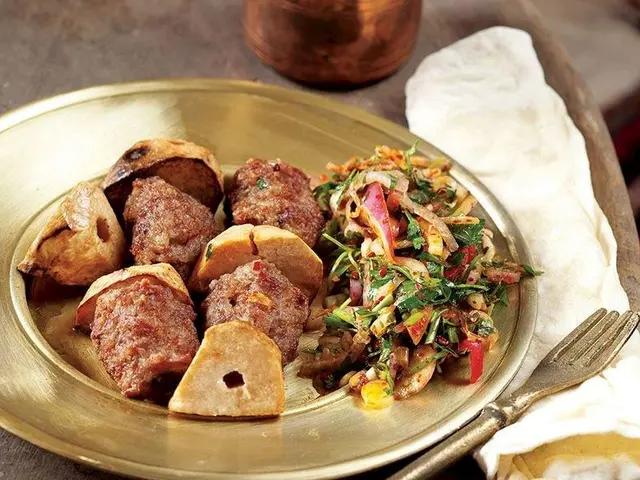
Gaziantep/Antep keme kebab is a traditional kebab variety unique to Gaziantep province in Turkey’s Southeastern Anatolia Region, registered with a geographical indication sign of origin. Protected under the Industrial Property Law No. 6769, it was registered on May 18, 2021, as a sign of origin, reflecting the seasonal and cultural richness of Gaziantep’s cuisine.
Keme kebab is prepared using keme mushrooms, which grow naturally in spring, combined with medium-fat or fatty sheep meat (either minced or cubed). The skewering method involves alternating mushrooms and meat, with the skewer starting and ending with a keme mushroom. Cooking is done on a charcoal grill. The kebab can be served on a plate, as a wrap, or with Gaziantep’s geographically indicated tırnaklı pide (flatbread).
The keme mushroom belongs to the Terfezia boudieri Chatin Cistaceae species, growing naturally 5–10 cm below the surface in terra rossa soils, typically in oak environments and grazing areas, from March to June. Locally known as yeryaran, domalan, or tumalan, its seasonal nature limits the production of Gaziantep/Antep keme kebab to spring months.
The preparation of keme kebab requires skill in both ingredient selection and execution. Keme mushrooms are cleaned, peeled, and cut into walnut-sized pieces. Due to their firm yet delicate structure, they are carefully pierced using local piercing tools or thin skewers for skewering. Sheep meat, either minced or cubed, is kneaded, portioned to match the mushroom size, and skewered alternately with the mushrooms. Cooking on a charcoal grill involves rotating the skewers in the same direction. Optionally, black pepper can be sprinkled before serving, and the kebab is typically accompanied by a green onion and parsley piyaz (salad) and ayran (yogurt drink).
The production of Gaziantep/Antep keme kebab relies on traditional knowledge and skills tied to Gaziantep, establishing a strong reputation with the region. Therefore, all production stages must occur within Gaziantep province.
The product is inspected at least once a year between February and July, coordinated by the Gaziantep Development Foundation. The inspection committee includes representatives from the Foundation, Gaziantep Provincial Directorate of Agriculture and Forestry, Gaziantep Metropolitan Municipality, Gaziantep Union of Chambers of Artisans and Craftsmen, and Gaziantep University Gastronomy Department. Inspection criteria include ingredient suitability, adherence to the production method, presentation, and correct use of the geographical indication emblem.
Türk Patent ve Marka Kurumu. "Gaziantep/Antep Keme Kebabı." Coğrafi İşaretler Portalı. Accessed October 25, 2025. https://ci.turkpatent.gov.tr/cografi-isaretler/detay/2234.
Türk Patent ve Marka Kurumu. Gaziantep/Antep Keme Kebabı Coğrafi İşaret Sicil Belgesi (No: 758). Accessed October 25, 2025. https://ci.turkpatent.gov.tr/Files/GeographicalSigns/993a31a8-8143-4ac8-9f25-a38bc7c4668a.pdf.

Type of Geographical Indication | Protected Geographical Indication | ||||||||
|---|---|---|---|---|---|---|---|---|---|
Registration Number | 758 | ||||||||
Registration Date | May 18, 2021 | ||||||||
Product / Product Group(s) | Dishes and Soups | ||||||||
Province(s) | Gaziantep | ||||||||
Applicant/Registrant(s) | Gaziantep Development Foundation | ||||||||
No Discussion Added Yet
Start discussion for "Gaziantep/Antep Keme Kebab" article
Product Characteristics
Preparation
Geographical Boundary and Production Connection
Inspection Process
This article was created with the support of artificial intelligence.