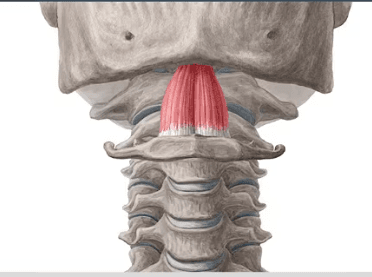


Origin(s) | Mandible (inferior mental spine) | ||||||||
|---|---|---|---|---|---|---|---|---|---|
Hold | Hyoid bone (anterior surface of the body) | ||||||||
Innervation | C1 + CN XII (Hypoglossal nerve) | ||||||||
The Geniohyoid Muscle is a long, narrow muscle belonging to the suprahyoid muscle group. It lies between the chin (mental region) and the hyoid bone and plays an important role in the movement of the tongue base.
The Geniohyoid Muscle is a slender, narrow muscle located within the suprahyoid muscle group of the neck. It is generally positioned superior and medial to the mylohyoid muscle and is in close contact with the contralateral geniohyoid muscle. This dual structure allows the muscle to insert symmetrically in the midline, and sometimes the bilateral muscles may merge to form a single muscle mass. The muscle originates from the inferior mental spine, located in the postero-inferior region of the mandibular symphysis. From here, the muscle fibers extend superoposteriorly to insert onto the anterior surface of the body of the hyoid bone. When the mandible is fixed, it pulls the hyoid bone upward; when the hyoid is fixed, it pulls the mandible downward. This orientation is compatible with speech and swallowing.
The Geniohyoid Muscle originates embryologically from the occipital somite. Because its neural innervation originates from the spinal C1 segment, it shares structural features with the muscles of the cervical region. Although it is located among the suprahyoid muscles, its neural origin is a key distinguishing feature. From an evolutionary perspective, the orientation of the muscle can vary among species. For example, in Neanderthals, muscle fibers follow a more horizontal course, while in modern humans, they have an oblique orientation.
The Geniohyoid Muscle receives motor nerve stimulation from the fibers of the first cervical spinal nerve (C1). These fibers reach the muscle via the hypoglossal nerve (cranial nerve XII). This structure of innervation creates a functional connection between both the cranial and spinal nervous systems. Arterial blood supply to the muscle is provided by branches of the lingual artery, which is a branch of the external carotid artery.
The Geniohyoid Muscle is a narrow, flat, and short muscle located within the suprahyoid muscle group, extending between the medial surface of the hyoid bone and the mental spine of the mandible. Embryologically, it originates from the second branchial arch and is innervated by the C1 segment of the cervical plexus, which courses via the hypoglossal nerve. When the muscle contracts, it moves the hyoid bone anteriorly and superiorly, facilitating the posterior displacement of the tongue during swallowing, elevating the floor of the mouth, increasing the efficiency of the oral phase, and facilitating bolus delivery to the pharynx. It also contributes to the expansion of the upper airway, facilitating inspiratory air passage. Through these functions, the geniohyoid muscle plays a role in fundamental physiological processes such as swallowing, speech, and breathing. Clinically, weakness or dysfunction of this muscle can be associated with conditions such as dysphagia, hypopharyngeal incoordination, and upper airway obstruction. In the evaluation of dysphagia, the function of the geniohyoid muscle can be examined using methods such as ultrasonography, magnetic resonance imaging (MRI), or electromyography. Surgically, the anatomy and variations of the geniohyoid muscle should be considered in procedures targeting the floor of the mouth, submental region, or anterior neck. Variations such as the muscle's double layering, different insertion points, or anatomic associations with adjacent structures are important for differential diagnosis in both surgical planning and imaging evaluations. Therefore, the geniohyoid muscle is a structure that should be evaluated in various clinical and surgical applications due to both its anatomical location and functional contributions.
Khan, Zainab, Talat Naqash, Shahid Iqbal, and Naveen Shukla. “Geniohyoid Muscle: Anatomy and Clinical Implications in Dentistry.” ResearchGate , July 2023. Accessed July 26, 2025.
https://www.researchgate.net/publication/372329069 .
Khan, Zainab, Talat Naqash, Shahid Iqbal and Naveen Shukla. “Geniohyoid Muscle: Anatomy and Clinical Implications in Dentistry.” Seoul National University Research Portal . Access date: 26 July 2025.
Shukla, Naveen, Shahid Iqbal, Talat Naqash and Zainab Khan. “Geniohyoid Muscle: Anatomy and Clinical Implications in Dentistry.” International Journal of Morphology 41, no. 3 (2023): 851–855. Access date: 26 July 2025.
https://www.scielo.cl/pdf/ijmorphol/v41n3/0717-9502-ijmorphol-41-03-851.pdf .

Origin(s) | Mandible (inferior mental spine) | ||||||||
|---|---|---|---|---|---|---|---|---|---|
Hold | Hyoid bone (anterior surface of the body) | ||||||||
Innervation | C1 + CN XII (Hypoglossal nerve) | ||||||||
Anatomy
Morphology and Connection Points
Embryological Origin and Classification
Nerve Innervation and Vascular Supply
Function and Clinical Relationships