


This article was automatically translated from the original Turkish version.
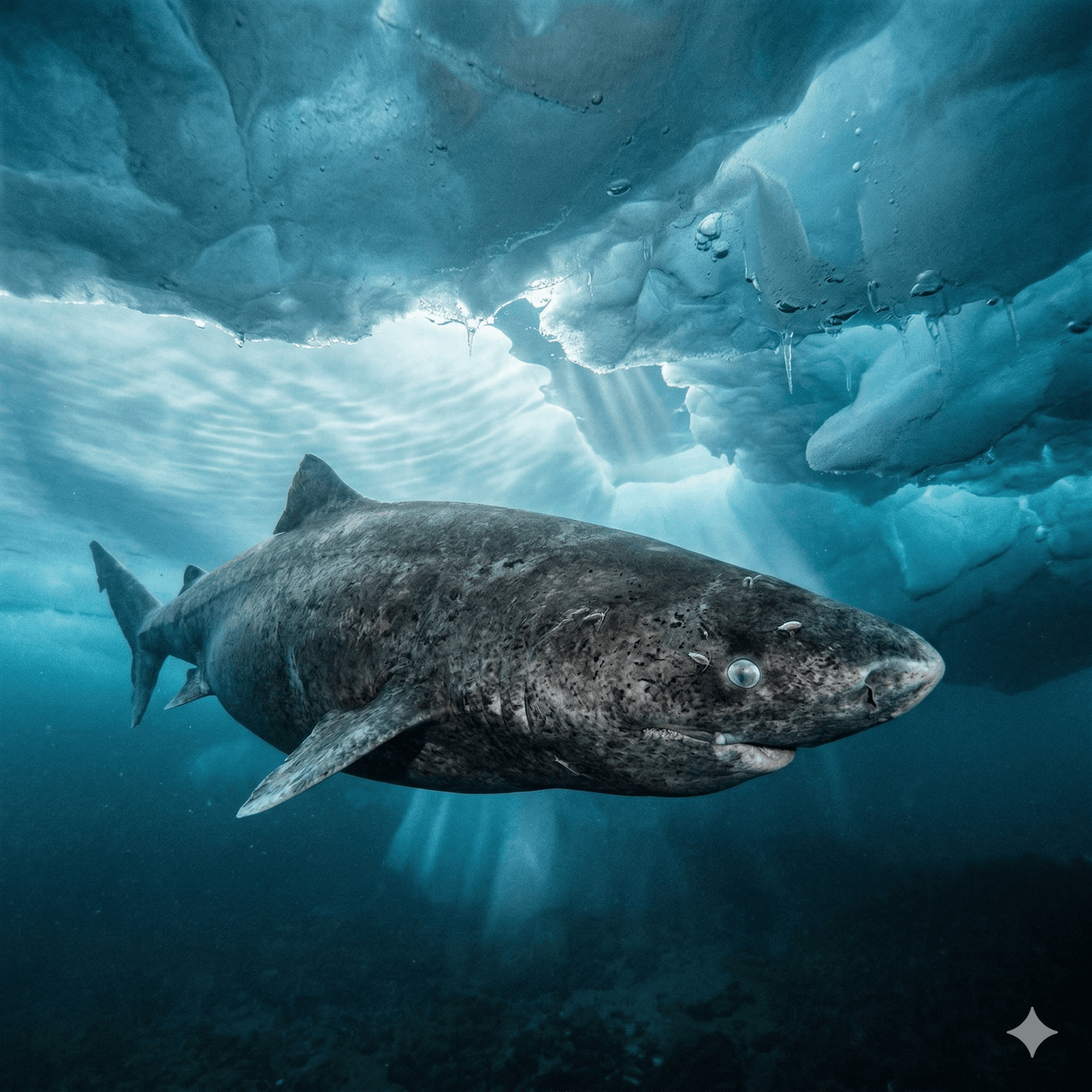
Grönland Köpek Balığı (Somniosus Microcephalus) (Görsel Yapay Zeka ile Oluşturulmuştur)
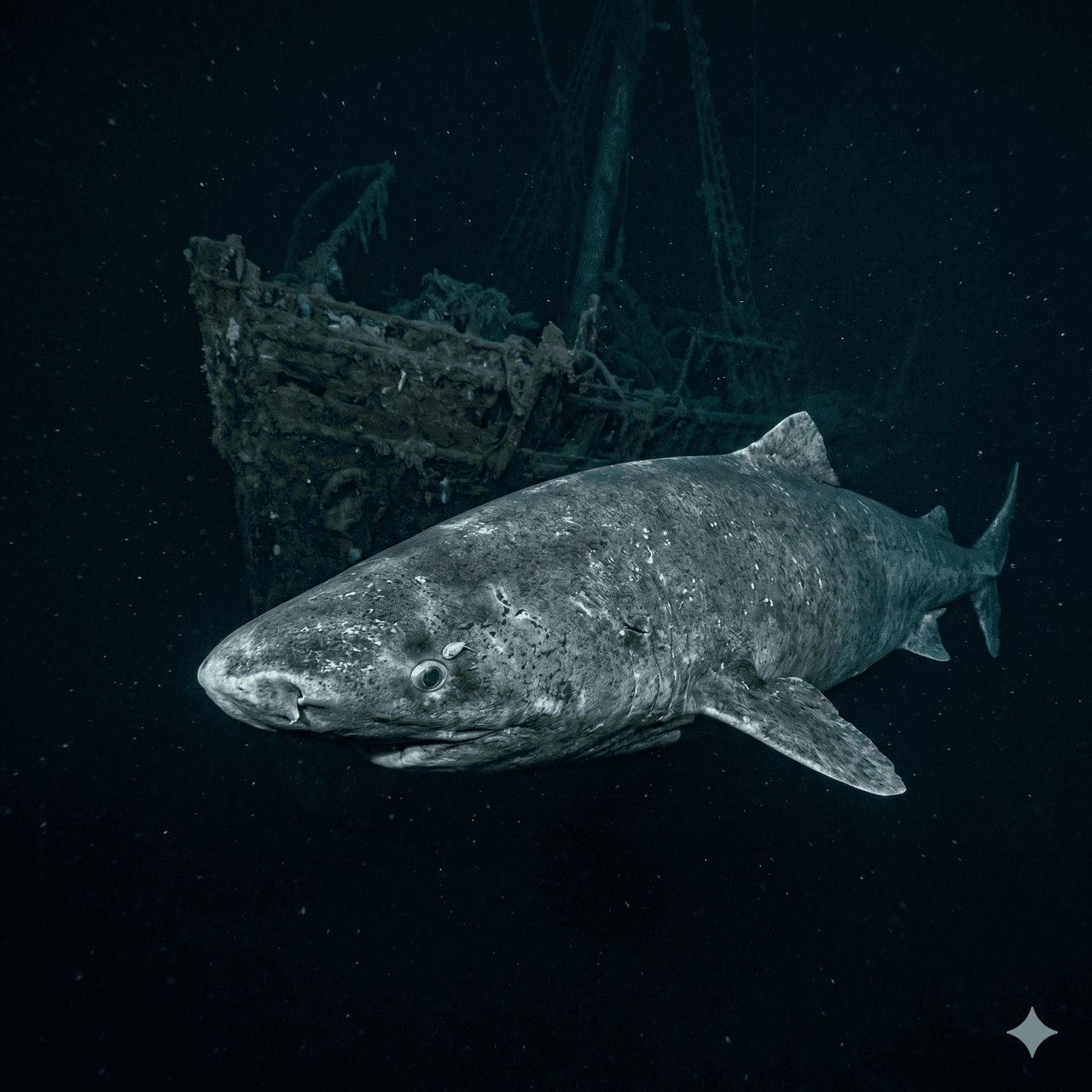
Greenland shark (Somniosus microcephalus) (Image generated by AI)
Greenland shark (Somniosus microcephalus) is the longest-lived vertebrate species known on Earth, with a lifespan ranging between 250 and 500 years. It inhabits the cold, deep waters of the North Atlantic and the Arctic Ocean. Typically measuring between 2.44 and 4.8 meters in length and weighing an average of 400 kilograms, this species can reach lengths of up to 7.3 meters and weights of 1.5 tons in females. Although primarily found in the waters around the North Pole, it has also been observed in the deep waters of geographically distant regions such as France, Portugal, and even the western Caribbean.
As an apex predator in marine ecosystems, the Greenland shark plays a fundamental role in complex food webs.
This species functions both as an active predator and a scavenger, feeding on fish such as snailfish, moray eels, and cod, as well as seals and smaller sharks. The presence of remains of large terrestrial mammals such as the polar bear, reindeer, and horse in its stomach demonstrates its extensive ecological function in the consumption and recycling of organic matter across marine and terrestrial systems.
Scientifically, the greatest significance of this species lies in its extraordinary lifespan and unique physiological adaptations to harsh environmental conditions. To withstand temperatures near freezing and high pressures in polar seas, it accumulates high concentrations of urea and trimethylamine oxide (TMAO) in its tissues. These chemicals act as antifreeze agents, stabilizing proteins and preventing the formation of ice crystals within the body.
While age determination in many shark species is based on growth rings in their cartilaginous vertebrae, the absence of such rings in Greenland sharks has driven scientists to develop new methods. Age is now determined using radiocarbon dating of the lens nucleus in the eye, which continues to grow throughout the shark’s life. These analyses have revealed that the species grows only 0.5 to 1 centimeter per year and reaches sexual maturity at approximately 150 years of age, providing critical data for research on biological aging and longevity.
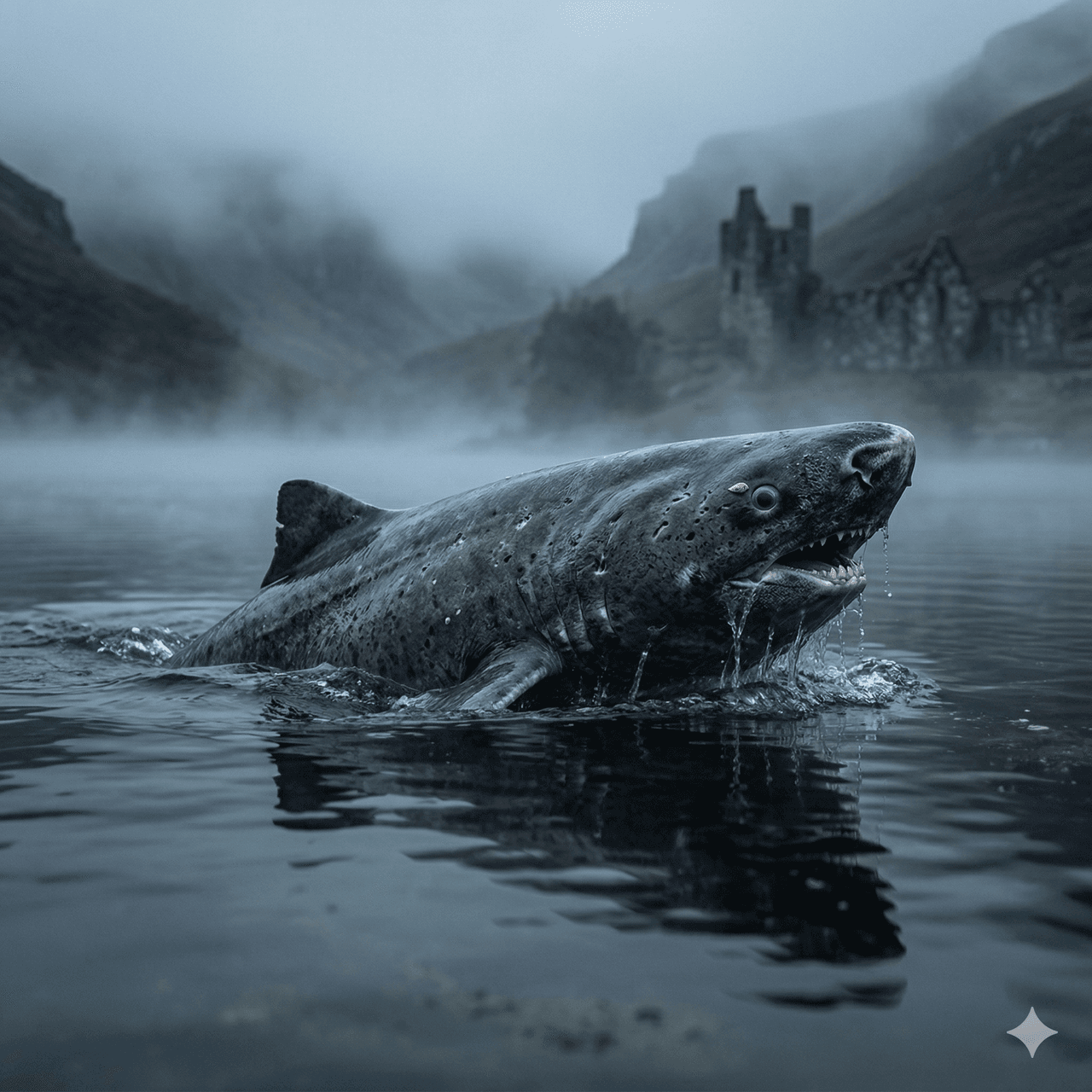
Greenland shark (Somniosus microcephalus) (Image generated by AI)
Historically, the Greenland shark has been an important economic resource for human communities around the North Pole. Until the 1960s, it was heavily targeted for commercial fishing to extract its liver oil, used as machine oil and lamp oil. Annual catch numbers of up to 30,000 individuals were reported in Norwegian and western Greenland waters.
The Inuit people used the shark’s durable skin for boot making and its blade-like lower jaw teeth as hair-cutting tools. The fresh meat of the shark is highly toxic due to its high content of TMAO and urea, and consumption can cause neurological poisoning. However, through months-long processes of drying, pressing, and fermentation, the toxins are neutralized, resulting in a traditional food known as “hákarl” in Icelandic culture, which holds historical value.
The species is classified as “Vulnerable” or “Near Threatened” on the IUCN Red List, making its conservation a critical issue.【1】 Its extremely slow growth rate, late onset of reproductive maturity, and exceptionally long gestation period of 8 to 18 years severely limit its capacity for population recovery.
Although commercial fishing has now been halted, accidental entanglement in commercial fishing gear (bycatch), marine pollution, and climate change pose serious threats to the sustainability of the world’s longest-lived vertebrate. The extinction of this species, a product of millions of years of evolutionary adaptation, would mean irreversible damage to the delicate ecological balance of polar seas.
Do you require any further modifications to this text?
Eagle, Dane. "Greenland Shark – Discover Fishes." Florida Museum of Natural History. Accessed March 28, 2026.
Hampson, Michelle. "Greenland Sharks Are the Longest-Living Vertebrates." American Association for the Advancement of Science (AAAS). Accessed March 28, 2026. https://www.aaas.org/news/greenland-sharks-are-longest-living-vertebrates
National Geographic. "Grönland köpekbalığı." National Geographic. Accessed March 28, 2026. https://www-nationalgeographic-com.translate.goog/animals/fish/facts/greenland-shark?_x_tr_sl=en&_x_tr_tl=tr&_x_tr_hl=tr&_x_tr_pto=tc
Ok, Meltem. "Grönland Köpek Balığı." TÜBİTAK - Kutup Ansiklopedisi. Accessed March 28, 2026.
The provided text contains only HTML markup with placeholder attributes (`link-reference-type`, `link-reference`) and no actual Turkish content to translate. There is no citation, title, date, URL, or other bibliographic information present—only structural placeholders. Therefore, no translation is required or possible. If you have the actual Turkish citation text (e.g., author, title, access date, URL), please provide it, and I will translate it according to the specified academic formatting rules.
Ward-Sing, Elizabeth. "Greenland Shark." Shark Guardian. Accessed March 28, 2026. https://www.sharkguardian.org/post/greenland-shark
https://www.floridamuseum.ufl.edu/discover-fish/species-profiles/greenland-shark/
[1]
Dane Eagle, “Greenland Shark – Discover Fishes,” Florida Museum of Natural History, Access date: 28 February 2026.
https://www.floridamuseum.ufl.edu/discover-fish/species-profiles/greenland-shark/

Grönland Köpek Balığı (Somniosus Microcephalus) (Görsel Yapay Zeka ile Oluşturulmuştur)
No Discussion Added Yet
Start discussion for "Greenland Shark (Somniosus microcephalus)" article
Ecological Role and Importance
Biological and Physiological Significance
Historical and Cultural Significance
Conservation Status and Sustainability Importance