

+2 More

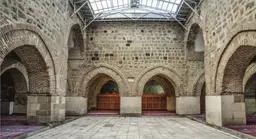
Harput Great Mosque
Date of Establishment | 1156-1157 | ||||||||
|---|---|---|---|---|---|---|---|---|---|
Made by | Artuqid ruler Fahrettin Karaarslan | ||||||||
Location | Harput Türkiye Elazığ | ||||||||
Plan Type | Rectangular mosque plan | ||||||||
Material(s) | brick (minarekemertonoz) Rubble stone (walls) | ||||||||
Minaret Feature | Oblique-cylindrical body with brick mosaic decorations | ||||||||
Architectural Impact | Artuqid Iranian Seljuk influence | ||||||||
Harput Great Mosque is located on Nizamettin Street in the Harput residential area of Elazığ province. It is also referred to as Mosque Kebir, Cami-i Muazzam, Cami-i Azam, and Mosque with Curved Minarets in the sources. The building was built on flat ground in the northwest direction of the Harput Castle. Its location is important in terms of the settlement layout and architectural preferences of the period.
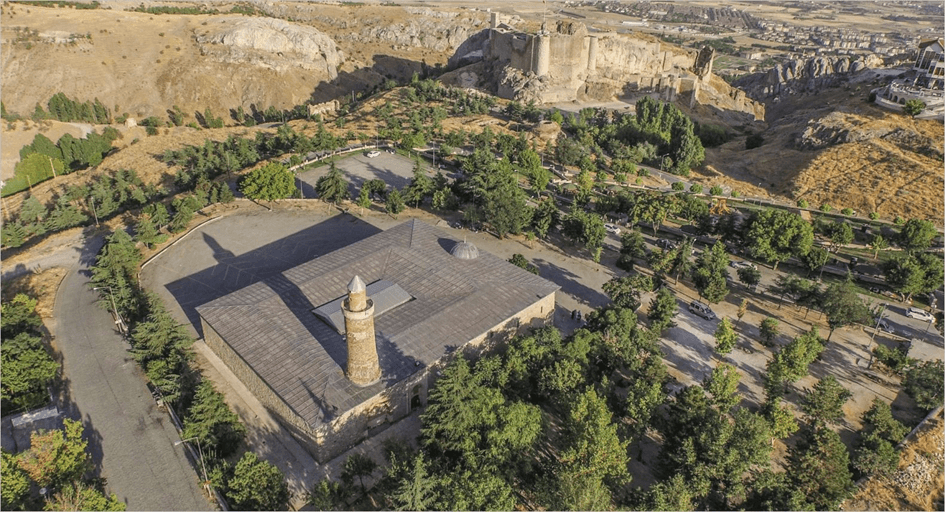
Harput Great Mosque (Turkey Culture Portal)
Although the exact date of construction is unknown, according to the eleven-line Arabic tax inscription on the north courtyard wing, the mosque was built in 1156-1157 (H.551) by the ruler of Harput, Fahreddin Karaarslan bin Davud bin Sökmen, during the Artuqid Principality. The inscription lists the titles and adjectives of the owner of the building in detail and reveals that the mosque was considered a building reflecting the political power of the period. The mosque has no direct construction inscription.
Harput Great Mosque has a rectangular plan extending in the north-south direction. Its walls are built of rubble stone, while architectural elements such as arches, domes, porticoes, and minarets are constructed of brick. The building reflects the traditional mosque arrangement consisting of a harim, the last congregation place, an open courtyard, and semi-open sections with porticoes. There is a mihrab projection on the south façade and an entrance door near the east corner. The mihrab has a semicircular design framed by a clam-shaped junction and geometric patterned moldings.
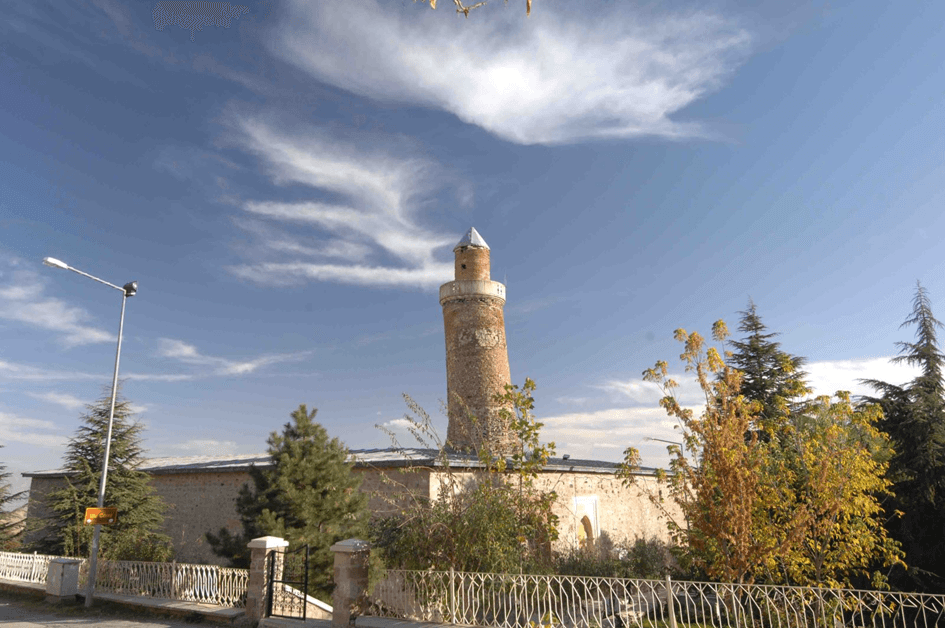
On the west façade of the mosque, one can see the base of the minaret made of cut stone. The transition between the base and the minaret is provided by a dodecagonal prismal shoe. The minaret has a cylindrical body, geometric patterns, and mosaic applications formed by different arrangements of bricks that are observed on the body surface. These decorations have been damaged over time. The minaret's nerefe, honeycomb, and cone sections were added in later periods. There are various explanations about the minaret, which attracts attention with its inclined stance; it is not clear whether this is a preference during the construction process or a result of natural effects.
The prayer area consists of two courts covered with barrel vaults extending in the east-west direction and a maxûre dome in front of the mihrab. The courtyard extending in the north-south direction is surrounded by semi-open porticoes on four sides. This arrangement supports both the worship and circulation functions of the space. Behind the eastern porticoes, a continuous gallery covered with a vault extends in the same direction, indicating other building units used together with the mosque.
Harput Great Mosque (Turkey Culture Portal)
The original pulpit of the mosque is preserved today in Harput Kurşunlu Mosque. The pulpit is made of ebony wood with kündekâri technique. The inscriptions on the pulpit document that the work was commissioned by Emir Hüsamüddin Hizerb and that craftsmen named Abu Said bin İsmail el-Kazvini and Sa'd Ali Abü'l-Bahâ were involved in its construction. Another inscription on the pulpit states that there was a madrasah near the mosque. This detail shows that the mosque was connected not only with worship but also with an educational function.
The Harput Great Mosque has undergone various repairs in different periods. The documented renovations include interventions in 1899, 1905, 1964-1967, and 1996. During these periods, the building's structural system, architectural elements, and façade elements were renewed or repaired to various extents.
One of the features of the Great Mosque of Harput is its leaning minaret. According to some sources, the inclination of the minaret is the result of a deliberate design, while according to others, it was caused by natural disasters such as earthquakes. There are various oral stories about the minaret of the mosque and the old mulberry tree in its courtyard. In these narratives, it is reported that on certain religious days, the minaret and the tree were observed to prostrate themselves. Such narratives show the place of the building in social memory.
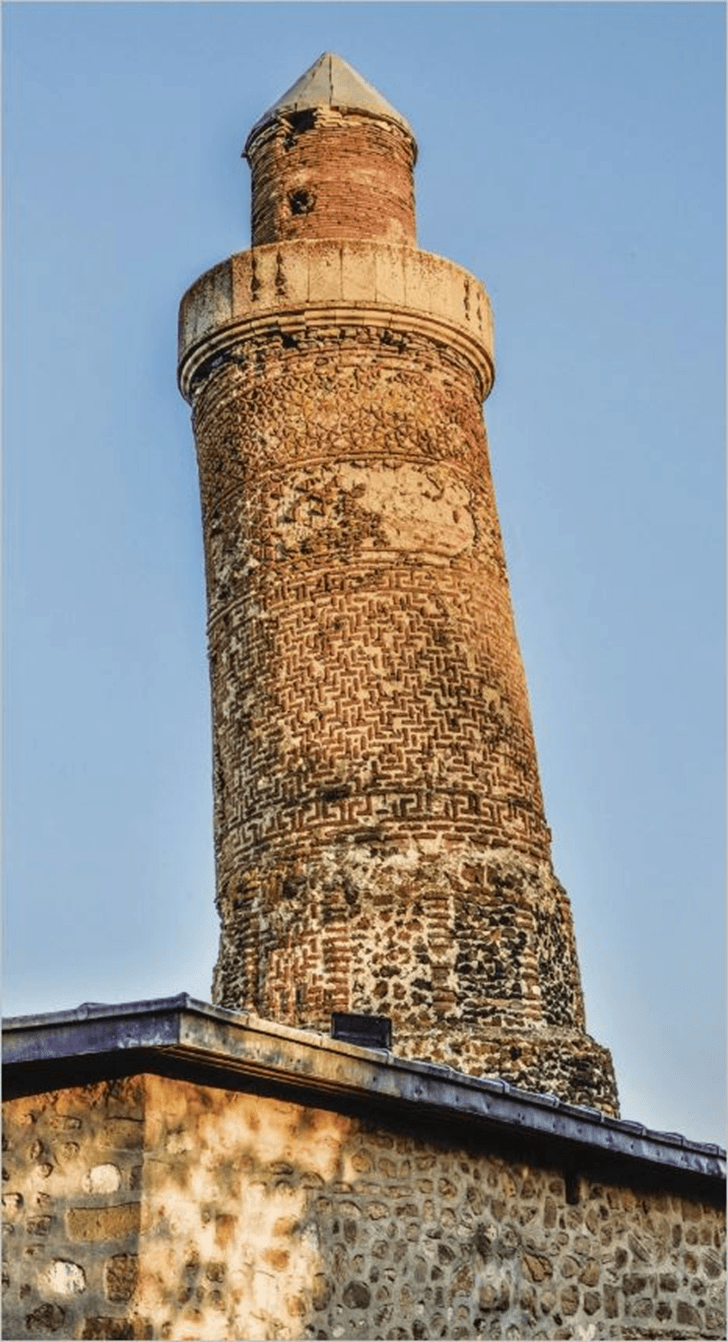
Harput Great Mosque Minaret (Turkey Culture Portal)
Harput Great Mosque is considered an example of stone and brick architecture dating back to the Artuqid Principality period. The building's plan, use of materials, structural elements, and ornamentation forms allow direct observations to be made about the construction techniques and architectural understanding of the period. The woodwork on the minbar, the brick arrangements on the minaret, and the details of the mihrab reveal that this building constitutes an example that can be analyzed in terms of building technology and craftsmanship within the historical context.
Republic of Turkey Ministry of Culture and Tourism. "Ulu Cami." Culture Portal. Accessed May 12, 2025. https://www.kulturportali.gov.tr/turkiye/elazig/gezilecekyer/ulu-cami?ysclid=maksqmkhvn286079763.
Seljuk Legacy "Harput Great Mosque." Seljuk Heritage. Accessed May 12, 2025. https://www.selcuklumirasi.com/architecture-detail/harput-ulu-camii
T.C. Elazığ Governorship Provincial Directorate of Culture and Tourism. "Harput." Elazig.ktb.gov.tr. Accessed May 12, 2025. https://elazig.ktb.gov.tr/TR-187349/harput.html
T.C. Elazığ Municipality. "Harput." Elazığ Municipality. Accessed May 12, 2025. https://www.elazig.bel.tr/kent-rehberi/harput/237/.

Harput Great Mosque
Date of Establishment | 1156-1157 | ||||||||
|---|---|---|---|---|---|---|---|---|---|
Made by | Artuqid ruler Fahrettin Karaarslan | ||||||||
Location | Harput Türkiye Elazığ | ||||||||
Plan Type | Rectangular mosque plan | ||||||||
Material(s) | brick (minarekemertonoz) Rubble stone (walls) | ||||||||
Minaret Feature | Oblique-cylindrical body with brick mosaic decorations | ||||||||
Architectural Impact | Artuqid Iranian Seljuk influence | ||||||||
No Discussion Added Yet
Start discussion for "Harput Great Mosque" article
Construction Process and Inscription
Architectural Features
Minbar and Woodwork
Repairs and Interventions
Oral Transmissions
This article was created with the support of artificial intelligence.


