

+1 More

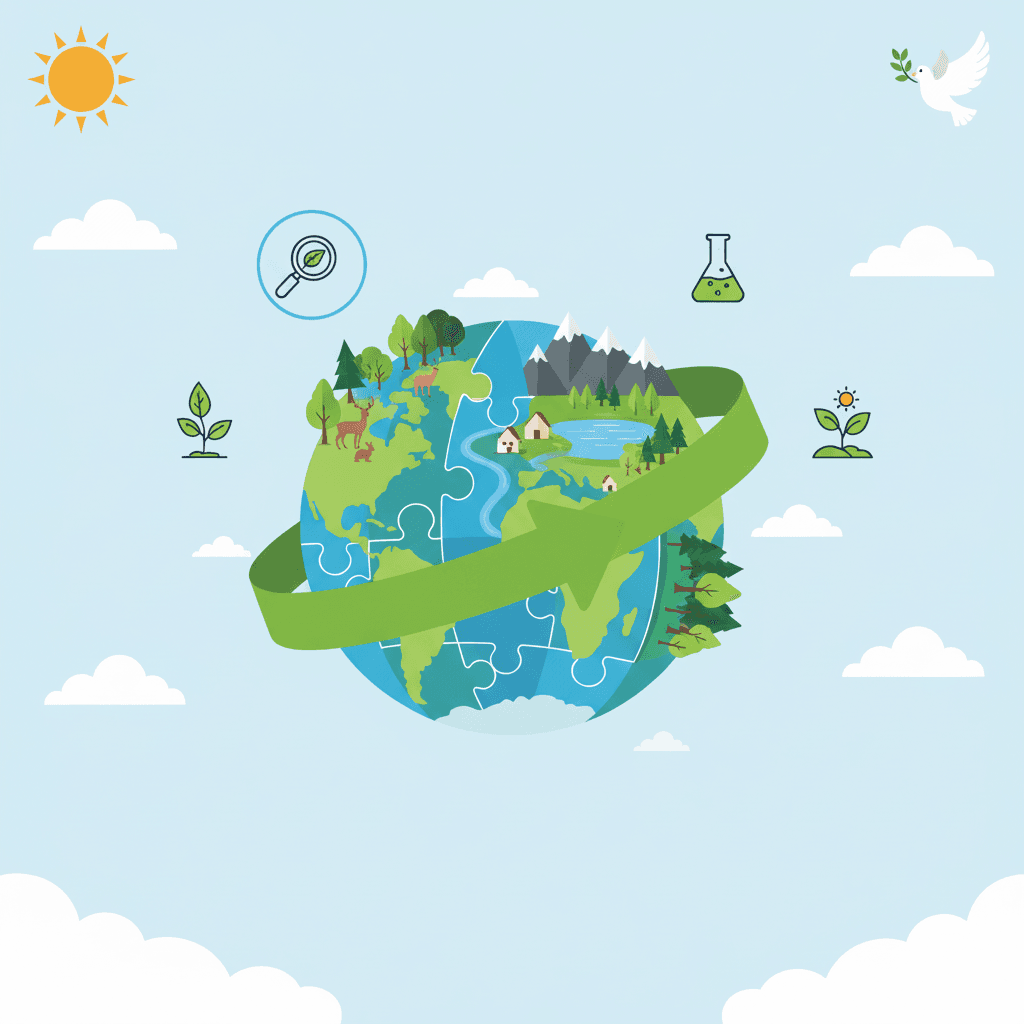
International Day for Biosphere Reserves (Generated by Artificial Intelligence.)
Date(s) | 3 November | ||||||||
|---|---|---|---|---|---|---|---|---|---|
First Established | 2021 | ||||||||
Founding Organization | UNESCO | ||||||||
Purpose(s) | To support nature-compatible economic activities of local communities To raise awareness of global environmental crises To draw inspiration from conservation and management models implemented in biosphere reserves To promote sustainable development To maintain balanced relationships between humans and nature | ||||||||
First Biosphere Reserve in Türkiye | Camili Biosphere Reserve | ||||||||
International Biosphere Reserves Day is an international observance held annually on November 3, promoting the maintenance of balanced relationships between humans and nature, sustainable development, and ecosystem conservation. The day highlights the significance of biosphere reserves designated under UNESCO’s Man and the Biosphere (MAB) Programme. Biosphere reserves are defined as terrestrial or aquatic ecosystems where ecological, economic, cultural, and social relationships between humans and nature are maintained in a balanced manner.
Biosphere reserves demonstrate that harmonious living with nature is feasible and provide concrete examples for human communities regarding sustainable development, ecosystem conservation, and natural resource management. These areas serve both the preservation of biodiversity and the economic and socio-cultural development of local communities.
The primary purpose of International Biosphere Reserves Day is to promote a development paradigm respectful of nature and living beings worldwide, inspired by sustainability and conservation models implemented within biosphere reserves. The day aims to establish balanced and sustainable ecological, economic, cultural, and social relationships between humans and nature. By using the practices observed in biosphere reserves as models for other areas, the day encourages sustainable development. Additionally, it seeks to raise awareness of global environmental crises—such as climate change, biodiversity loss, pollution, droughts, pandemics, and disasters—while supporting local communities in developing nature-compatible economic activities, thereby fostering a healthy balance between ecosystem conservation and socio-economic development.
Biosphere reserves are areas where both the physical and living components of ecosystems are holistically protected. They are of great importance for both biodiversity and the preservation of socio-economic and cultural values. Key aspects of their significance include:
The first biosphere reserve was designated in 1976. On the occasion of the 50th anniversary of UNESCO’s Man and the Biosphere (MAB) Programme, the 41st General Conference in 2021 declared November 3 as International Biosphere Reserves Day.
The MAB Programme forms the foundation of biosphere reserves and aims to achieve sustainable development goals by fostering responsible, collective action toward a more prosperous and nature-compatible world. The proclamation of this day globally highlights the universal importance of biosphere reserves and the models they provide for humanity.
Worldwide, there are 748 biosphere reserves across 134 countries, covering a total area of 7,442,000 km², with approximately 275 million people living in their surrounding regions. The World Network of Biosphere Reserves holds universal significance in terms of ecosystem diversity and biological richness.【1】
Türkiye’s first and only biosphere reserve, the Camili Biosphere Reserve, is located in Borçka district of Artvin Province and was designated on June 29, 2005, by the UNESCO MAB National Coordination Council. The area spans 25,298 hectares, with the Efeler and Gorgit regions in the core zone designated as nature protection areas. The Camili biosphere reserve features a wide range of natural ecosystems, from green valleys to high alpine meadows. The area is home to the pure Caucasian honeybee subspecies, and local producers are entitled to obtain organic product certification. Additionally, the region possesses unique socio-cultural values, such as the polyphonic elders’ choir. Following its designation as a biosphere reserve, ecotourism, nature guiding, natural product, and honey production activities increased, strengthening the local economy in harmony with nature. The sustainable development and conservation practices implemented in Camili were presented as a best practice example from Türkiye at the Rio+20 Conference in Brazil in 2012.

Camili Biosphere Reserve (Anadolu Ajansı)
Anadolu Ajansı. "Türkiye'nin Tek Biyosfer Rezerv Alanı Camili Havzası, Kültürel ve Ekolojik Gezilerin Rotasında." Anadolu Ajansı. Accessed October 20, 2025. https://www.aa.com.tr/tr/kultur/turkiyenin-tek-biyosfer-rezerv-alani-camili-havzasi-kulturel-ekolojik-gezilerin-rotasinda/3288296
Tarım ve Orman Bakanlığı. “3 Kasım Uluslararası Biyosfer Rezervler Günü.” Accessed October 20, 2025. https://www.tarimorman.gov.tr/DKMP/Sayfalar/GormeEngellilerDetay.aspx?OgeId=324&Liste=Haber
UNESCO. “International Day for Biosphere Reserves.” UNESCO. Accessed October 20, 2025. https://www.unesco.org/en/days/biosphere-reserves
UNESCO Türkiye Milli Komisyonu. “3 Kasım Uluslararası Biyosfer Rezervleri Günü.” UNESCO Türkiye Milli Komisyonu. Accessed October 20, 2025. https://www.unesco.org.tr/Home/AnnouncementDetail/6037
[1]
Tarım ve Orman Bakanlığı. “3 Kasım Uluslararası Biyosfer Rezervler Günü.” Accessed October 20, 2025. https://www.tarimorman.gov.tr/DKMP/Sayfalar/GormeEngellilerDetay.aspx?OgeId=324&Liste=Haber

International Day for Biosphere Reserves (Generated by Artificial Intelligence.)
Date(s) | 3 November | ||||||||
|---|---|---|---|---|---|---|---|---|---|
First Established | 2021 | ||||||||
Founding Organization | UNESCO | ||||||||
Purpose(s) | To support nature-compatible economic activities of local communities To raise awareness of global environmental crises To draw inspiration from conservation and management models implemented in biosphere reserves To promote sustainable development To maintain balanced relationships between humans and nature | ||||||||
First Biosphere Reserve in Türkiye | Camili Biosphere Reserve | ||||||||
No Discussion Added Yet
Start discussion for "International Day for Biosphere Reserves" article
Purpose
Significance
History
Global Data and the Example of Türkiye
This article was created with the support of artificial intelligence.