+2 More

Date(s) | July 26 | ||||||||
|---|---|---|---|---|---|---|---|---|---|
Date of Declaration | November 6, 2015 | ||||||||
Declaring Authority | UNESCO General Conference (document 38 C/66) | ||||||||
Proposing Country | Ecuador | ||||||||
Supporting Countries | Latin American and Caribbean Group (GRULAC) | ||||||||
International Day for the Conservation of the Mangrove Ecosystem is an international awareness day observed annually on July 26. The day is designated to highlight the ecological, economic and social importance of mangrove ecosystems and to raise awareness about their protection and sustainable management. The observance was officially established in 2015 through a decision by the UNESCO General Conference.
Mangrove ecosystems consist of salt-tolerant plant species that develop in transitional zones between land and sea, under the influence of tides. These ecosystems play a crucial role in preventing coastal erosion, mitigating the impacts of storms and waves, providing habitats for numerous aquatic and terrestrial species and storing carbon to reduce the effects of climate change. Through the celebration of this day, UNESCO emphasizes that the conservation of mangroves is of great importance for sustainable development and community security.

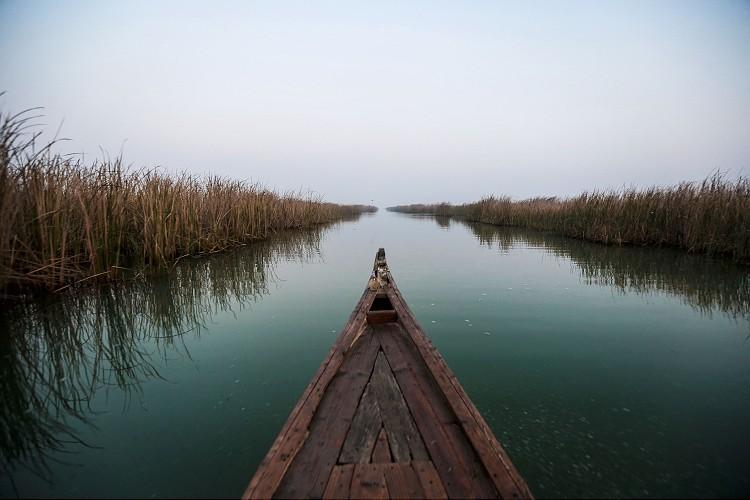
Mangrove Ecosystem (Anadolu Ajansı)
The proposal to declare the International Day for the Conservation of the Mangrove Ecosystem was submitted to UNESCO by Ecuador and supported by the Latin American and Caribbean Group (GRULAC). The proposal was considered during the 197th session of the UNESCO Executive Board under decision 197 EX/Decision 41 and subsequently placed on the agenda of the 38th session of the UNESCO General Conference.
The UNESCO General Conference, through document 38 C/66 dated November 6, 2015, officially declared July 26 as the “International Day for the Conservation of the Mangrove Ecosystem.”【1】 The decision recognized that mangrove ecosystems are highly biologically productive, protect coastal areas, act as natural barriers against climate change and are important for the livelihoods of local communities. Member states, non-governmental organizations, universities, research centers and local communities were invited to celebrate this day and organize awareness-raising activities.
UNESCO conducts its work on mangrove conservation through programs such as the Man and the Biosphere (MAB) Programme, the International Hydrological Programme (IHP) and the Local and Indigenous Knowledge Systems Programme (LINKS). Numerous mangrove areas are included within UNESCO World Heritage Sites, Biosphere Reserves and the Global Geoparks Network. Examples of such areas include the La Selle Biosphere Reserve in Haiti, the Can Gio Mangrove Reserve in Vietnam, the Shankou Mangrove Area in China and the Langkawi Geopark in Malaysia.
The main purpose of the International Day for the Conservation of the Mangrove Ecosystem is to raise awareness about the importance of protecting mangrove ecosystems and to promote their sustainable management. Through this observance, UNESCO aims to recognize the environmental, economic and social functions of mangroves, support scientific research in these areas and integrate local knowledge with modern science.
UNESCO seeks to strengthen cooperation among governments, civil society organizations, scientists and local communities. The conservation of mangrove ecosystems is crucial for the safety of coastal populations, the sustainability of livelihoods and the preservation of cultural values. Through awareness activities, educational programs and scientific projects, UNESCO promotes knowledge sharing and international collaboration to ensure the long-term protection of these ecosystems.
Mangrove ecosystems form a natural boundary between land and sea, performing numerous ecological functions. Their root systems prevent coastal erosion and reduce the impacts of natural disasters such as storms and floods. They also provide habitat, breeding grounds and feeding areas for fish, shellfish, birds and many other species. In this way, mangrove ecosystems support food security for coastal communities and enable the sustainable use of natural resources.

Mangrove Ecosystem (Anadolu Ajansı)
Mangrove ecosystems also capture carbon dioxide from the atmosphere, storing carbon and thereby playing a role in combating climate change. For this reason, they are also referred to as “blue carbon ecosystems.” In addition to supporting biodiversity, they contribute to the safety of human communities and the protection of livelihoods.
UNESCO conducts various international projects aimed at the conservation of mangrove ecosystems. The MangRes Project, launched in 2022, focuses on the restoration and sustainable management of mangrove ecosystems in seven countries in the Latin America and Caribbean region (Colombia, Cuba, Ecuador, El Salvador, Mexico, Panama and Peru). The project aims to reforest mangrove ecosystems, engage local communities in the process and integrate scientific knowledge with traditional practices.
In Asia, the Sustaining Our Oceans Project targets the conservation of the largest mangrove ecosystem in Thailand. This project seeks to strengthen mangrove management by combining local knowledge with scientific research.
UNESCO also collaborates with the OceanTeacher Global Academy to implement training programs aimed at developing experts for the long-term conservation and management of mangrove ecosystems. These programs enhance environmental education capacity, improve the knowledge of young researchers and local leaders, and contribute to the broader adoption of practices for mangrove ecosystem conservation.
Anadolu Ajansı. “Mezopotamya’nın Saklı Güzelliği: Bataklıklar.” Anadolu Ajansı. Accessed October 26, 2025. https://www.aa.com.tr/tr/turkiye/mezopotamya-nin-sakli-guzelligi-batakliklar/2090770
United Nations Environment Programme. “International Day for the Conservation of the Mangrove Ecosystem 2023.” UNEP. Accessed October 26, 2025. https://www.unep.org/events/campaign/international-day-conservation-mangrove-ecosystem-2023
UNESCO. "Message from Ms Audrey Azoulay, Director-General of UNESCO, on the occasion of the International Day for the Conservation of the Mangrove Ecosystem, 26 July 2025." UNESCO Digital Library. Accessed October 26, 2025. https://unesdoc.unesco.org/ark:/48223/pf0000394876?posInSet=26&queryId=N-ab1342ba-79e0-4ac2-8fce-523858fe5495
UNESCO. "Proclamation of the International Day for the Conservation of the Mangrove Ecosystem 38 C/66." UNESCO Digital Library. Accessed October 26, 2025. https://unesdoc.unesco.org/ark:/48223/pf0000235350
[1]
UNESCO. "Proclamation of the International Day for the Conservation of the Mangrove Ecosystem 38 C/66." UNESCO Digital Library. Accessed October 26, 2025. https://unesdoc.unesco.org/ark:/48223/pf0000235350


Date(s) | July 26 | ||||||||
|---|---|---|---|---|---|---|---|---|---|
Date of Declaration | November 6, 2015 | ||||||||
Declaring Authority | UNESCO General Conference (document 38 C/66) | ||||||||
Proposing Country | Ecuador | ||||||||
Supporting Countries | Latin American and Caribbean Group (GRULAC) | ||||||||
No Discussion Added Yet
Start discussion for "International Day for the Conservation of the Mangrove Ecosystem" article
History
Purpose
Ecological and Social Importance
UNESCO’s Activities and Projects
This article was created with the support of artificial intelligence.