
+1 More


Kingdom(s) | Plantae | ||||||||
|---|---|---|---|---|---|---|---|---|---|
Division (Phylum) | Magnoliophyta | ||||||||
Class | Magnoliopsida | ||||||||
Order | Saxifragales | ||||||||
Family | Paeoniaceae | ||||||||
Genus | Paeonia | ||||||||
Specie(s) | Paeonia peregrina Mill | ||||||||
Local Names | Bocur, Peony, Top Tulip, Rhododendron Bear, Rose Donkey Rose | ||||||||
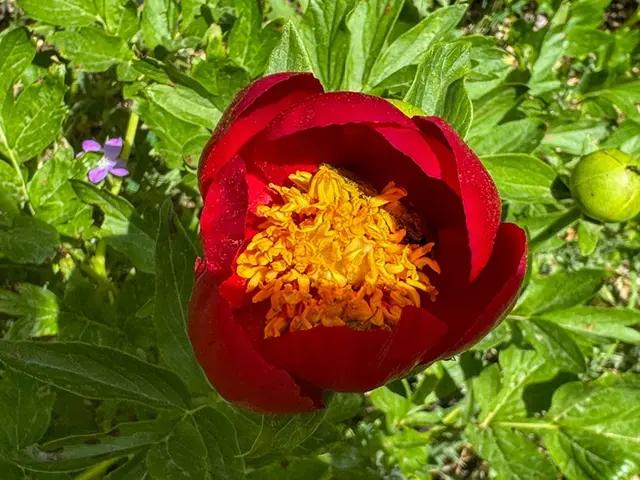
The Itecik tulip, a member of the Paeoniaceae family and known for its bright, blood-red flowers, is a plant species endemic to the Uşak region and part of the Turkish flora. It is also known by various names, including "bocur," "peony," "top tulip," "rhododendron," "bear rose," and "donkey rose." The plant has no botanical relationship with the tulip (Tulipa) genus; the name “tulip” is simply a local name referring to the shape of the flower.
The plant's flowers typically range from 5 to 15 centimeters in diameter and are borne singly at each stem tip. These petals are striking with their red hues. The Itecik tulip usually blooms around the second week of May and retains its red color for only 15 days. After this period, the flowers begin to fade and shed their petals, preparing for the next blooming season.
The plant's other morphological components support these flowers: its leaves are arranged in a row, dark green, compound, and have slightly hairy surfaces. One feature that allows the plant to survive and resprout year after year is its root system; the Itecik tulip has thick, tuberous roots ( tubers ) buried underground, between 25 and 75 centimeters. These roots store nutrients and water, allowing the plant to withstand harsh environmental conditions and perpetuate its species.
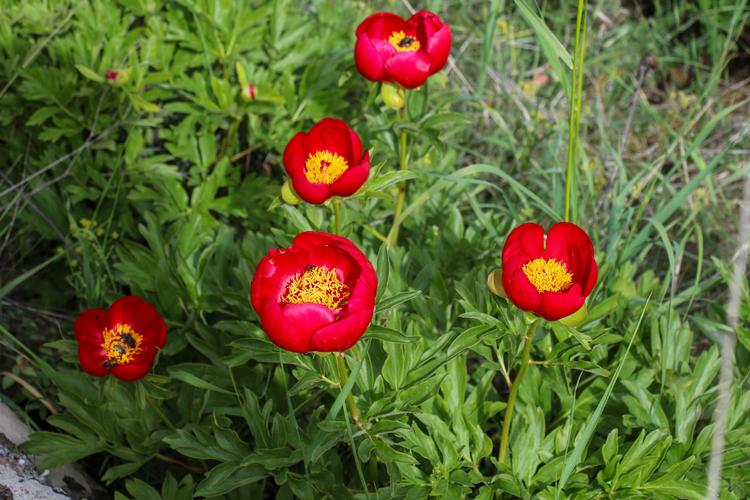
İtecik Tulip ( Anadolu Agency )
It is found in the İtecik Hill area , within the borders of Kayaağıl Village , Uşak province , in the inland areas of Turkey's Aegean Region . This endemic species prefers high altitudes, and the natural population on İtecik Hill grows naturally under natural conditions at an altitude of approximately 1,200 meters above sea level . Before being declared a Nature Conservation Area, the area where tulips bloomed densely covered approximately 50 decares of land. Climatically, the region where the plant grows generally exhibits continental climate characteristics due to its location in the inland areas of the Aegean Region .
Phytochemical studies on Paeonia peregrina extract have revealed high levels of phenolic and flavonoid compounds in the plant's petals. For example, the total phenolic content in the petal extract was determined to be 23.75 mg GAE/g. This bioactive chemical diversity is the source of the species' high antioxidant and antimicrobial activities. It has been shown to be more effective against the bacterium Klebsiella pneumoniae than standard antibiotics (erythromycin, penicillin, and vancomycin).
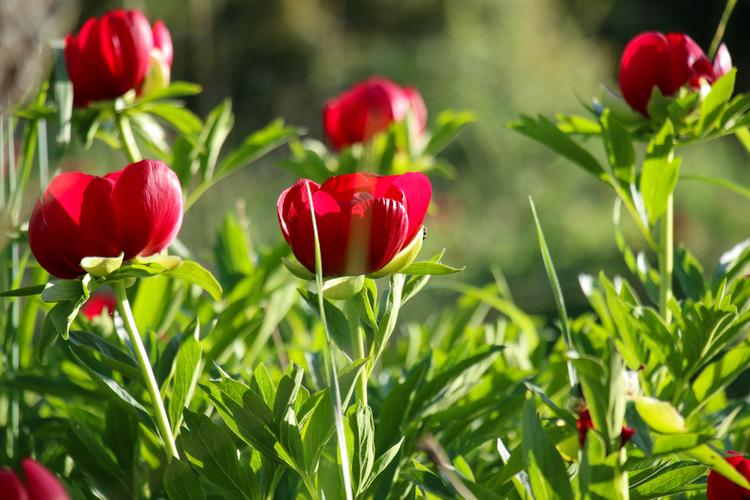
İtecik Tulip ( Anadolu Agency )
The area densely populated by the endemic species was officially declared a Nature Conservation Area in 2020,thus gaining legal protection. Additionally, as part of physical protection measures, the approximately 50-decare area where the tulip grows on İtecik Hill, at an altitude of 1,200 meters , has been fenced with wire to prevent unauthorized entry and potential damage to the plant. As a result of these protection efforts, the tulip population has increased in the region . The İtecik Tulip is a protected species by the Ministry of Environment and Forestry of the Republic of Turkey. Highly deterrent administrative fines have been set for those who unauthorizedly remove the plant from its natural habitat ; as of 2024, the penalty for such an action is 244,000 Turkish Lira .
Despite all these measures, the threats facing the Itecik Tulip persist. The primary threat is its narrow natural range (endemism), which makes the plant vulnerable to environmental change and habitat destruction. Furthermore, its limited flowering cycle of only 15 days makes it vulnerable to climate change and sudden weather events, threatening its reproductive success.
Çalık, Mehmet. "The Itecik tulip shows its blood-red color for only 15 days." Anadolu Ajansı. May 15, 2024. Accessed 19 October 2025. https://www.aa.com.tr/tr/yasam/itecik-lalesi-kan-kirmizisi-rengini-sadece-15-gun-gosteriyor/3219914.
Çalık, Mehmet. "The rare Itecik tulip showed its blood-red color." Anadolu Ajansı. May 25, 2025. Accessed 19 October 2025. https://www.aa.com.tr/tr/yasam/ender-gorulen-itecik-lalesi-kan-kirmizisi-rengini-gosterdi/3578939.
Özdemir, Ayşe, and Dudu Bayraktar Döner. “Phytotherapy in the History of Medicine and a General View of Paeonia (Bocur, Peony, Itecik Tulip) Plant.” Uşak University Journal of Science and Nature Sciences , 57–64. Accessed 19 October 2025. https://dergipark.org.tr/en/download/article-file/488349.
Özdemir, Ayşe. “Antioxidant Capacity and Antimicrobial Activity of Paeonia Peregrina L. [Uşak-Itecik Tulip] Extracts and Its Phenolic and Flavonoid Compounds.” Ulutas Medical Journal 6, no. 1:30–37. Accessed 19 October 2025. https://www.ulutasmedicaljournal.com/fulltext/135-1570097747.pdf.

Kingdom(s) | Plantae | ||||||||
|---|---|---|---|---|---|---|---|---|---|
Division (Phylum) | Magnoliophyta | ||||||||
Class | Magnoliopsida | ||||||||
Order | Saxifragales | ||||||||
Family | Paeoniaceae | ||||||||
Genus | Paeonia | ||||||||
Specie(s) | Paeonia peregrina Mill | ||||||||
Local Names | Bocur, Peony, Top Tulip, Rhododendron Bear, Rose Donkey Rose | ||||||||
Morphological Features
Distribution Area and Habitat Characteristics
Genetic Diversity and Taxonomic Assessment
Conservation Status and Threat Factors
This article was created with the support of artificial intelligence.