

+1 More

Registration Number | 445 | ||||||||
|---|---|---|---|---|---|---|---|---|---|
Registration Date | August 22, 2019 | ||||||||
Registered Holder | Karaköprü Municipality | ||||||||
Geographical Boundary | Turkey Şanlıurfa Province | ||||||||
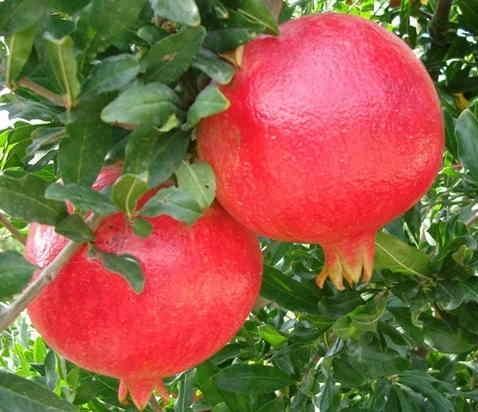
The Karaköprü Pomegranate is a distinctive pomegranate variety native to the Karaköprü district in the province of Şanlıurfa, located in Turkey’s Southeastern Anatolia Region. Historical records suggest that this pomegranate type was tasted by Sultan Murad IV during his Baghdad campaign in the 17th century and was described by the renowned traveler Evliya Çelebi as “pomegranates weighing one okka” (a historical unit of weight). The Karaköprü Pomegranate holds significant cultural value in traditional production and consumption practices. It was officially registered as a designation of origin and granted geographical indication protection by the Turkish Patent and Trademark Office on August 22, 2019, under Registration No. 445.
The registration process was carried out by Karaköprü Municipality. The product is categorized under processed and unprocessed fruits and is geographically restricted to the boundaries of Şanlıurfa Province.
The Karaköprü Pomegranate possesses unique attributes in terms of appearance, aril structure, and juice quality, distinguishing it from other regional pomegranate varieties. Its color spectrum includes pink–red tones on a yellow base, and it has a moderately thin and elastic peel. The average fruit weight is 743 grams, with an average width of 11.91 cm and length of 9.01 cm. Peel thickness is measured at 1.99 mm, with an approximate peel weight of 296 grams, corresponding to a peel ratio of around 40%.
The arils are large, pinkish-red in color, and contain soft seeds. The total aril ratio is 60%, with an average aril firmness of 381 grams. The weight of 100 arils exceeds 50 grams. These characteristics make the Karaköprü Pomegranate suitable for both fresh consumption and juice production.
The juice yield of the Karaköprü Pomegranate is approximately 47%. The obtained juice is characterized by a dark red color, with a pH value of 3.37 and a total acidity of 1.27%. According to biochemical analyses, its antioxidant capacity measures 126 mg TEAC/100 ml, and its total phenolic content is 38 mg GAE/100 ml. These features indicate that the Karaköprü Pomegranate is rich in bioactive components, making it a valuable source of health-promoting juice.
Propagation of the Karaköprü Pomegranate is primarily achieved through hardwood cuttings. These cuttings are taken in late winter or early spring and are planted directly into nursery plots. In orchard planting, trees are spaced 2 meters apart within rows and 4 meters between rows, arranged in a north–south orientation. The trees naturally develop a multi-stemmed bush form. For optimal yield and quality, a 3–4 stem structure is preferred, with crown pruning and interior thinning practices applied.
Traditional fertilization involves farmyard manure, while modern methods supplement with nitrogen and phosphorus fertilizers. Soil cultivation is performed at shallow depths to avoid root damage, particularly focusing on weed control during spring and summer months. Irrigation is intensified during flowering and fruit development periods, while it is halted before harvest to prevent fruit cracking.
Harvesting occurs when the peel color transitions from yellow to pink–red, and the calyx segments begin to open outward. Pruning shears are used during harvest to prevent physical damage to the fruit. Hand-picking is avoided to protect both the fruit and the tree. Fruits are carefully collected with a stem length of 1–2 mm and placed into special crates.
Thanks to its durable peel structure, the Karaköprü Pomegranate can be stored under proper conditions for 4–6 months. The ideal storage temperature is 5 °C, with a relative humidity of 90–95%. Modern cold storage facilities are considered the safest method for long-term preservation.
Inspection activities are coordinated by a supervisory body established under Karaköprü Municipality. This body includes representatives from the Şanlıurfa Provincial Directorate of Agriculture and Forestry, the GAP Agricultural Research Institute Directorate, and the Department of Food Engineering at Harran University.
Inspections are conducted at least once per year and additionally in response to complaints when necessary. These inspections assess the physical properties of the product (color, peel structure, aril appearance, taste), production methods, and the correct usage of the geographical indication. It is mandatory for the geographical indication to appear on the product packaging alongside the brand name, with a size no smaller than the brand name.
Turkish Patent and Trademark Office. Designation of Origin: Karaköprü Pomegranate, No. 445. Ankara: Turkish Patent and Trademark Office, 2019. Accessed July 5, 2025. https://ci.turkpatent.gov.tr/Files/GeographicalSigns/f7b4785c-534a-43ed-85f0-3e24771b15e3.pdf.
Turkish Patent and Trademark Office. “Karaköprü Pomegranate – Geographical Indication Detail.” Registration No. 445, September 24, 2019. Accessed July 5, 2025. https://ci.turkpatent.gov.tr/cografi-isaretler/detay/38478.
Karaköprü Municipality. Karaköprü Pomegranate Registered. Created: September 24, 2019. Accessed July 5, 2025. https://www.karakopru.bel.tr/icerik/552/12/karakopru-nari-tescillendi.

Registration Number | 445 | ||||||||
|---|---|---|---|---|---|---|---|---|---|
Registration Date | August 22, 2019 | ||||||||
Registered Holder | Karaköprü Municipality | ||||||||
Geographical Boundary | Turkey Şanlıurfa Province | ||||||||
No Discussion Added Yet
Start discussion for "Karaköprü Pomegranate" article
Physical and Chemical Characteristics
Juice Quality
Production and Cultivation Process
Harvesting and Storage
Inspection and Geographical Indication Usage
This article was created with the support of artificial intelligence.