
+2 More


Location | Fethiye Muğla/ Türkiye | ||||||||
|---|---|---|---|---|---|---|---|---|---|
Historical Names | Karmylassos and Levissi | ||||||||
Date of Foundation | 3000-4000 BC | ||||||||
Current Status | Ghost City | ||||||||
UNESCO Location | World Friendship and Peace Village | ||||||||
Kayaköy is an abandoned settlement center located 8 km southwest of the Fethiye district center of Muğla in Southwestern Anatolia. Kayaköy, known as Karmylassos and Levissi in ancient times, dates back to the 3rd and 4th millennia BC according to philological and archaeological findings. It was ruled by the Lycians, Alexander the Great, the Romans, the Byzantines, the Greeks, the Menteşeoğulları, and the Ottoman Empire. In 1923, a population exchange took place between Turks and Greeks. Today, Kayaköy is a "ghost town" with its historical stone places and ruins.

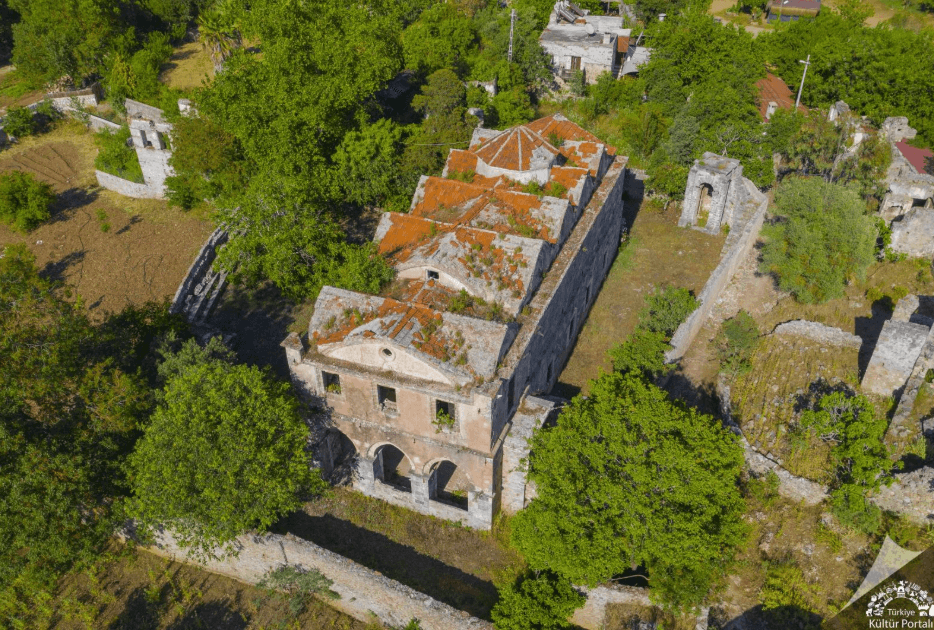
Kayaköy Ruins (Türkiye Culture Portal)
According to philological data, the history of Kayaköy dates back to approximately 3000 BC, and the writings of the Lycians on sarcophagi and rock tombs in the surrounding area date back to around 4000 BC. This settlement, known as Karmylassos in ancient times and later known as Levissi, was inhabited by the Lycians. After the conquests of Alexander the Great, the region came under the rule of the Roman and Byzantine Empires.
Towards the end of the Middle Ages, it came under the control of the Menteşeoğulları Principality in 1284 and then the Ottoman Empire in 1424. During the Ottoman period, especially in the late Ottoman period, Kayaköy became a settlement with a dense Greek population, with the rights granted to minorities. According to 1912 records, the population of the village was approximately 6500 people, and Turks and Greeks lived together.
However, with the population exchange between Turkey and Greece in 1923, the Greeks in Kayaköy migrated to Greece. Within the scope of the population exchange, Turks from Western Thrace were settled in the village, but due to the living conditions of the region, such as water shortages and unfavorable lands for agriculture, most of those who came moved to other places within a short time. As a result of these migrations, Kayaköy was largely abandoned, and today it is an important ruin known as a "ghost town" with its stone houses, chapels, two large churches, a school, and a customs building, most of which are in ruins.
UNESCO has declared Kayaköy a World Friendship and Peace Village. 736 buildings in the village have been registered as monumental and taken under protection.
Kayaköy is an abandoned village settlement 8 km from Fethiye in Southwestern Anatolia. The settlement is located on a mountainous and rocky slope. Considering the geographical conditions, the houses are arranged on the slope so as not to block each other in terms of view and light.
The buildings in the village are generally constructed of stone and consist of small houses, each no larger than about 50 square meters. A typical feature of the settlement is the presence of two large churches, a school, and a customs house, with numerous chapels interspersed among the houses.
These buildings represent a settlement that developed as a result of the rights granted to minorities, especially in the late Ottoman Empire. The empty area in the northern part of the Upper Church, which is defined as a commercial area, and its surroundings are known to have been occupied by shops such as coffee shops, butchers, greengrocers, grocers, and fabric shops. There are also windmills in the ruins and the remains of shops forming the commercial area of the city. Today, the wooden parts of these buildings (doors, windows, roof systems) have been destroyed by natural factors, and the general appearance of Kayaköy has gained the character of a "ghost town".
Republic of Türkiye Ministry of Culture and Tourism. “Kayaköy Ruins - Muğla.” Türkiye Culture Portal. Accessed July 16, 2025. https://www.kulturportali.gov.tr/turkiye/mugla/gezilecekyer/kayakoy
Akdu, Serap. “Kayaköy Ruins.” Encyclopedia of Turkish Tourism. Accessed July 16, 2025. https://turkiyeturizmansiklopedisi.com/kayakoy-orenyeri
Bozyigit, Recep and Tapur, Tahsin. "An Abandoned Settlement Center in Southwestern Anatolia: Kayaköy (Fethiye)." Marmara Journal of Geography, 22 (2010): 363-387. Accessed July 16, 2025. https://dergipark.org.tr/en/download/article-file/3225
Republic of Turkey Ministry of Tourism and Culture. “Kayaköy.” Muğla Provincial Directorate of Culture and Tourism. Accessed July 16, 2025. https://mugla.ktb.gov.tr/tr-177919/kayakoy.html

Location | Fethiye Muğla/ Türkiye | ||||||||
|---|---|---|---|---|---|---|---|---|---|
Historical Names | Karmylassos and Levissi | ||||||||
Date of Foundation | 3000-4000 BC | ||||||||
Current Status | Ghost City | ||||||||
UNESCO Location | World Friendship and Peace Village | ||||||||
No Discussion Added Yet
Start discussion for "Kayaköy Ruins (Karmylassos)" article
History
Settlement Characteristics
This article was created with the support of artificial intelligence.