Type of Geographical Indication | Protected Designation of Origin | ||||||||
|---|---|---|---|---|---|---|---|---|---|
Registration Number | 365 | ||||||||
Registration Date | July 6, 2018 | ||||||||
Product / Product Group(s) | Processed and unprocessed fruits and vegetables and mushrooms | ||||||||
Province(s) | Kırıkkale | ||||||||
Applicant/Registrant(s) | Kırıkkale Municipality | ||||||||
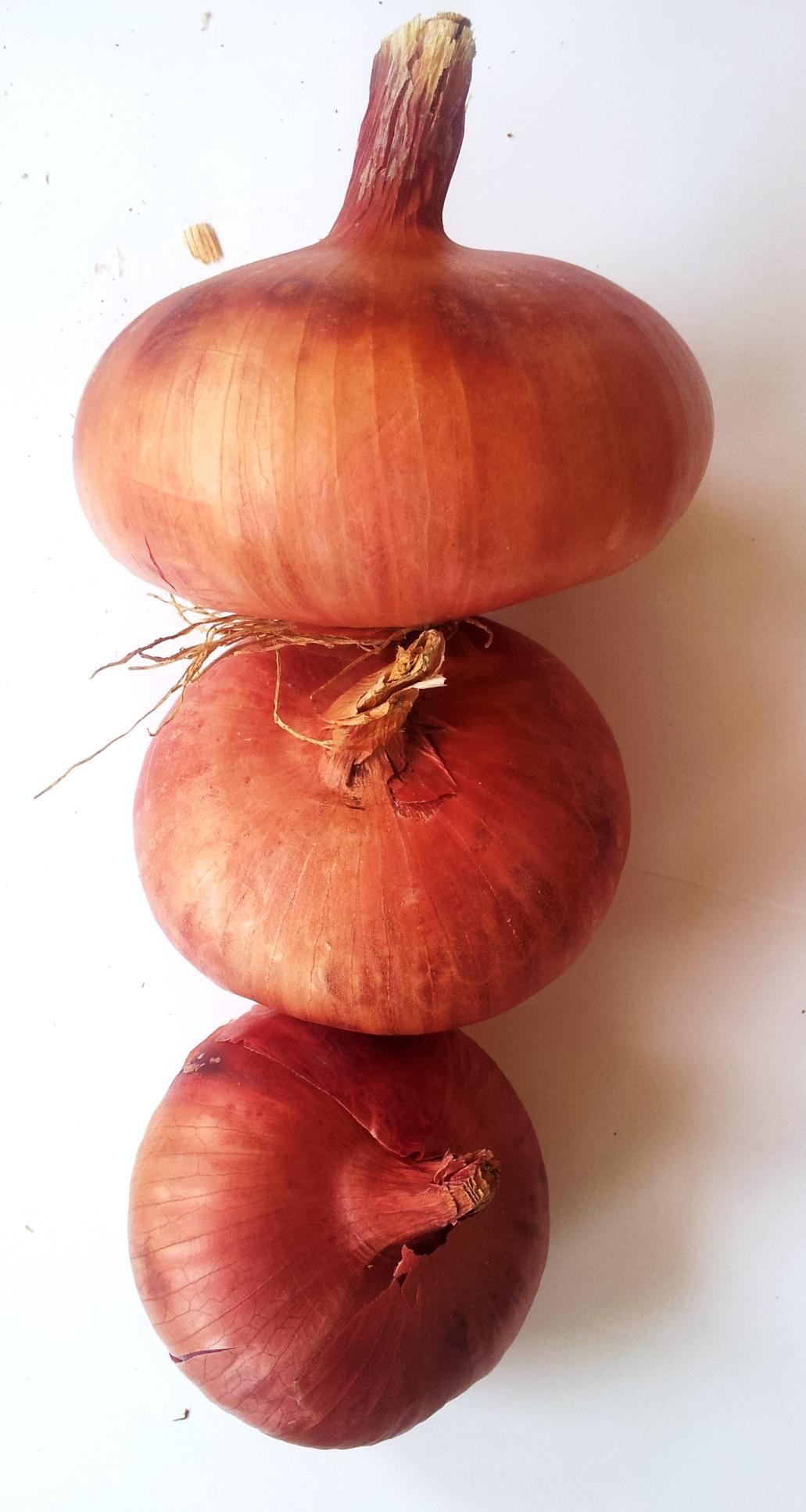
Kırıkkale Kılıçlar onion is a local dry onion variety cultivated in Kılıçlar village, Yahşihan district, Kırıkkale province, in Türkiye’s Central Anatolia Region. Registered as a Protected Designation of Origin on July 6, 2018, under the Industrial Property Law No. 6769, the registration was carried out by the Kırıkkale Municipality.
The Kılıçlar onion belongs to the Allium cepa L. species of the Alliaceae family. While Asia to Anatolia is considered the genetic center for onions, Kılıçlar village stands out as a key area where a local variety has been cultivated for many years. The seeds used for production have been locally sourced by the village community for approximately a century, developing distinct population characteristics through cross-pollination. These genetic traits, combined with the region’s climate, soil, and the fertility provided by a stream connected to the Kızılırmak River, result in a distinctive product.
The Kılıçlar onion has a flattened bulb shape. Plant height ranges from 10–40 cm, with bulb diameter of 8–11 cm and bulb height of 5–7 cm. The neck thickness is 0.4–1 cm, and bulb weight varies from 100–750 grams. It typically has 1–2 outer skin layers and 5–8 fleshy layers, each 5–7.5 mm thick. The outer skin is brownish-red, while the fleshy layers range from white to reddish hues. The dry matter content is 11–12%, soluble solids content is 8–9%, and C vitamin content in a 100-gram bulb is 6.4–7 mg. The onion’s slightly bitter taste is attributed to its pyruvic acid content.
Despite being a short-day plant, the onion exhibits long-day characteristics due to its growth period and ability to be stored in simple facilities until February, enhancing its market value.
Soil preparation begins in September–October with plowing to a depth of 30 cm, followed by a second tilling and leveling in February–March. Seeds are sown by hand and covered with a rake. Fertilization involves diammonium phosphate (DAP) applied at sowing and urea in two stages. Irrigation is performed 7–8 times based on rainfall, using sprinkler irrigation when rainfall is insufficient and flood irrigation during growth stages.
Weed control and soil loosening are achieved through hoeing. Chemical methods are used for pest and disease management. Onions are left to dry naturally before harvest in August, after which the leaves are cut, and the bulbs are sorted by size for market.
The soils of Kılıçlar village are clay-loam, slightly alkaline, moderately calcareous, and salt-free. While organic matter is low, it is supplemented with farmyard manure. The soil is rich in potassium and iron and moderate in phosphorus. The region experiences a continental climate with hot, dry summers and cold, rainy winters. Rainfall from January to May is sufficient for onion development.
The protection of the product under its geographical indication is managed by the Kırıkkale Municipality. Inspections are conducted twice a year by a committee comprising experts from Kırıkkale University, the Provincial Directorate of Agriculture and Forestry, and the Chamber of Agriculture. The first inspection occurs in May–June in the fields, and the second in August–September after harvest. Inspection reports are submitted to the Turkish Patent and Trademark Office, and legal action is taken against non-compliant individuals or entities.
Türk Patent ve Marka Kurumu. "Kırıkkale Kılıçlar Soğanı." Coğrafi İşaretler Portalı. 2018. Accessed October 25, 2025. https://ci.turkpatent.gov.tr/cografi-isaretler/detay/38148.
Türk Patent ve Marka Kurumu. Kırıkkale Kılıçlar Soğanı Coğrafi İşaret Sicil Belgesi. Tescil No: 365. Accessed October 25, 2025. https://ci.turkpatent.gov.tr/Files/GeographicalSigns/365.pdf.

Type of Geographical Indication | Protected Designation of Origin | ||||||||
|---|---|---|---|---|---|---|---|---|---|
Registration Number | 365 | ||||||||
Registration Date | July 6, 2018 | ||||||||
Product / Product Group(s) | Processed and unprocessed fruits and vegetables and mushrooms | ||||||||
Province(s) | Kırıkkale | ||||||||
Applicant/Registrant(s) | Kırıkkale Municipality | ||||||||
No Discussion Added Yet
Start discussion for "Kırıkkale Kılıçlar Onion " article
Botanical Characteristics and Origin
Physical and Chemical Characteristics
Agricultural Production Process
Ecological Conditions
Inspection and Protection
This article was created with the support of artificial intelligence.