

+1 More


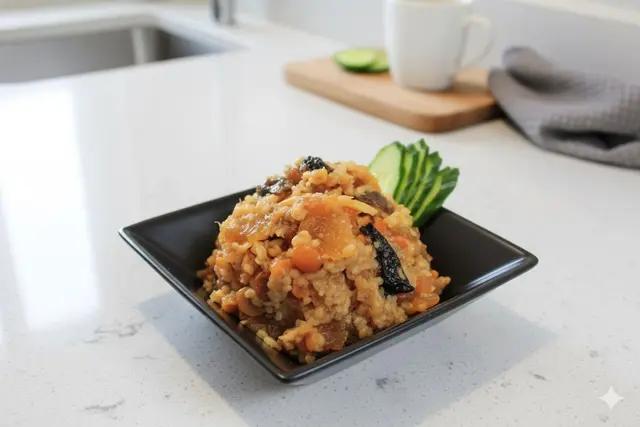
Kishu Kinzanji Miso (Generated by Artificial Intelligence.)
Kishu Kinzanji Miso is a traditional processed foodstuff, protected by a geographical indication (GI), native to Wakayama Prefecture (formerly Kishu District), Japan. Unlike regular miso, it is not consumed as a condiment (spice), but rather as a food mostly consumed as is.
The origins of "Kishu Kinzanji Miso" date back to the Kamakura Period (1185-1333). When the Buddhist monk Kakushin returned to Japan from China under the Song Dynasty, the production method spread to the areas around Yuasa, Gobo, and other regions in present-day Wakayama Prefecture. Initially known as a type of pickled/preserved food, "Kishu Kinzanji Miso" later spread to other areas of Kishu Prefecture as a result of the industrial promotion policies of local feudal lords. Industrial production techniques corresponding to today's production methods were already established by 1615, when miso was already sold in Edo (present-day Tokyo), the capital of the Tokugawa shogunate, as a specialty of the Kishu Prefecture. From that time on, the product sold under the name "Kishu Kinzanji Miso" was produced in Wakayama Prefecture, particularly in Wakayama City, Yuasa Town, and Gobo City, according to established methods. To protect the brand, the Kishu Miso Producers Cooperative was established in 1951 by miso producers in Wakayama Prefecture and regulations were drawn up regarding the use of the name "Kishu Kinzanji Miso".
About Kishu Kinzanji Miso (地理的表示産品情報発信サイト)
Kishu Kinzanji Miso is produced using a three-ingredient base of soybeans, barley, and rice. The production process begins by steaming these grains and coating them with seed malt to create koji (a substance created by spreading fermentative microorganisms, primarily koji mold (Aspergillus oryzae), on grains like rice and barley or legumes like soybeans). The koji is then mixed with botanical ingredients such as uri, eggplant, ginger, and shiso, along with salt and sugar. This mixture is fermented and aged in layers.
While regular Kinzanji Miso is typically made with koji made from soybeans or wheat, along with additional ingredients such as uri, eggplant, and ginger, Kishu Kinzanji Miso is distinguished by its use of three grains—rice, barley, and soybeans—as its base ingredients. Another distinguishing feature of the product is that its soft texture is maintained even if the koji grains remain. Shipping standards require the miso to have a grainy texture and a color that has changed from yellowish to dark brown. Before shipping, the miso must undergo a sensory analysis of its aroma, flavor, and texture by someone with over ten years of experience in Kinzanji Miso production.

Kishu Kinzanji Miso (Generated by Artificial Intelligence.)
No Discussion Added Yet
Start discussion for "Kishu Kinzanji Miso" article
History
Production and Materials
This article was created with the support of artificial intelligence.