+2 More

Location | Germiyan District-Kütahya City Center Kütahya- Türkiye | ||||||||
|---|---|---|---|---|---|---|---|---|---|
Year of Establishment | 1999 | ||||||||
Housed in | Vacidiye Madrasa (1314) | ||||||||
Theme(s) | Tile Art and History | ||||||||
Collection Contents | Tile Artifacts from the 18th Century to Present Panels and Decorative Elements | ||||||||
Affiliated Institution | Anatolian Seljuks | ||||||||
Architectural Style(s) | Kütahya Museum Directorate | ||||||||
The Kütahya Tile Museum is one of the most important institutions reflecting Türkiye’s deep-rooted history in ceramic tile art. Opened to visitors in 1999, the museum houses a rare collection that documents Kütahya’s centuries-old tile-making tradition with examples from both the Ottoman and Republican periods. Located in the city center of Kütahya, the museum operates within the historical structure of the Vacidiye Madrasa, situated in the Germiyan District and dating back to the 14th century.
The building that houses the Kütahya Tile Museum, the Vacidiye Madrasa, was constructed in 1314 during the reign of the Anatolian Seljuk Sultan Yakub II. Reflecting the distinct features of Seljuk architecture, the structure is made of cut stone and has an open courtyard, porticoes, and a single-story layout. The inscription above the entrance gate indicates that the madrasa was commissioned by Vacid bin Mehmed, a physician and astronomer of the time. Used for educational and religious purposes since the 14th century, the madrasa was assigned various functions during the Republican era and was restored and transformed into a tile museum in 1999.
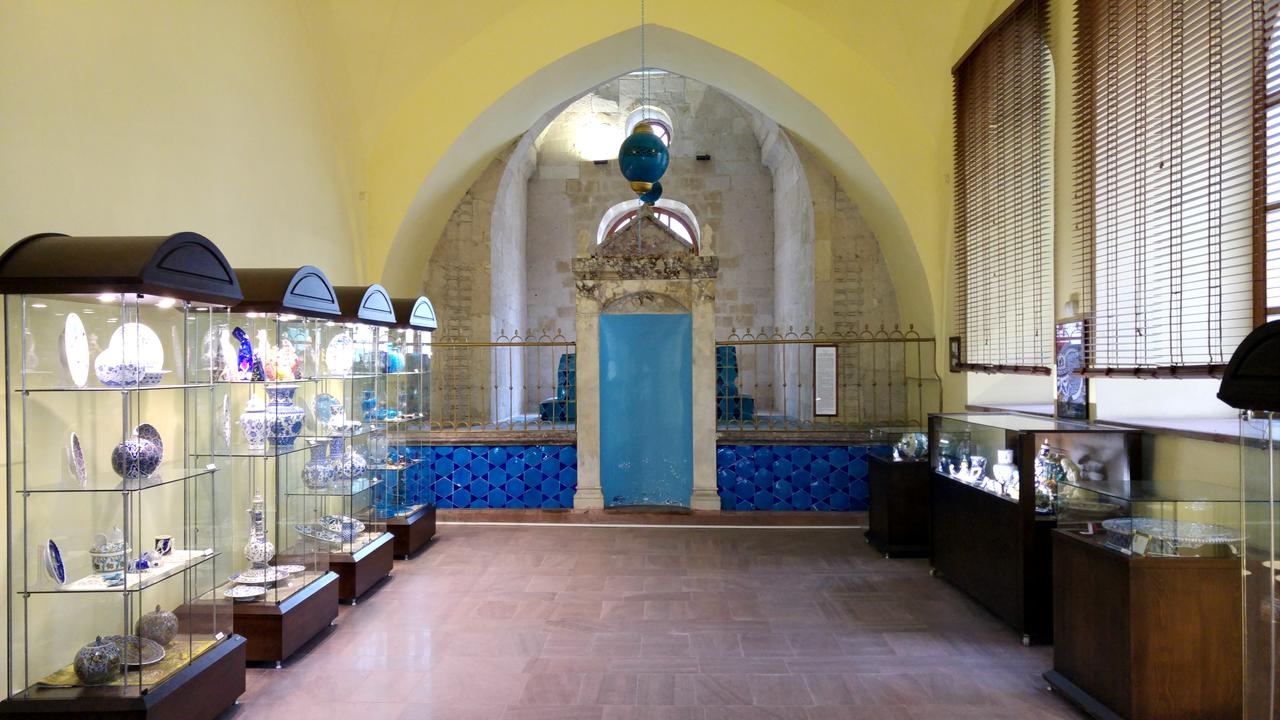
The Kütahya Tile Museum showcases the rich tile-making history of the region through its wide-ranging collection, which spans from the 18th century to the present day. Among the artifacts are plates, vases, decorative panels, ewers, oil lamps, and ornamental elements used in mosque decoration, all created for various functional and aesthetic purposes.
In addition to the displayed objects, the museum features informative panels and visuals that explain the production techniques and stylistic variety in Kütahya tile art. These elements provide visitors with insights into the historical development and technical processes of the art form. The works predominantly feature blue-white, green-yellow, navy, and red tones, with botanical motifs, geometric patterns, and traditional Turkish designs taking center stage.

Kütahya Tile Museum (Republic of Türkiye Ministry of Culture and Tourism)
Kütahya is one of the most prominent centers for tile production in Türkiye. The craft began to flourish in the region during the 14th century and reached its peak in the Ottoman period. After the decline of İznik tiles, Kütahya tiles became the main style of artistic tile production from the 17th century onwards. These ceramics were produced for both domestic use and the ornamentation of palaces and mosques, eventually gaining a distinct artistic identity. Today, tile-making continues to play a vital role in the city’s economy and cultural identity.
The Kütahya Tile Museum serves not only as an exhibition space but also as a vital center for cultural awareness and education. It plays an essential role in preserving and promoting local handicrafts for future generations. The museum provides a rich visual and historical resource for artists, researchers, students, and visitors interested in tile art. Kütahya’s inclusion in the UNESCO Creative Cities Network in the category of “crafts and folk arts” owes much to the cultural significance of this heritage.
Başak, Oktay. “Kütahya Çini Müzesi.” Türkiye Turizm Ansiklopedisi. 2019. Erişim 25 Haziran 2025. https://turkiyeturizmansiklopedisi.com/kutahya-cini-muzesi.
Kültür Varlıkları ve Müzeler Genel Müdürlüğü. “Kütahya Müze Müdürlüğü.” Erişim 25 Haziran 2025. https://kvmgm.ktb.gov.tr/TR-44119/kutahya-muze-mudurlugu.html.
Kültür ve Turizm Bakanlığı. “Çini Müzesi.” Kültür Portalı. Erişim 25 Haziran 2025. https://www.kulturportali.gov.tr/turkiye/kutahya/gezilecekyer/cn-muzes
Kütahya Valiliği. “Müzelerimiz.” Erişim 25 Haziran 2025. http://www.kutahya.gov.tr/muzelerimiz.
Kütahya İl Kültür ve Turizm Müdürlüğü. “Çini Müzesi.” Erişim 25 Haziran 2025. https://kutahya.ktb.gov.tr/TR-69423/cini-muzesi.html.

Location | Germiyan District-Kütahya City Center Kütahya- Türkiye | ||||||||
|---|---|---|---|---|---|---|---|---|---|
Year of Establishment | 1999 | ||||||||
Housed in | Vacidiye Madrasa (1314) | ||||||||
Theme(s) | Tile Art and History | ||||||||
Collection Contents | Tile Artifacts from the 18th Century to Present Panels and Decorative Elements | ||||||||
Affiliated Institution | Anatolian Seljuks | ||||||||
Architectural Style(s) | Kütahya Museum Directorate | ||||||||
No Discussion Added Yet
Start discussion for "Kütahya Tile Museum " article
Historical Structure: Vacidiye Madrasa
Museum Collection and Sections
The Role of Tile Art in Kütahya
Cultural Heritage and Education
This article was created with the support of artificial intelligence.