



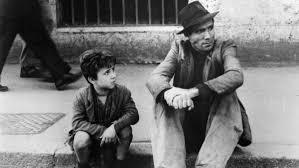
Ladri di biciclette is a film directed by Vittorio De Sica and released in 1948. It is one of the important examples of the Italian Neorealism movement. The film depicts the economic hardships experienced in post-World War II Italy through the story of an unemployed man whose bicycle is stolen. The production was shot on real locations and reflects the social conditions of the period.
The film tells the story of unemployed Antonio Ricci, whose bicycle, needed for his new job, is stolen. Antonio depends on his bicycle to make a living, and he sets out with his young son Bruno to search for it in the streets of Rome. The film narrates the events during this search, illustrating both individual and societal situations.
The film addresses themes of poverty, unemployment, and social injustice in the post-war era. Antonio’s search for the bicycle is connected not only to a material need but also to the concepts of livelihood and dignity. The film reflects the economic and social difficulties faced by the lower classes of society.
Ladri di biciclette movie trailer(Youtube)
Bicycle Thieves carries the characteristics of Italian Neorealism; it was filmed on real locations, used amateur actors, and natural lighting. The camera movements are simple and natural, avoiding dramatic exaggeration. Director De Sica’s approach aims to present the characters and setting realistically.
The film helped Italian Neorealism gain international recognition and is regarded as a significant work in world cinema history. It received positive feedback from critics and audiences at the festivals where it was screened.
Awards:
Nominations:
IMDb. "Bicycle Thieves (1948) – Full Cast & Crew." IMDb. Accessed May 21, 2025. https://www.imdb.com/title/tt0040522/
MUBI. "Bicycle Thieves Awards." MUBI. Accessed May 21, 2025. https://mubi.com/tr/films/bicycle-thieves/awards
Rotten Tomatoes Classic Trailers. "Bicycle Thieves (1948) Trailer #1 | Movieclips Classic Trailers." YouTube. Accessed May 21, 2025. https://www.youtube.com/watch?v=H2P4xo9kmPM

No Discussion Added Yet
Start discussion for "Ladri di biciclette" article
Thematic Structure
Production and Aesthetic Features
Cast
Release and Impact
Awards and Nominations
This article was created with the support of artificial intelligence.
