

+2 More

The Library of Alexandria was a research and writing institution founded in the 3rd century BCE in the city of Alexandria, Egypt, by the Ptolemaic Dynasty. Regarded as one of the largest and most influential centers of knowledge in the ancient world, it developed in parallel with the rise of Alexandria—established by Alexander the Great—in the Hellenistic realm. More than a mere repository of books, the library formed part of a scientific and intellectual complex called the Museion. It was constructed under a systematic, state-sponsored information policy aimed at collecting all written works from around the world, and it led advances especially in philology, medicine, mathematics, astronomy, and philosophy.
It is said that over time the library’s collection grew to hundreds of thousands of works through parchment and papyrus rolls seized or purchased from ships entering the harbor. Renowned scholars such as Zenodotus, Callimachus, Aristophanes of Byzantium, and Eratosthenes served there, and Callimachus’s Pinakes catalogue laid the foundations for systematic bibliography in the Western world.
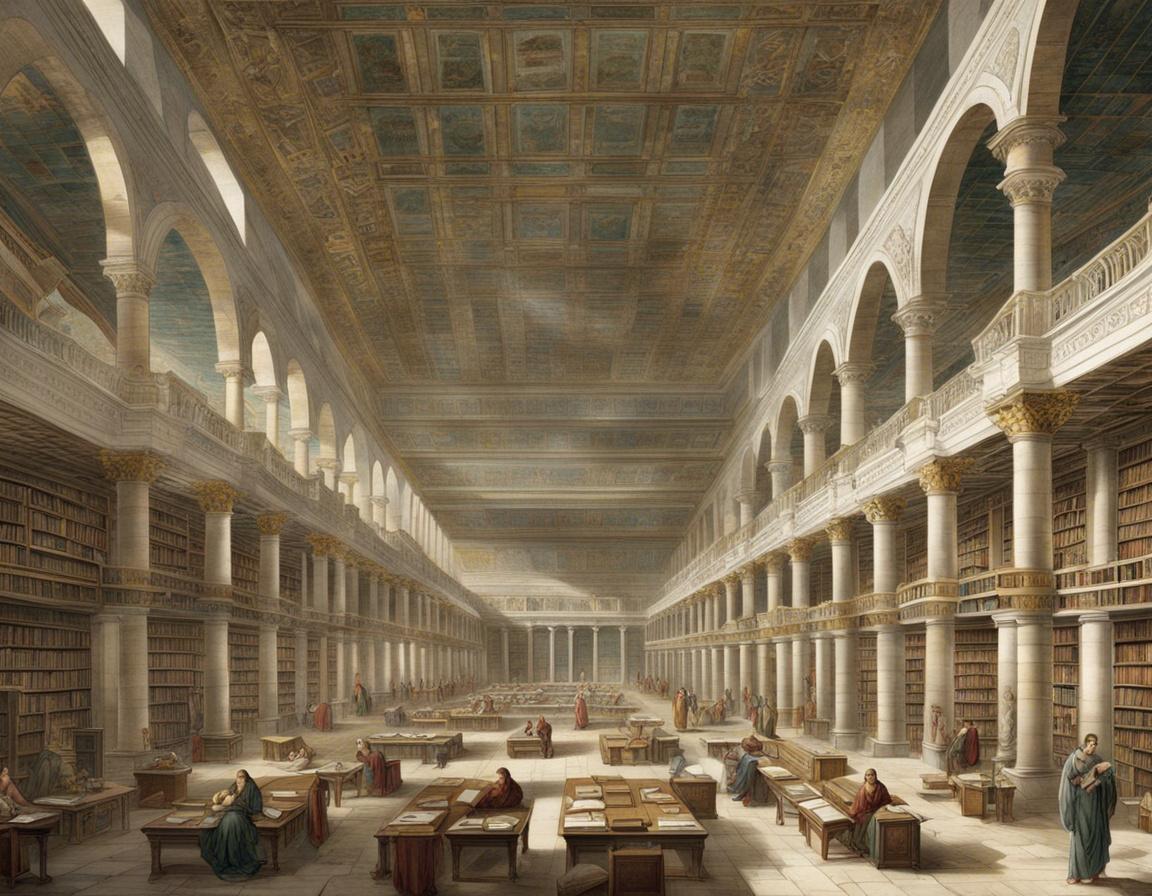
Estimated Visual Depiction of the Library of Alexandria (Generated by AI.)
The idea of the Library of Alexandria took shape indirectly when Alexander the Great founded the city of Alexandria in Egypt in 331 BCE. After Alexander’s death, one of his generals, Ptolemy, took control of Egypt and ascended the throne as Ptolemy I Soter (323–283 BCE), the first ruler of the Ptolemaic Dynasty. During his reign, he invited Demetrius of Phalerum—a student of Aristotle and former administrator in Athens—to his court as an advisor. Demetrius proposed establishing a research center modeled on Aristotle’s Lyceum, thus giving form to the idea of a grand library where all knowledge would be gathered.
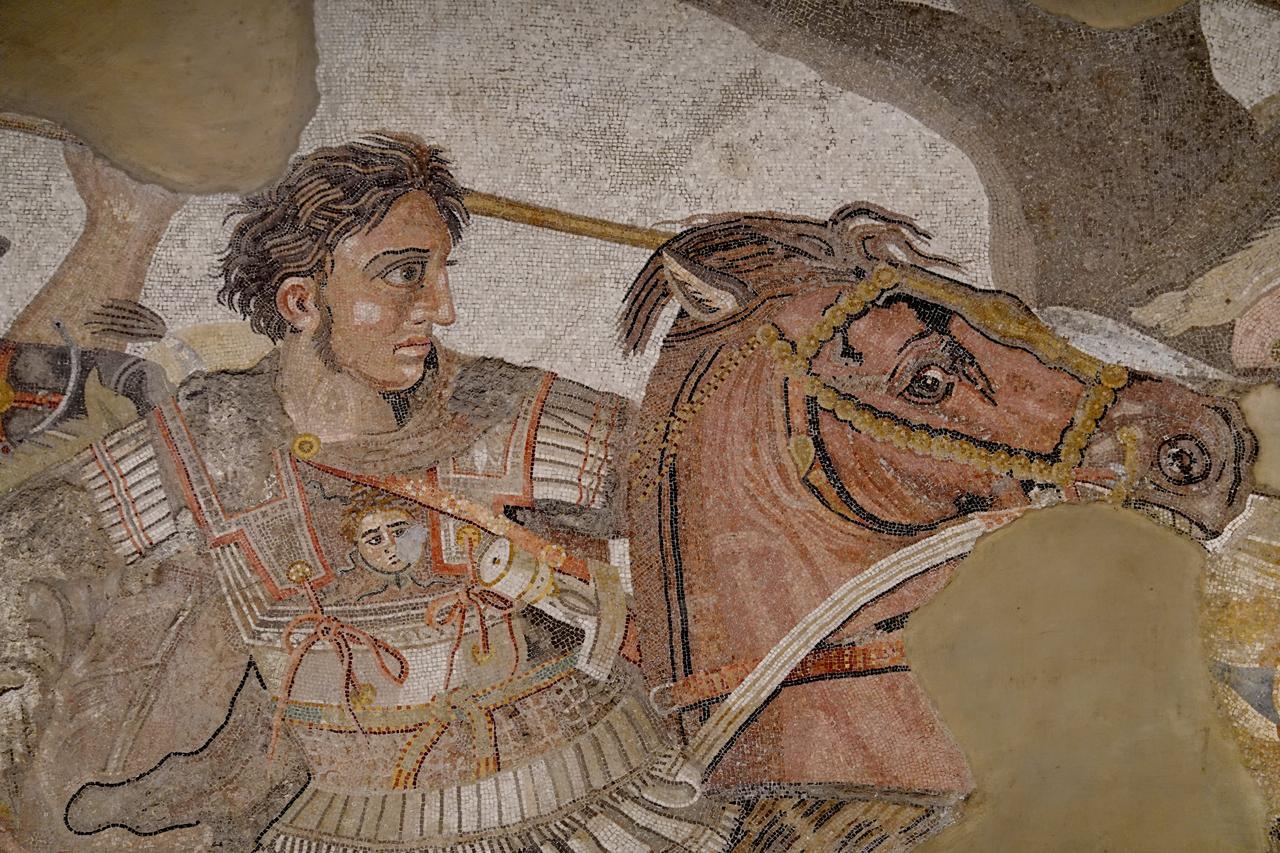
Mosaic Depicting Alexander the Great, Located in the National Archaeological Museum of Naples (Richard Mortel, flickr)
Under Ptolemy II Philadelphus (283–246 BCE), the institution took on a formal character. Integrated into the scientific complex known as the Museion, it became not only an archive but also a center for research and education. During this period, the library operated under direct royal patronage, and books were collected in an organized manner. Manuscripts found on incoming ships were temporarily impounded for copying; the originals remained in the library, and the copies were returned to their owners.
Zenodotus, one of the first librarians, initiated practices such as cataloguing and textual criticism. He was followed by Callimachus, who in his 120-volume work Pinakes classified authors by genre, subject matter, and alphabetically. This work is considered the first systematic catalogue in the history of Western bibliography. Scholars like Eratosthenes worked there as well, producing foundational texts in geography, astronomy, and history.
The library functioned not merely as a repository of knowledge but as a center of intellectual production. Researchers at the Museion received salaries from the state and were exempt from taxes. As an early model of what we now call an “academy,” the institution saw the composition of numerous works in philosophy, medicine, mathematics, literature, and linguistics.
The library suffered its first great devastation in 47 BCE when Julius Caesar attacked the port of Alexandria during Rome’s civil war. The fighting and fires that broke out as Caesar besieged the city destroyed a significant portion of the collection. As the blaze spread to the ships in the harbour, some of their book holdings were lost as well. Thereafter, once Roman rule was firmly established, royal patronage waned, and by the mid-2nd century BCE under Ptolemy VIII, the expulsion of foreign scholars had already begun to erode the institution’s intellectual strength.
In 272 CE, Emperor Aurelian’s campaign against Queen Zenobia of Palmyra wrought widespread destruction in the Brucheion quarter of Alexandria, and it is believed that the Museion suffered damage in that attack. Later, in 391 CE, when Emperor Theodosius ordered the closure of pagan temples, the Serapeion and its attached second library were demolished.
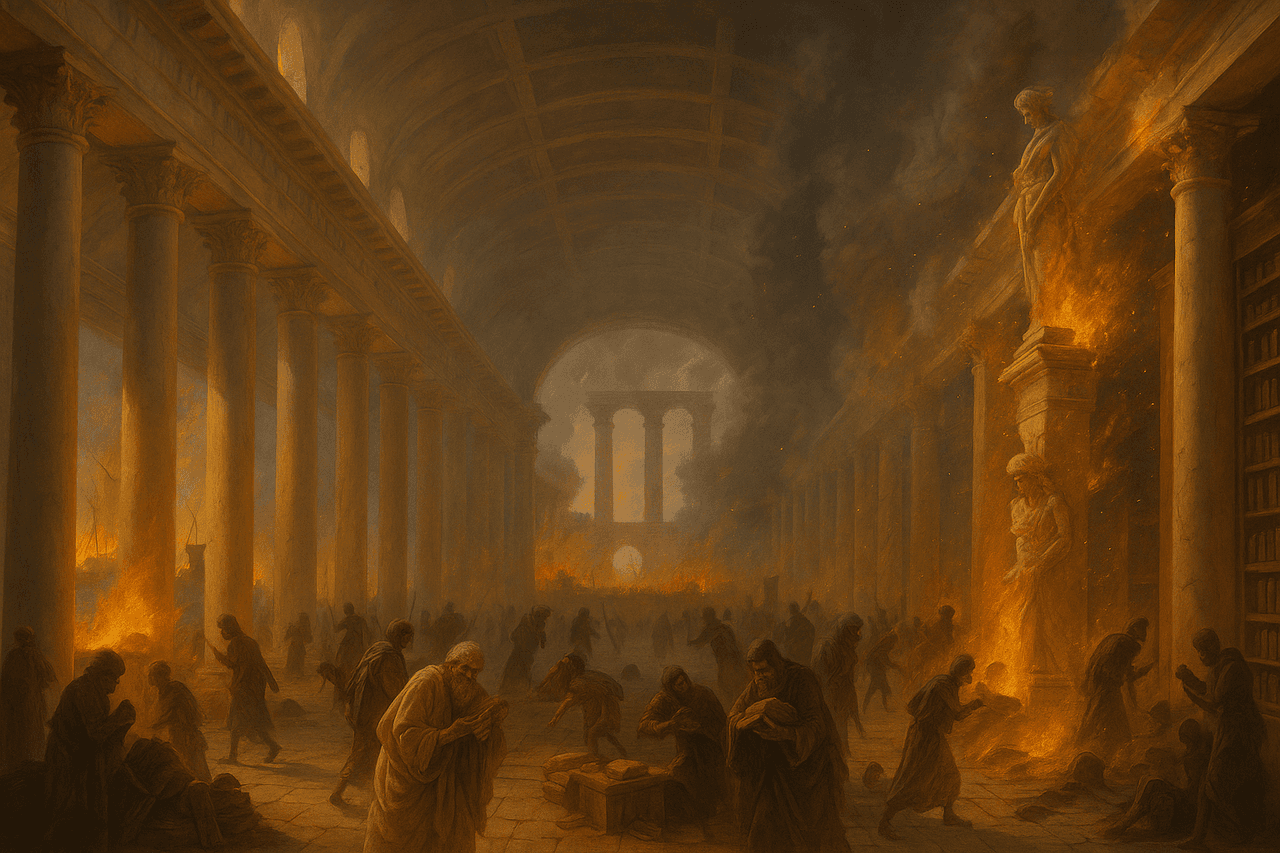
An Image Representing the Burning of the Library of Alexandria (Generated by AI.)
The most controversial account of the library’s final destruction claims that in 642 CE, after the Muslim conquest of Egypt, Caliph Hz. ʿUmar ordered Amr b. al-ʿĀs to burn what remained. Although this story appears in the writings of Islamic historians such as Ibn al-Qifṭī and al-Maqrīzī, there is no contemporary evidence to support its historicity. By the time of the Arab conquest, the Library of Alexandria had already endured multiple catastrophic losses, and modern scholarship regards the tale of its last burning as a later ideological invention, noting that the library had long since ceased to function.
From its inception, the Library of Alexandria operated under the direct patronage of the Ptolemaic dynasty. Its administration extended well beyond organizing scrolls to directing scholarly activity, systematizing textual criticism, and overseeing cataloguing. Librarians were typically chosen from among the realm’s leading philologists and thinkers—often those with close ties to the royal court—and were themselves active researchers within the Museion.
One of the first librarians, Zenodotus (early 3rd century BCE), became renowned for his philological editions of Homer and for formalizing both the classification of the collection and the practice of textual criticism. He was succeeded by Callimachus, who, in addition to his work as librarian, was a celebrated poet and thinker. In his 120-volume catalogue Pinakes, Callimachus classified authors by genre and alphabet, creating what is considered the first systematic bibliography in the Western world.
Eratosthenes (c. 276–194 BCE) later served as both librarian and polymath, producing foundational works in geography, astronomy, and mathematics—most famously estimating the Earth’s circumference and laying the groundwork for cartographic science. At the end of the 3rd century BCE, Aristophanes of Byzantium refined Greek grammar and orthography and carried out lexicographical studies, thereby strengthening the library’s pedagogical mission. Following him, Apollonius of Rhodes achieved literary fame with his epic Argonautica while serving as librarian, enhancing the institution’s cultural influence. In the library’s later period, Aristarchus of Samothrace became known for his detailed Homeric commentaries and methodological contributions to literary criticism.
In tribute to the ancient institution’s legacy, the modern Bibliotheca Alexandrina was inaugurated in 2002 through a partnership between UNESCO and the Egyptian government. Located on the Mediterranean coast near the presumed site of the old library, its circular design symbolizes the continuity of knowledge. An inclined roof tilts toward the sea, featuring openings that admit natural light into the interior, and its exterior walls are clad in granite panels inscribed with characters from diverse writing systems around the world.
More than a library, the Bibliotheca Alexandrina functions as a comprehensive cultural complex, housing a conference centre, four museums, art galleries, travelling exhibition spaces, a planetarium, and science centres. Its main reading room encompasses 70,000 m² and can hold up to eight million volumes. The institution’s mission is twofold: to honour the memory of the ancient library and to serve as a modern hub for knowledge creation and scientific exchange, offering an open research and educational environment to both the Arab world and the international scholarly community.
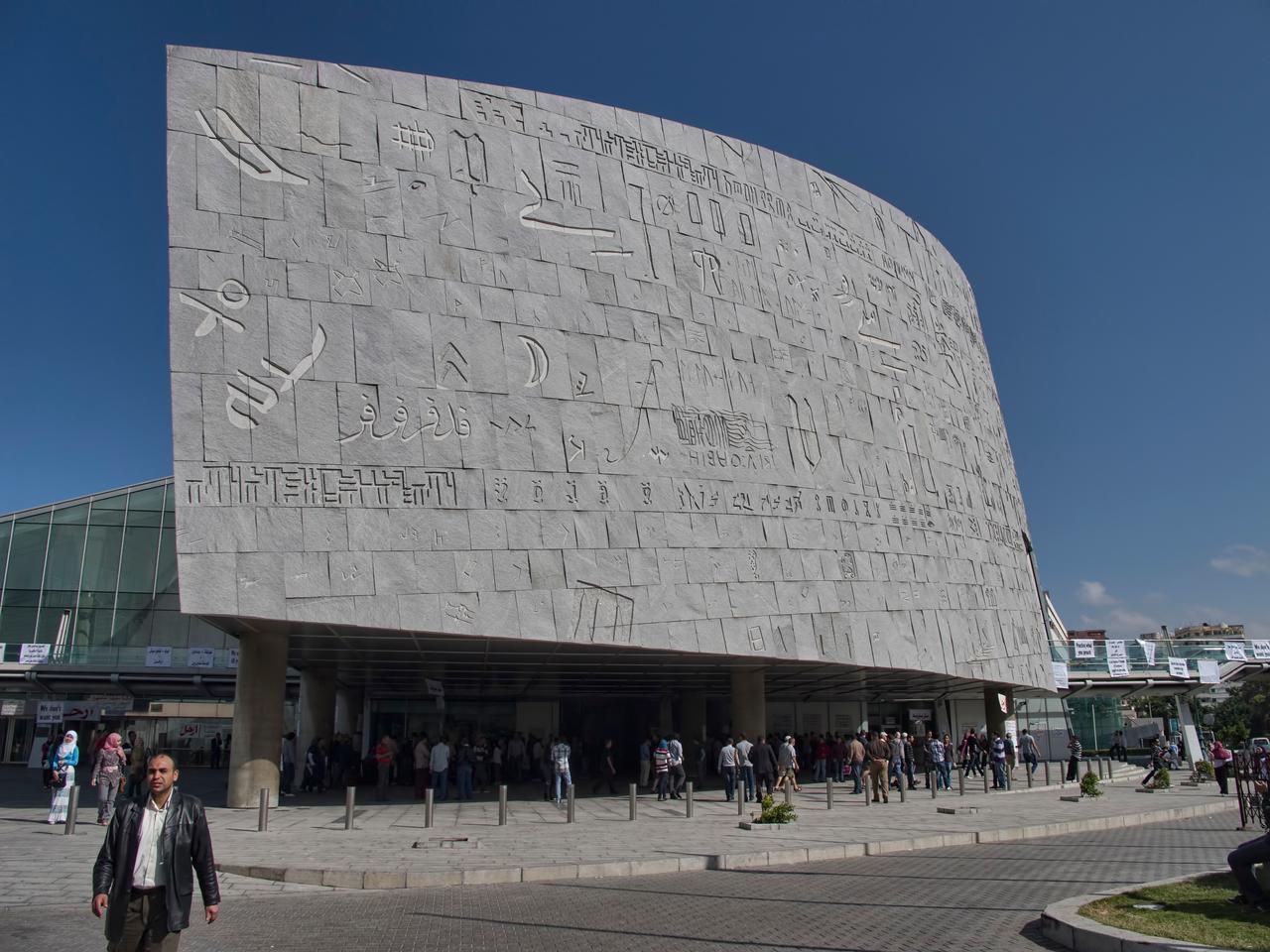
Bibliotheca Alexandrina (Dan Lundberg, flickr)
Mark, Joshua J. "The Library of Alexandria.” World History Encyclopedia. Accessed May 3, 2025.
https://www.worldhistory.org/trans/tr/1-10883/iskenderiye-kutuphanesi/
Ellens, Harold J. The Ancient Library of Alexandria and Early Christian Theological Development. University of Michigan, 1993. https://archive.org/details/the-ancient-library-of-alexandria
Costa, Virgilio. Berti, Monica. "The Ancient Library of Alexandria. A Model for Classical Scholarship in the Age of Million Book Libraries.” CLIR proceedings of the International Symposium. Accessed May 3, 2025. Erişim adresi
Güngör, Ö., Günay, D. A., Turan, E. S., and Alp, Ö. "İskenderiye Kütüphanesinin Tarihi Serüveni ve Akıbeti." Takvim-i Vekayi 10, no. 1 (2022): 103–124. https://dergipark.org.tr/tr/pub/takvim/issue/70952/1128479
Macleod, Roy. The Library of Alexandria Centre of Learning in the Ancient World. I.B. Tauris, 2010. Erişim adresi
Mardon, Austin. Library of Alexandria. Golden Meteorite Press, 2021. https://www.academia.edu/54084095/Library_of_Alexandria
UNESCO. ”Alexandria, ancient remains and the new library.” UNESCO World Heritage Convention. Accessed May 11, 2025. https://whc.unesco.org/en/tentativelists/1822/
Dan Lundberg. ”20111112_Egypt_0102 Bibliotheca Alexandrina JPG.” Flickr. Accessed May 11, 2025. https://flic.kr/p/aNRCza
Richard Mortel. ”Alexander Mosaic, Naples Archeological Museum (3) JPG.” Flickr. Accessed May 11, 2025. https://flic.kr/p/2hgR8b6


No Discussion Added Yet
Start discussion for "Library of Alexandria" article
History
Burning of the Library
Library Administration and Main Figures
Bibliotheca Alexandrina
This article was created with the support of artificial intelligence.
