

+1 More

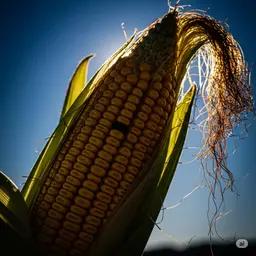
Maize Plant (Zea mays)
Scientific Name(s) | Zea Mays | ||||||||
|---|---|---|---|---|---|---|---|---|---|
Family | Poaceae | ||||||||
Photosynthesis Type | C4 | ||||||||
Origin(s) | Balsas Basin Mexico | ||||||||
Domestication Period | 7000–5000 BCE | ||||||||
Global Annual Production (2024) | ≈ 1.22 Billion Tons | ||||||||
Primary Uses | Bioplastics Bioethanol Feed Food | ||||||||
Genome Size | ≈ 2.3 Gbp | ||||||||
Chromosome Number | 2n = 20 | ||||||||
Key Gene Loci | gt1 tga1 tb1 | ||||||||
The maize plant (Zea mays) is one of the most widely cultivated cereal crops worldwide and holds significant importance both for food and industrial uses. Originating from Central America, this plant has historically been a staple food source and has gradually become a global agricultural commodity. Due to its resilience, high yield, and versatile applications, maize is favored by both small-scale farmers and large-scale industrial agriculture. Today, maize plays a crucial role in the production of various food products, animal feed, and biofuels because of its rich content of starch, oil, protein, and fiber.
The botanical characteristics and cultivation requirements of maize are fundamental factors that determine its productivity and resilience. Moreover, its genetic diversity and adaptability enable successful cultivation across diverse geographical regions.
Maize is an annual plant belonging to the Poaceae (grass) family. The stem is cylindrical and typically ranges from 1 to 3 meters in height. Its leaves are long and ribbon-shaped, while the root system is shallow and widespread. Maize flowers are monoecious; male flowers form tassels at the top of the stem, and female flowers are located on the ear. The ear is the structure where female flowers are densely clustered, usually measuring between 10 and 30 centimeters. Pollination occurs via wind, making the direction and speed of the wind critical factors influencing maize yield.
Certain climate and soil conditions are required for the successful cultivation of maize. Warm and temperate climates support optimal growth. The critical temperature ranges for the plant’s development stages—germination, leaf formation, ear development, and kernel filling—are essential. Temperatures below 10°C slow maize development, while temperatures above 30°C may negatively affect growth. Maize prefers well-drained soils rich in nutrients, with a pH between 5.5 and 7.0. Soil preparation, fertilization, and irrigation practices are regularly employed in maize farming to enhance yield.

Corn Grain and Seed (Created with Artificial Intelligence)
Maize exhibits significant genetic diversity, which enables its adaptation to varying environmental conditions. The genetic resources of maize are generally classified into three main groups: landraces, hybrids, and genetically modified varieties. Landraces have evolved naturally and through human intervention over many years within specific regions, usually adapting well to local climate and soil conditions. Hybrid varieties result from the crossbreeding of different genotypes and typically exhibit superior traits such as higher yield and disease resistance. Genetically engineered maize varieties are designed especially to resist pests and certain diseases.
In modern agriculture, genetic diversity is harnessed to develop maize cultivars that are resilient to climate change and disease pressures, thereby enhancing agricultural productivity. Moreover, molecular biology techniques allow for detailed examination of the genetic structure, enabling the rapid and effective introduction of desired traits into plants. These advances contribute significantly to sustainable agricultural practices and food security.

Representative Life Cycle of Egypt (Created with Artificial Intelligence)
Maize is a versatile crop with significant global importance for both human nutrition and industry. Beyond the direct consumption of maize kernels, various products such as flour, starch, corn oil, and corn syrup are derived from maize. Additionally, it serves as a major feed source in animal husbandry. Maize also plays an increasing role in biofuel production, being one of the primary raw materials used in ethanol manufacturing. Due to these multifaceted uses, maize is regarded as a fundamental component of economic development and energy independence in many countries.
Sustainability in maize production is crucial for minimizing environmental impacts. Various agricultural techniques have been developed to prevent soil erosion, optimize water resource usage, and reduce pesticide application. Approaches such as organic farming and integrated pest management aim to decrease the environmental footprint of maize cultivation.

Role in Food and Feed Systems (Created with Artificial Intelligence)
Erenstein, O., Jaleta, M., Sonder, K., Mottaleb, K., & Prasanna, B. (2022). Global Maize Production, Consumption And Trade: Trends And R&D Implications. Food Security, 14(5), 1295–1319. Accessed May 30, 2025. https://doi.org/10.1007/s12571-022-01288-7.
Kumar, A., Longmei, N., Kumar, P., & Kaushik, P. (2021). Molecular Marker Analysis Of Genetic Diversity In Maize: A Review. Obm Genetics, 6(1), 1. Accessed May 30, 2025. https://doi.org/10.21926/obm.genet.2201150.
Lang, M., Kollmann, J., Prestele, J., Wiesinger, K., & Albrecht, H. (2020). Reintroduction Of Rare Arable Plants In Extensively Managed Fields: Effects Of Crop Type, Sowing Density And Soil Tillage. Agriculture Ecosystems & Environment, 306, 107187. Accessed May 30, 2025. https://doi.org/10.1016/j.agee.2020.107187.

Maize Plant (Zea mays)
Scientific Name(s) | Zea Mays | ||||||||
|---|---|---|---|---|---|---|---|---|---|
Family | Poaceae | ||||||||
Photosynthesis Type | C4 | ||||||||
Origin(s) | Balsas Basin Mexico | ||||||||
Domestication Period | 7000–5000 BCE | ||||||||
Global Annual Production (2024) | ≈ 1.22 Billion Tons | ||||||||
Primary Uses | Bioplastics Bioethanol Feed Food | ||||||||
Genome Size | ≈ 2.3 Gbp | ||||||||
Chromosome Number | 2n = 20 | ||||||||
Key Gene Loci | gt1 tga1 tb1 | ||||||||
No Discussion Added Yet
Start discussion for "Maize Plant (Zea mays)" article
Botanical Characteristics and Cultivation Conditions of Maize
Genetic Diversity and Agricultural Development of Maize
Economic Importance and Uses of Maize
This article was created with the support of artificial intelligence.