

This article was automatically translated from the original Turkish version.
+1 More
edit 14 tem
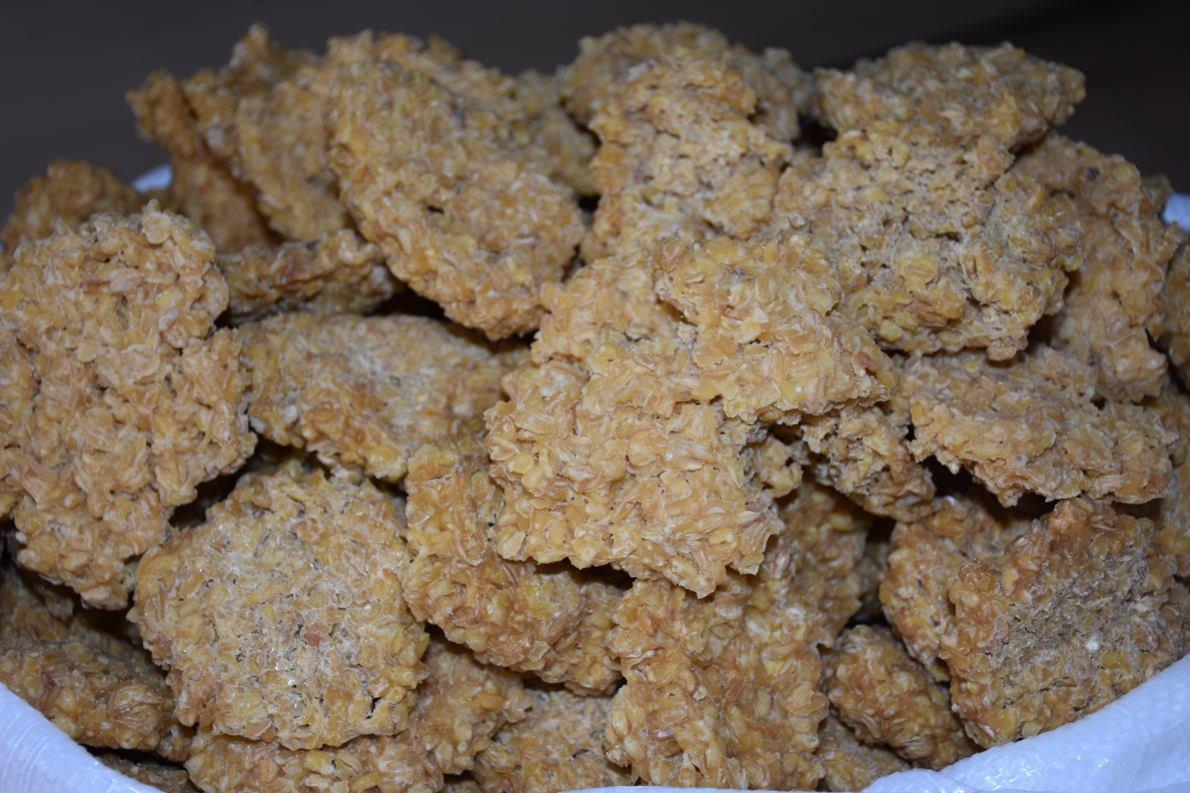
Malatya tarhanası is a traditional type of tarhana unique to Malatya province, officially registered as a geographical indication. It is produced by partially dehulling cracked wheat in a stone mill, boiling it, and then mixing it with yogurt, fresh dough yeast, flour, salt, and water, followed by fermentation.
Malatya tarhanası was registered as a geographical indication on 23 July 2022 under application number C2021/000446 by the Yeşilyurt Municipality. The registration was issued by the Turkish Patent and Trademark Office, with the geographical boundary limited exclusively to Malatya province. The geographical indication links the product’s unique character and reputation to its place of origin.
The designation "Malatya tarhanası" and the geographical indication emblem must appear on the product or its packaging. If they are not present on the product or packaging, they must be displayed in a clearly visible location within the production facility.
Malatya tarhanası is produced by partially dehulling whole wheat grains (cracked wheat or gendime) in a stone mill and then blending them with other ingredients. During production, the cracked wheat is pounded in the stone mill for approximately two hours, with water sprinkled at regular intervals. The partially dehulled cracked wheat is then air-dried in the sun and boiled.
Once boiled, the cracked wheat is cooled to room temperature and mixed with yogurt, fresh dough yeast, water, salt, and flour, then kneaded into dough. The resulting dough is left to ferment for a specified period. The distinctive feature of Malatya tarhanası lies in this fermentation process and its traditional sun-drying method. The dried product has a compressed form, which is why it is also known within the geographical boundary as "sıkma tarhana". Malatya tarhanası holds an important place in the culinary culture of Malatya province and carries its reputation due to this cultural heritage.
The production of Malatya Tarhanası involves combining specific ingredients in prescribed proportions. The standardized ingredients are as follows:
The production process consists of the following steps:
The history of Malatya tarhanası is rooted in the region’s traditional culinary culture. Due to this historical and cultural connection, production is restricted exclusively within the boundaries of Malatya province. Production within this geographical boundary is mandatory to preserve the traditional knowledge associated with tarhana and to ensure product quality.
The production and compliance of Malatya tarhanası are regularly monitored. The monitoring body is coordinated by Yeşilyurt Municipality and operates with the participation of at least three experts from the following institutions:
Monitoring is conducted at least once annually. Additional inspections may be carried out at any time when deemed necessary or upon complaint. The scope of monitoring includes verifying the suitability of ingredients used in production, adherence to the prescribed production method, and the correct use of the "Malatya Tarhanası" designation and geographical indication emblem on the product and packaging. The monitoring body may obtain services from experts or institutions in the public or private sector. The registering entity is responsible for initiating legal procedures to protect the geographical indication rights of the product.
Turk Patent and Trademark Office. "Malatya Tarhanası Coğrafi İşaret Tescil Belgesi (PDF)." *Coğrafi İşaretler Portalı.* Accessed July 14, 2025. https://ci.turkpatent.gov.tr/Files/GeographicalSigns/1067542f-94dd-437a-82cd-667b604694bc.pdf.
Türk Patent ve Marka Kurumu. "Malatya Tarhanası." Coğrafi İşaretler Portalı. Accessed July 14, 2025. https://ci.turkpatent.gov.tr/cografi-isaretler/detay/5442.

Geographical Indication and Legal Status
Product Definition and Distinctive Characteristics
Recipe/Production Method
Geographical Boundary and Production Conditions
Monitoring Mechanism