
Border | It is innervated by the motor branch of the mandibular nerve (V3). | ||||||||
|---|---|---|---|---|---|---|---|---|---|
Artery | It is supplied by the pterygoid branches of the maxillary artery. | ||||||||
Function(s) | Lifts the lower jaw up and moves it sideways It helps chewing. | ||||||||
The Medial Pterygoid Muscle , one of the muscles of mastication, plays a critical role in closure and lateral movements of the mandible. Along with the masseter, it forms a powerful jaw closer and is innervated by the trigeminal nerve (CN V).
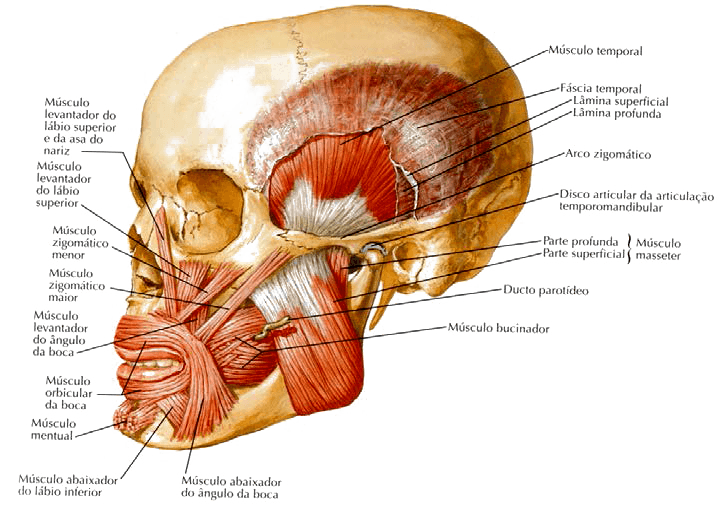
The Medial Pterygoid Muscle is a powerful muscle located deep among the muscles of mastication, inserting onto the medial surface of the mandible. It has two heads: the deep head originates from the medial surface of the lateral pterygoid plate of the sphenoid bone, and the superficial head originates from the maxillary tuberosity and the pyramidal process of the palatine bone. These heads join to insert onto the medial surface of the ramus of the mandible, just below the mandibular foramen, and onto the mandibular angle. The lower end of the muscle fuses with the masseter muscle to form a common tendon, grasping the mandible like a vice. The deep and superficial heads of the muscle originate from different bones but insert onto the medial surface of the mandible at a common point. They are closely related to the masseter muscle, forming a prehensile structure for the mandible. This morphological arrangement coordinates chewing movements.
The Medial Pterygoid Muscle belongs to the first pharyngeal arch muscle group, innervated by the mandibular nerve (CN V₃). Embryologically, it develops from paraxial mesoderm and is functionally classified among the muscles of mastication.
The muscle is innervated by the medial pterygoid branch of the mandibular nerve. The same nerve also gives branches to the tensor veli palatini and tensor tympani muscles. Its blood supply is provided by the pterygoid branches of the maxillary artery and the pharyngeal arteries.
The primary function of the medial pterygoid muscle is to elevate the mandible and close the jaw, contributing to the biting movement along with the masseter muscle. When contracted bilaterally, it moves the mandible forward (protrusion), while when contracted unilaterally, it shifts the jaw to the opposite side, supporting the grinding movement. It works in coordination with the lateral pterygoid muscle. Clinically, the muscle can be a source of pain and tension in bruxism (tooth-clenching) and TMJ dysfunction. Tenderness can be detected by palpation of the inner surface of the mandible. Furthermore, this region is susceptible to the spread of odontogenic infections; infections spreading from impacted wisdom teeth can reach the medial pterygoid muscle region, causing trismus (jaw locking). Treatment may require antibiotics and surgical drainage. In surgery, the muscle's depth of location and its vascular-nerve relationships are particularly important in mandibular and orthognathic surgeries.
"Anatomy, Head and Neck, Medial Pterygoid Muscle." 2019. ResearchGate . Access date: July 3, 2025. https://www.researchgate.net/publication/336278733_Anatomy_Head_and_Neck_Medial_Pterygoid_Muscle .
"Effect of Acute and Chronic Restraint Stress in the Medial Pterygoid Muscle of Rats with and without Partial Edentulism." 2023. ResearchGate . Accessed July 3, 2025. https://www.researchgate.net/publication/390043691_Effect_of_acute_and_chronic_restraint_stress_in_the_medial_pterygoid_muscle_of_rats_with_and_without_partial_edentulism .
"Histochemical Study of Rabbit Medial Pterygoid Muscle during Postnatal Development." 2016. ResearchGate . Accessed July 3, 2025. https://www.researchgate.net/publication/305642367_Histochemical_study_of_rabbit_medial_pterygoid_muscle_during_postnatal_development .
StatPearls. "Anatomy, Head and Neck, Medial Pterygoid Muscle." By M. Varacallo and S. Patel. 2023. In StatPearls [Internet] . StatPearls Publishing. Access date: 3 July 2025.

Border | It is innervated by the motor branch of the mandibular nerve (V3). | ||||||||
|---|---|---|---|---|---|---|---|---|---|
Artery | It is supplied by the pterygoid branches of the maxillary artery. | ||||||||
Function(s) | Lifts the lower jaw up and moves it sideways It helps chewing. | ||||||||
No Discussion Added Yet
Start discussion for "Medial Pterygoid Muscle" article
Anatomical Structure and Location
Morphology and Connection Points
Embryological Origin and Classification
Nerve Innervation and Vascular Supply
Function and Clinical Relationships