

+2 More

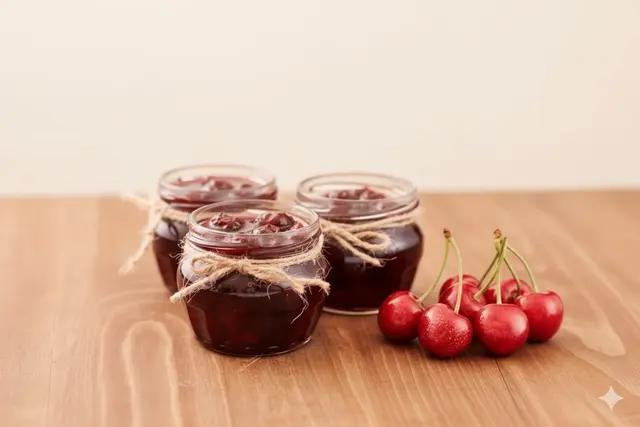
Modena Sour Cherry Tomatoes ( Created with Artificial Intelligence )
Name(s) | Modena Black Cherries | ||||||||
|---|---|---|---|---|---|---|---|---|---|
Product Type | Sour Cherry Marmalade (Confettura) | ||||||||
Geographical Indication | Geografica Protetta (IGP) / Protected Geographical Indication | ||||||||
Control Organization | CSQA (Via S. Gaetano 74 - THIENE (VI)) | ||||||||
Modena Sour Cherry Tomatoes (Original name: Amarene Brusche di Modena ) are a Protected Geographical Indication product reserved for a special sour cherry marmalade (confettura). This marmalade is known for its flavor, which has a balance between sweet and sour, and a distinct acidity.
The origin and fame of Modena Sour Cherry Tomato marmalade are linked to the "knowledge" (saper fare) passed down through the region for centuries, which stems from the necessity of rapid processing due to the fruit's short shelf life. The product's reputation is enhanced by its natural production processes, high fruit content, and the absence of additives. From the early 19th century, in the 1820s, a documented tradition of planting sour cherry trees around rural houses in the agricultural region of Modena for the production of syrup, preserves, and marmalade is documented. Furthermore, old cookbooks such as "L'arte di ben cucinare et istruire" from 1662 and 19th-century manuscripts indicate that the fruit was used in the preparation of local desserts, particularly homemade tarts (crostate casalinghe). From the early 20th century onward, the region was recognized as a production area (distretto produttivo), with numerous cherry farms, collection centers, cold storage facilities, and artisanal laboratories producing marmalade.
About Modena Sour Cherry Tomatoes ( ER Agricoltura caccia e pesca )
The raw material for marmalade comes from special "sour cherry (ciliegio acido)" varieties traditionally grown in the region. These varieties include Amarena di Castelvetro, Amarena di Vignola (short and long-stemmed), Amarena di Montagna, and Marasca di Vigo. Harvesting typically takes place between May 20 and July 31, depending on when the fruit ripens. The harvested fruit must be delivered to the production facility within twenty-four hours of harvest and cooled within two hours to prevent fermentation and maintain its quality. Only traditional production techniques are permitted in the preparation of marmalade to give the product its unique characteristics. This traditional method is based on concentration by thermal evaporation; no thickeners, colorings, or preservatives are allowed. Concentration can be carried out both in a traditional open vessel, directly on fire, and under vacuum at low temperatures. Before concentration, no more than 35% sucrose sugar by weight is added, and no other sugars are allowed. The fruit ratio used should be a minimum of 150 grams per 100 grams of finished product. To maintain the typical acidic and sweet flavor balance of marmalade, packaging (confection) should be carried out in-line at the end of the process, avoiding any further pasteurization steps.
The area where Modena Sour Cherry Tomatoes are grown and marmalade is produced is limited to the administrative territories of certain municipalities within the province of Modena (e.g., Modena, Vignola, Carpi, Sassuolo, etc.) and some municipalities within the neighboring province of Bologna. Each stage of production is documented and monitored through registration in special lists (registration of parcels, growers, producers) managed by the control structure to ensure traceability.
Modena Sour Cherry Tomato Marmalade is packaged in glass or tinned tin containers in various capacities, from 15 ml to 5000 ml for professional use. The label must include the IGP logo and name, as well as the EU Community Symbol (community symbol) and the name, title, and address of the producing company. The logo consists of a stylized figure of a dark green letter "A" with the center line replaced by a red cherry (Amarena). The use of private labels is permitted provided they do not compliment the product or mislead consumers. The producer reserves the right to indicate the variety, year of production, and cultivation method used on the label.
ER Agricoltura caccia e pesca. "Una confettura dal sapore unico con le Amarene brusche di Modena Igp." YouTube video. May 22, 2023. 01:41. https://www.youtube.com/watch?v=wtC3YKcY7t4.
MASAF – Ministry of Agriculture, Food and Forestry Policies. “Amarene Brusche di Modena (IGP)”. Accessed October 21, 2025. https://www.masaf.gov.it/flex/cm/pages/ServeAttachment.php/L/IT/D/5%252F1%252F0%252FD.8533281919a8f9b0524a/P/BLOB%3AID%3D3343/E/pdf?mode=download.

Modena Sour Cherry Tomatoes ( Created with Artificial Intelligence )
Name(s) | Modena Black Cherries | ||||||||
|---|---|---|---|---|---|---|---|---|---|
Product Type | Sour Cherry Marmalade (Confettura) | ||||||||
Geographical Indication | Geografica Protetta (IGP) / Protected Geographical Indication | ||||||||
Control Organization | CSQA (Via S. Gaetano 74 - THIENE (VI)) | ||||||||
No Discussion Added Yet
Start discussion for "Modena Sour Cherry Tomatoes" article
Historical Origin and Reputation
Production Method
Production Area
Packaging and Labeling
This article was created with the support of artificial intelligence.