
+2 More

Name(s) | Mount Fuji (富士山 Fujisan) | ||||||||
|---|---|---|---|---|---|---|---|---|---|
Type(s) | Stratovolcano | ||||||||
Location | Honshu Japan (100 km Southwest of Tokyo) | ||||||||
Cultural Significance | Sacred Site in Shintō and Buddhism | ||||||||
UNESCO Status | World Cultural Heritage Site (2013) Under “Fujisan, Sacred Place and Source of Artistic Inspiration” | ||||||||
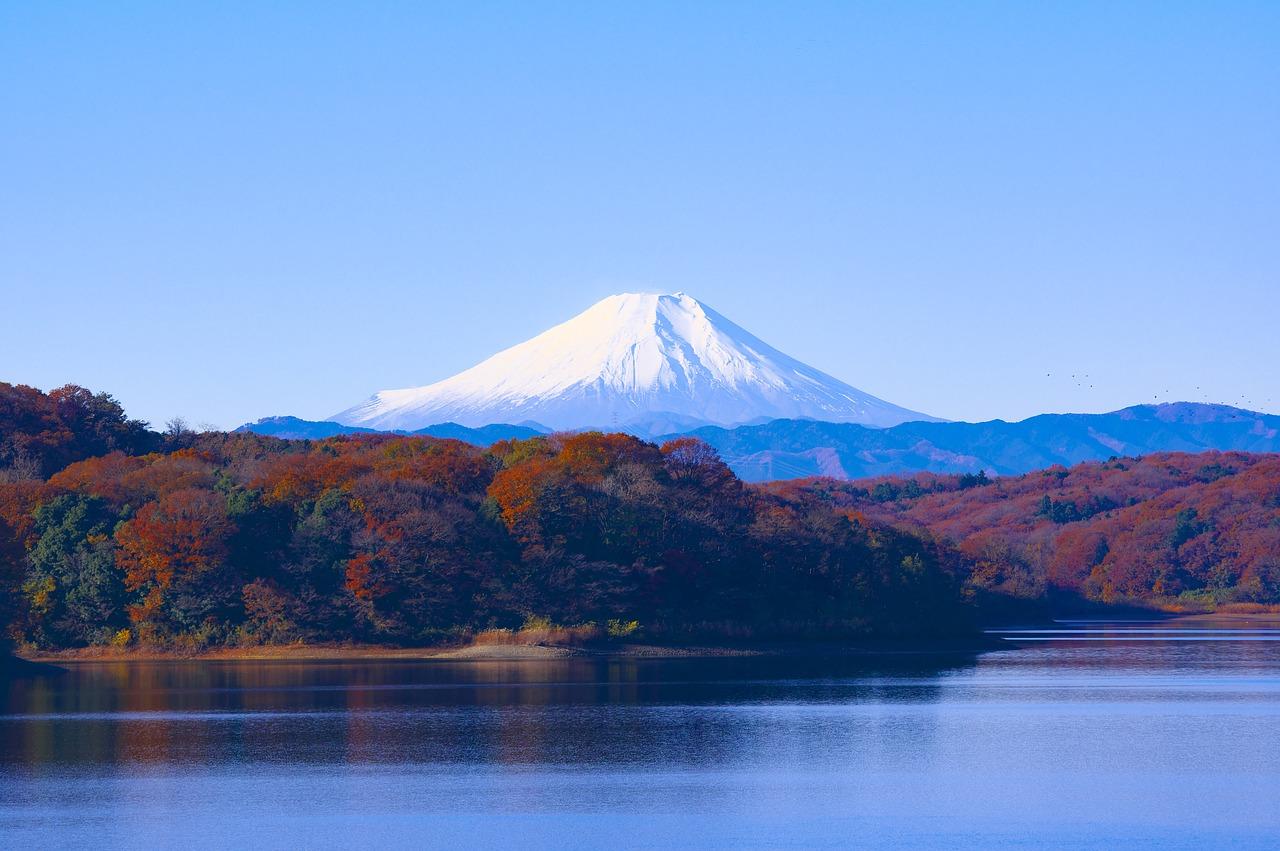
Mount Fuji (Japanese: 富士山, Fujisan) is the highest peak in Japan, standing at 3,776 meters. It is located in central Honshu Island, approximately 100 kilometers southwest of Tokyo. Known for its symmetrical conical shape, this stratovolcano is snow-capped for about half the year. Mount Fuji has long been recognized for its aesthetic and spiritual significance, both by the Japanese people and international observers.

Mount Fuji (World History Encyclopedia)
Mount Fuji is a geologically young volcano that formed approximately 100,000 years ago. Its first major eruption left a volcanic ash layer up to three meters thick across Japan’s Kantō Plain. The mountain’s iconic conical shape developed around 10,000 years ago. According to legend, the mountain appeared overnight, coinciding with the formation of Lake Biwa. In some narratives, it is said that rocks falling from the sky completed the summit.
Mount Fuji has played a central role in Japanese religious life for centuries. Reverence and fear toward Asama-no-Ōkami, a deity associated with volcanic fire, combined with frequent eruptions during the 8th and 9th centuries, led to the mountain’s sanctification. In this context, significant shrines such as Fujisan Hongū Sengen Taisha in Shizuoka and Kawaguchi Asama Jinja in Yamanashi were established.
Following a decline in volcanic activity during the 11th century, Mount Fuji began to be visited as a site of pilgrimage and purification. Ascetic practices were carried out on its slopes by mountain monks of the shugendō tradition. From the 17th century onward, the folk faith known as Fuji-kō, founded by Hasegawa Kakugyō (1541–1646), gained popularity. Within this belief system, followers conducted collective purification rituals at sacred sites such as the Fuji Five Lakes, the Oshino Hakkai springs, and the Shiraito Falls.
Mount Fuji has served as a source of inspiration in Japanese literature, painting, and folk art for centuries. The mountain frequently appears in waka and tanka poetry, in Noh plays (such as Hagoromo), and in ukiyo-e woodblock prints, particularly in works by artists like Katsushika Hokusai and Utagawa Hiroshige. Its symmetrical form has become a symbol of purity, grandeur, and tranquility within the Japanese aesthetic tradition. The image of Mount Fuji has also had an impact on Western art, appearing in the works of artists such as Vincent van Gogh and composers like Claude Debussy.
During the medieval period, Mount Fuji’s summit was symbolically associated with an eight-petaled lotus flower, with each “petal” linked to a Buddha or bodhisattva, such as Yakushi, Kannon, Jizō, Sengen, Dainichi, Amida, Fudō, and Shaka. This symbolic structure was connected to the Taizōkai Mandala of Shingon Buddhism, framing the mountain as a sacred site reflecting the wisdom of Dainichi Nyorai (a deity in Ethnic Buddhism).
The “spiritual pond” in the mountain’s crater has been described as a mystical place where deities and demons occasionally appear and where the water is believed to possess healing properties. Additionally, the Hitoana (“Human Hole”) cave at the foot of the mountain has been associated with the underworld or hell. In local legends, this site is depicted as a liminal space where humans encounter gods, dragons, and the realms beyond.
In 2013, Mount Fuji was inscribed on the UNESCO World Heritage List as a Cultural Site under the title “Fujisan, Sacred Place and Source of Artistic Inspiration.” In this designation, the mountain was recognized not only for its natural beauty but also as a cultural landscape encompassing religious structures, pilgrimage routes, lakes, waterfalls, and historic lodging houses (oshi).
Mount Fuji is one of Japan’s most visited natural and cultural landmarks. Sites such as the Fuji Five Lakes (Kawaguchi, Yamanaka, Sai, Shoji, Motosu), the Oshino Hakkai springs, the coastal pine forest of Miho no Matsubara, and Arakurayama Sengen Park are preserved and opened to visitors as part of this cultural landscape. Since the 2000s, environmental measures aimed at sustainable tourism have been strengthened—for example, the installation of eco-friendly toilet systems and the enforcement of building regulations. With its striking natural form and deep cultural and spiritual significance, Mount Fuji holds a unique place in the Japanese national identity.
World History Encyclopedia. Photograph. Accessed July 9, 2025. https://www.worldhistory.org/uploads/images/6473.jpg?v=1752038310-0.
“Mount Fuji Japan Blue Sky Mountain.” Pixabay. Photograph. Accessed July 10, 2025. https://pixabay.com/photos/mount-fuji-japan-blue-sky-mountain-1898348/.
“Japan Mount Fuji Sayama Lake.” Pixabay. Photograph. Accessed July 10, 2025. https://pixabay.com/photos/japan-mount-fuji-sayama-lake-1706942/.
Cabinet Office of Japan, Mt. Fuji: World Heritage, Highlighting Japan, no. 176 (January 2023): 2–29. Accessed July 10, 2025. https://www.gov-online.go.jp/pdf/hlj/20230101/hlj202301_Mt_Fuji_World_Heritage.pdf.
Royall Tyler. “A Glimpse of Mt. Fuji in Legend and Cult.” The Journal of the Association of Teachers of Japanese, Vol. 16, No. 2 (1981), pp. 140–165. Accessed July 10, 2025. https://www.jstor.org/stable/489324?seq=1.
Ken’ichi Ishii, “Fuji Kyuko and Tourism in Mt Fuji Area,” Japan Railway & Transport Review 55 (March 2010): 26–29. Accessed July 10, 2025. https://www.gov-online.go.jp/pdf/hlj/20230101/hlj202301_Mt_Fuji_World_Heritage.pdf.

Name(s) | Mount Fuji (富士山 Fujisan) | ||||||||
|---|---|---|---|---|---|---|---|---|---|
Type(s) | Stratovolcano | ||||||||
Location | Honshu Japan (100 km Southwest of Tokyo) | ||||||||
Cultural Significance | Sacred Site in Shintō and Buddhism | ||||||||
UNESCO Status | World Cultural Heritage Site (2013) Under “Fujisan, Sacred Place and Source of Artistic Inspiration” | ||||||||
Geological Formation
Cultural and Religious Significance
Literary and Artistic Influence
The Summit and Symbolic Meanings
UNESCO World Heritage Status
Modern Tourism and Conservation
This article was created with the support of artificial intelligence.