

+1 More

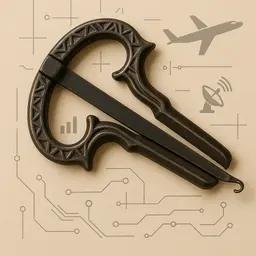
Mouth Harp
Type(s) | Lamellophone (Heteroglot / Idioglot) | ||||||||
|---|---|---|---|---|---|---|---|---|---|
Material(s) | Metal (Steel Brass) Bone Bamboo | ||||||||
Origin(s) | First in China B.C. ~2000 Spread Through Central Asia | ||||||||
Distribution(s) | Türkiye Europe Nepal India Siberia Central Asia | ||||||||
Usage | Shamanic Ritual, Folk Music, Classical Music, Ethnomusicology | ||||||||
Acoustics | Tongue Vibration + Mouth Resonance for Harmonic Production | ||||||||
The mouth harp is a traditional instrument made from hard materials such as metal, bamboo, or bone, and produces sound through resonance within the mouth. This instrument, belonging to the lamellophone class, creates sound by vibrating a flexible reed with the finger. The instrument is placed in the mouth and held stable with the help of the lips, teeth, or jaw, and the player's oral cavity functions as a resonance chamber. In this regard, the mouth harp possesses both idiophonic and aerophonic qualities in sound production.

Mouth Harp (AA)
The origin of the mouth harp is attributed to the Shaanxi region of China, with archaeological findings dating back to 2000 BCE. Over time, the instrument spread westward through Central Asia; it was adopted by Turkic communities such as Uzbekistan, Kazakhstan, Tuva, and Yakutia, and used in Shamanistic rituals and folk music performances. With this spread extending to Anatolia, the mouth harp has gained a limited place among Turkish folk instruments.
The mouth harp is known by different names in various cultures. In the Turkic world, it is known as "temir komuz" or "xomus," while in Europe it is called "Jew's harp," in German "Maultrommel," and in India "morsing." Material selection and structural design create the regional variations of the instrument. While those made of metal are common, forms carved from bamboo or bone are also present in regions like Tibet and Nepal.
The mouth harp is held steady with one hand; its flexible reed is vibrated with a finger. This vibration resonates within the oral cavity, creating different timbres. Different harmonics can be obtained through the air volume in the mouth and throat movements. The instrument is more of a rhythm and effect instrument that produces harmonic-based timbres, rather than a melodic one.
Mouth Harp (Human in Nature)
Besides its use in Shamanistic traditions, the mouth harp can also be described as a "speaking instrument" due to its sound-producing potential. The different frequencies produced by the oral cavity sometimes allow for imitative (onomatopoeic) sound patterns. This contributes to the understanding of vowel harmonies and timbral expressions in some languages.
The mouth harp is gaining increasing interest in the fields of ethnomusicology and organology. Interdisciplinary studies are being conducted on this instrument within the context of traditional instrument preservation, performance analyses, and sound technologies. Furthermore, mouth harp performances are frequently featured at traditional festivals, on digital platforms, and in academic presentations.
Doğadaki İnsan. ''Ağız kopuzu hikayesi ve performansı.'' Doğadaki İnsan Youtube Channel. Accessed July 15, 2025. https://www.youtube.com/watch?v=RlGO8_fV4Dw
Erel, Fatih. ''Kazakh culture is introduced to the world at the 5th World Nomad Games.'' Anadolu Agency. Accessed July 15, 2025. https://www.aa.com.tr/tr/kultur/kazak-kulturu-5-dunya-gocebe-oyunlarinda-dunyaya-tanitiliyor/3329268
Nikolsky, Aleksey. “Talking Jew’s Harp and Its Relation to Vowel Harmony as a Paradigm of Formative Influence of Music on Language.” In The Origins of Language Revisited, 217–322. Accessed July 15, 2025. https://www.researchgate.net/publication/339165696_Talking_Jew%27s_Harp_and_Its_Relation_to_Vowel_Harmony_as_a_Paradigm_of_Formative_Influence_of_Music_on_Language
Özkul, Abdullah. ''Instrument-loving professor collected approximately 200 musical instruments from 30 countries.'' Anadolu Agency. Accessed July 15, 2025. https://www.aa.com.tr/tr/kultur-sanat/enstruman-hayrani-profesor-30-ulkeden-yaklasik-200-muzik-aleti-biriktirdi/2571566
Wright, Michael. ''The Search for the Origins of the Jew’s Harp.'' The Silk Road. Accessed July 15, 2025. http://www.silkroadfoundation.org/newsletter/vol2num2/Harp.htm


Mouth Harp
Type(s) | Lamellophone (Heteroglot / Idioglot) | ||||||||
|---|---|---|---|---|---|---|---|---|---|
Material(s) | Metal (Steel Brass) Bone Bamboo | ||||||||
Origin(s) | First in China B.C. ~2000 Spread Through Central Asia | ||||||||
Distribution(s) | Türkiye Europe Nepal India Siberia Central Asia | ||||||||
Usage | Shamanic Ritual, Folk Music, Classical Music, Ethnomusicology | ||||||||
Acoustics | Tongue Vibration + Mouth Resonance for Harmonic Production | ||||||||
Historical Background
Regional Variations
Playing Technique and Acoustic Mechanism
Cultural Context and Phonetic Aspects
Contemporary Use and Academic Approaches
This article was created with the support of artificial intelligence.