


+2 More

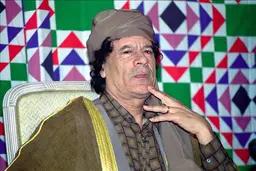
Muammer Ebu Minyar el-Kaddafi
Name(s) | Muammar Abu Minyar al-Gaddafi | ||||||||
|---|---|---|---|---|---|---|---|---|---|
Birth | 1942, Sirte, Libya | ||||||||
Death | October 20, 2011, Sirte, Libya | ||||||||
Time in Power | 1969–2011 | ||||||||
Ideology | Third International Theory (a blend of Islam and socialism) | ||||||||
Major Work | The Green Book (1975) | ||||||||
Key Events | 1969: Coup d'état overthrowing King Idris,1977: Declaration of the Socialist People's Libyan Arab Jamahiriya,1988: Lockerbie bombing,2011: Arab Spring and the fall of the regime | ||||||||
Foreign Policy | Arab nationalism, anti-imperialism, support for international terrorism, proposal of African Union | ||||||||
Relations with Türkiye | Initially neutral, later supportive of opposition during the Arab Spring | ||||||||
Muammar Kaddafi was a statesman who ruled Libya between 1969 and 2011 and profoundly transformed the country’s political, social, and economic structure in the process. Kaddafi, who ended the Kingdom of Libya with a bloodless coup at the age of 27, became a controversial figure in both regional and global politics during his nearly 42-year rule. The “Third Universal Theory” he developed and the Green Book that forms the basis of this theory reveal his ideological orientation. Welfare policies based on oil revenues, his authoritarian management style, and the strategies he followed in international relations were the fundamental elements that shaped Kaddafi’s political identity.
Muammar Abu Minyar al-Kaddafi was born in 1942 in the Sirte region of Libya to a family of Bedouin origin. At a young age, he was influenced by the Arab nationalist ideas of Egyptian President Gamal Abdel Nasser; his political awareness began to develop, especially during the Suez Crisis in 1956. Kaddafi began his education by studying history at the University of Libya, then joined the Military Academy in Benghazi, and in 1966, he received short-term military training in England. During his student years, his opposition to the monarchy gradually increased, which led him to take actions aimed at regime change in the following period.
Kaddafi, who carried out a bloodless military coup on September 1, 1969, while King Idris was abroad, became the head of the "Revolutionary Command Council" and declared the Libyan Arab Republic. Following the coup, foreign military bases were closed, and many strategic areas, especially the oil sector, were nationalized. During the same process, the elite class belonging to the monarchy period was eliminated, and a reckoning with the previous regime was carried out through people's courts. These developments were evaluated as part of the goal of establishing Libya as a nationalist-based state structure independent of foreign interventions.
In the 1970s, Kaddafi wrote his work called the Green Book, in which he systematized his ideological vision. The “Third Universal Theory” included in this book offers an alternative political and social model proposal against capitalism and socialism. The theory represents the combination of some principles of Islam with socialism, and advocates a form of government based on direct popular participation. Parliamentary democracy and political parties were criticized on the grounds that they did not fully reflect the will of the people; “people’s congresses” and “people’s committees” were suggested instead.
In 1977, Libya was redefined as the “People’s Socialist Jamahiriya”, and the Jamahiriya system theoretically aimed to spread power to the grassroots. However, in practice, the administration evolved into a centralized structure, and opposition was suppressed. Kaddafi took all levels of the state mechanism under his control and banned political parties and independent civil society organizations.
In Kaddafi's domestic policy, an economic structure based on oil revenues is at the forefront. Between 1971 and 1974, a large portion of oil production was nationalized, and various social welfare projects were implemented with the revenues obtained. Education and health services were provided free of charge, infrastructure investments were accelerated, and housing, scholarships, and social assistance were expanded. As a result of these policies, significant increases in life expectancy and literacy rates were observed. However, despite these developments, fundamental rights and freedoms were severely restricted; freedom of expression, political pluralism, and the principles of the rule of law were systematically violated.
Kaddafi's foreign policy was determined by the principles of Arab nationalism, anti-imperialism, and the protection of Muslim societies. Attempts to establish an Arab League with countries such as Egypt, Syria, and Tunisia failed; instead, it became a controversial actor on a global scale, with the support provided to various armed groups. Libya was isolated by Western countries, especially in the 1980s, due to the support given to organizations such as the Palestine Liberation Organization (PLO), the IRA, and the Red Brigades. In 1986, the US bombed the cities of Tripoli and Benghazi; Libya was held responsible for the Lockerbie plane attack in 1988, and international sanctions were imposed on the country. From the 1990s onwards, Kaddafi turned to the African continent and contributed to the formation of the African Union by putting forward the idea of a "United States of Africa". In the 2000s, he made efforts to normalize relations with the West; he accepted responsibility for the Lockerbie attack, paid compensation, and pledged to end weapons of mass destruction programs.
In 2011, mass protests began in Libya as a result of the Arab Spring, and were particularly concentrated in the city of Benghazi. The Kaddafi regime adopted a harsh stance against the demonstrators’ demands for democratization; it attempted to suppress the opposition by using special forces and mercenaries. This paved the way for international intervention with the United Nations Security Council resolutions 1970 and 1973. The military operations launched in March 2011 under the leadership of NATO supported the opposition forces; with the fall of Tripoli in August, the Kaddafi regime effectively ended. Kaddafi, who was captured in his birthplace of Sirte on October 20, 2011, was killed on the same day.
Türkiye initially adopted a neutral position during the Arab Spring process in Libya; it advocated for a peaceful resolution of the crisis by establishing dialogue with the Kaddafi regime. However, following the regime’s violence against civilians, Türkiye supported the NATO operation within the framework of United Nations resolutions. Türkiye, which has taken on an active role in areas such as the implementation of a no-fly zone, humanitarian aid activities, and the protection of civilians, has developed its relations with the Libyan National Transitional Council.
Anadolu Ajansı. "Attempted to Buy Weapons from China." AA, September 28, 2011. https://www.aa.com.tr/tr/dunya/cinden-silah-almaya-kalkmis/414272.
Anadolu Ajansı. "Gaddafi's Son Captured Dead." AA, October 20, 2011. https://www.aa.com.tr/tr/dunya/kaddafinin-oglu-olu-ele-gecirildi/316534.
Anderson, Jon Lee. "King of Kings." The New Yorker, November 7, 2011. Accessed May 1, 2025. https://www.newyorker.com/magazine/2011/11/07/king-of-kings-jon-lee-anderson.
BBC Türkçe. "Muammar Gaddafi: Libya's Unique Leader." BBC Türkçe, October 20, 2011. https://www.bbc.com/turkce/ozeldosyalar/2011/10/111020_profile_gaddafi.
Kibar Önder, Neslihan. "Gaddafi Era Libyan Domestic and Foreign Policy: Turkey's Policy in the Libyan Arab Spring." Karabük University Institute of Graduate Studies Department of International Political Economy, 2021. https://dergipark.org.tr/tr/download/article-file/1663802.

Muammer Ebu Minyar el-Kaddafi
Name(s) | Muammar Abu Minyar al-Gaddafi | ||||||||
|---|---|---|---|---|---|---|---|---|---|
Birth | 1942, Sirte, Libya | ||||||||
Death | October 20, 2011, Sirte, Libya | ||||||||
Time in Power | 1969–2011 | ||||||||
Ideology | Third International Theory (a blend of Islam and socialism) | ||||||||
Major Work | The Green Book (1975) | ||||||||
Key Events | 1969: Coup d'état overthrowing King Idris,1977: Declaration of the Socialist People's Libyan Arab Jamahiriya,1988: Lockerbie bombing,2011: Arab Spring and the fall of the regime | ||||||||
Foreign Policy | Arab nationalism, anti-imperialism, support for international terrorism, proposal of African Union | ||||||||
Relations with Türkiye | Initially neutral, later supportive of opposition during the Arab Spring | ||||||||
Early Life and Military Career
The 1969 Coup and His Rise to Power
Ideological Orientation: Third Universal Theory and the Green Book
Domestic Policy and Social Welfare Practices
Foreign Policy and International Relations
The 2011 Arab Spring and the End of the Regime
Türkiye's Attitude