



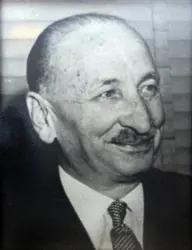
Necmettin Sadak
Birth Year | 1890 | ||||||||
|---|---|---|---|---|---|---|---|---|---|
Place of Birth | Isparta (Ottoman Republic) | ||||||||
Date of Death | September 21 1953 | ||||||||
Place of Death | New York (USA) | ||||||||
Grave | Zincirlikuyu Cemetery (Istanbul) | ||||||||
Occupation(s) | Diplomat Politician Journalist | ||||||||
Education | Lyon University Mektebi Sultani (Galatasaray High School) | ||||||||
Position(s) | Minister of Foreign Affairs (Hasan Saka Government 1947 – May 1950) Permanent Representative of Turkey to the League of Nations (1936) Member of TBMM Foreign Affairs Committee (various terms since 1927) Sivas Deputy (III. IV. V. and VI. Terms) | ||||||||
Political Party(s) | Republican People Party (CHP) | ||||||||
Necmettin Sadak (1890–1953) is known as one of Turkey's leading journalists, politicians, and diplomats, having undertaken roles in both academic and political spheres during the transition from the Ottoman Empire to the Republic. After completing his education in France, he contributed to the Republic's modernization process through his work as a faculty member, followed by political and diplomatic duties. He served as the Minister of Foreign Affairs between 1949 and 1950, increasing Turkey's effectiveness in foreign policy.
Necmettin Sadak was born in Isparta in 1890, the son of Sadık Şihabeddin Bey. His father was a jurist and civil servant who served as a court president in various cities of the Ottoman Empire. Growing up in this family environment laid a foundation for Necmettin Bey's intellectual development.
After completing his primary education in Edirne, he continued his secondary education in high schools (idadiler) in İzmir and Konya. Upon his father's assignment to Istanbul, he began his education at Mektebi Sultani (Galatasaray High School) there and graduated in 1910.
After graduation, he continued his education at Lyon University in France, pursuing higher education in social sciences. He returned to Turkey in 1914, stepping into his academic and professional life.
After returning to Turkey, he worked as an interpreter at the Ministry of Education (Maarif Nezareti) and as an examiner in the copyright-translation department. In 1916, he was appointed as an assistant professor of Sociology (İçtimaiyat) at Istanbul Darülfünunu. Following the death of the famous sociologist Ziya Gökalp, he was appointed Professor of Sociology. During this period, he made significant contributions in the field of social sciences, rising to a recognized position in academic circles.
He actively worked as a journalist during the founding period of the Republic. He supported the early activities of the Republican People's Party, writing articles to explain the reforms to the public. He drew attention with his ideas supporting the National Struggle. Together with Ruşen Eşref and Midhat Sadullah, he prepared the book "Cumhuriyet Kıraati" (The Republic Reading), contributing to the awareness of young people regarding the Republic and social reforms.

Necmettin Sadak in Servet-i Fünun Magazine, September 15, 1927 - (picryl)
In 1928, he entered the Grand National Assembly as a deputy for Sivas. During this period, he served on the Education and Foreign Affairs Commissions.
He participated in important conferences representing Turkey abroad. He successfully represented Turkey at the 1932 Geneva Disarmament Conference and the 1936 Montreux Straits Convention. The adoption of the Montreux Convention, strengthening Turkey's sovereignty over the Straits, took place during this period.
He participated in various meetings as Turkey's delegate to the League of Nations. He strived to enhance Turkey's prestige in the international arena. Under the looming threat of World War II, he supported Turkey's security and foreign policy measures. He continued his activities in the Foreign Affairs Commission, supporting Turkey's peaceful policies.
On January 16, 1949, he became the Minister of Foreign Affairs in the Hasan Saka Government. This was a critical period during which Turkey accelerated its integration with the West under Cold War conditions. Necmettin Sadak ensured Turkey's participation in the Marshall Plan and played an active role in Turkey's accession process to the Council of Europe. He defined the Council of Europe as an important institution in terms of human rights, freedoms, and international cooperation. He continued his ministerial duties until 1950.
With the Democratic Party coming to power, he resigned from his position as Minister of Foreign Affairs on May 22, 1950. He withdrew from politics and returned to his chief editorial position at the Akşam newspaper. However, health problems emerged. Due to a lung ailment, he first underwent surgery in Switzerland, then received cancer treatment in the USA.
After approximately a month and a half of cancer treatment in New York, he passed away on September 21, 1953. His body was brought to Istanbul and buried in Zincirlikuyu Cemetery. His death received extensive coverage in both domestic and international press. He was remembered as a politician, diplomat, and intellectual nurtured by Turkey during the early Republican period.
Atatürk Encyclopedia. “Necmettin Sadak (1890–1953).” Accessed May 27, 2025. https://ataturkansiklopedisi.gov.tr/detay/457/Necmettin-Sadak-(1890-1953).
Ministry of Foreign Affairs of the Republic of Türkiye. “Biography of Mr. Necmettin Sadak.” Accessed May 27, 2025. https://www.mfa.gov.tr/sayin-necmettin-sadak_in-ozgecmisi.tr.mfa.
Picryl. “1927-09-15 Servet-i Fünun Istanbul Deputy Necmettin Sadak.” Accessed May 27, 2025. https://picryl.com/media/1927-09-15-serveti-funun-istanbul-mebusu-necmettin-sadak-7728f5.

Necmettin Sadak
Birth Year | 1890 | ||||||||
|---|---|---|---|---|---|---|---|---|---|
Place of Birth | Isparta (Ottoman Republic) | ||||||||
Date of Death | September 21 1953 | ||||||||
Place of Death | New York (USA) | ||||||||
Grave | Zincirlikuyu Cemetery (Istanbul) | ||||||||
Occupation(s) | Diplomat Politician Journalist | ||||||||
Education | Lyon University Mektebi Sultani (Galatasaray High School) | ||||||||
Position(s) | Minister of Foreign Affairs (Hasan Saka Government 1947 – May 1950) Permanent Representative of Turkey to the League of Nations (1936) Member of TBMM Foreign Affairs Committee (various terms since 1927) Sivas Deputy (III. IV. V. and VI. Terms) | ||||||||
Political Party(s) | Republican People Party (CHP) | ||||||||
Birth and Family Background (1890 – 1905)
Education Years (1905 – 1914)
Academic Career and Early Professional Life (1914 – 1928)
Journalism and National Struggle Period (1920s)
Beginning of Political Life and Early Years in the Grand National Assembly (1928 – 1939)
League of Nations and International Representation (1930s – 1940s)
Period as Minister of Foreign Affairs (1949 – 1950)
End of Political Life and Journalism (1950 – 1953)
Health Issues and Death (1953)
This article was created with the support of artificial intelligence.