Type of Geographical Indication | Protected Designation of Origin | ||||||||
|---|---|---|---|---|---|---|---|---|---|
Registration Numbe | 491 | ||||||||
Registration Date | March 12, 2020 | ||||||||
Product / Product Group(s) | Seasonings/flavorings and salt for food sauces | ||||||||
Province(s) | Gaziantep | ||||||||
Applicant/Registrant(s) | Nizip Commodity Exchange | ||||||||
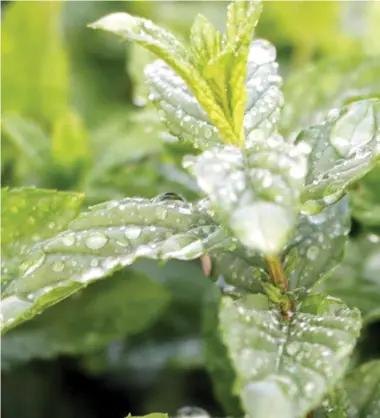
Nizip mint (Mentha spicata L.) is a seasoning herb closely associated with Nizip district in Gaziantep, Türkiye, distinguished by its unique aroma and green color. Registered as a designation of origin on March 12, 2020, under the Industrial Property Law No. 6769, it has been protected by a geographical indication since that date. The registration was carried out by the Nizip Commodity Exchange.
Nizip mint is marketed in both fresh and dried forms. Its characteristic aroma is derived from volatile oil components, particularly carvone (40–70%) and limonene (20%). Other monoterpenes and sesquiterpenes, such as carveol, menthol, borneol, linalool, and menthone, further enrich its aroma profile. These chemical components distinguish Nizip mint from other mint varieties.
The product’s quality is influenced by environmental factors, including Nizip’s continental climate, day-night temperature differences (averaging 24°C during harvest), long sunlight exposure, low relative humidity, and the region’s elevation. These conditions, combined with traditional shade-drying methods, minimize aroma loss and preserve the mint’s distinctive green color.
Nizip mint cultivation began in the 1960s. Production is carried out through a seedling method locally known as “şitilleme.” During the flowering period, fresh branches are cut and planted in finger-depth holes, typically between April 15 and May 15.
Fertilization, referred to locally as “zibilleme,” is done in two stages using sheep and goat manure: the first in February and the second approximately 45 days later. Irrigation, sourced from groundwater, is applied every 6–10 days, adjusted based on plant height and weather conditions.
Harvesting, known as “kırım,” is done by hand. The same root can yield 3–4 harvests per year, with productivity lasting 2–3 years. Harvesting occurs when the plant reaches 40–50 cm in height and the lower leaves begin to drop.
Drying is performed in the shade on a lined cloth. The mint is left overnight to reduce moisture, then moved to a larger shaded area in the morning and turned with a pitchfork throughout the day. In the evening, leaves are separated from stems using rotating rubber crushers, aerated with a pitchfork to remove stems, and sifted to eliminate foreign matter.
Nizip mint is grown in clay-loam soils rich in phosphorus, manganese, potassium, and lime, with a slightly alkaline pH, no salinity, and moderate organic matter content. Irrigation water, sourced from groundwater, is moderately hard, slightly alkaline, and has low conductivity.
The production and processing of Nizip mint are inspected at least once a year under the coordination of the Nizip Commodity Exchange. The inspection committee includes representatives from the Nizip District Directorate of Agriculture and Forestry, Nizip Municipality, Gaziantep University Nizip Vocational School Food Technology Department, Nizip Chamber of Commerce and Industry, and Nizip Artisans and Craftsmen Chamber. Physical and chemical analyses are conducted as needed, and the “Nizip Mint” label and designation of origin emblem on packaging are also inspected.
Gaziantep Büyükşehir Belediyesi. "Nizip Nanesi." Accessed October 25, 2025. https://ci.gaziantep.bel.tr/Urunler/nizip-nanesi-1015.
Türk Patent ve Marka Kurumu. "Nizip Nanesi." Coğrafi İşaretler Portalı. Accessed October 25, 2025. https://ci.turkpatent.gov.tr/cografi-isaretler/detay/38458.
Türk Patent ve Marka Kurumu. Nizip Nanesi Coğrafi İşaret Sicil Belgesi. Accessed October 25, 2025. https://ci.turkpatent.gov.tr/Files/GeographicalSigns/816bd55b-42e3-4af3-86e2-f5dfe42d3a9d.pdf.

Type of Geographical Indication | Protected Designation of Origin | ||||||||
|---|---|---|---|---|---|---|---|---|---|
Registration Numbe | 491 | ||||||||
Registration Date | March 12, 2020 | ||||||||
Product / Product Group(s) | Seasonings/flavorings and salt for food sauces | ||||||||
Province(s) | Gaziantep | ||||||||
Applicant/Registrant(s) | Nizip Commodity Exchange | ||||||||
Distinctive Characteristics
Agricultural Production Process
Drying and Processing
Soil and Water Characteristics
Inspection Mechanism
This article was created with the support of artificial intelligence.