+1 More

Origin(s) | Türkiye | ||||||||
|---|---|---|---|---|---|---|---|---|---|
Manufacturer(s) | Nuri Demirağ Aircraft Factory | ||||||||
Aircraft Type(s) | Training and sport aircraft | ||||||||
Designer | Selahattin Reşit Alan (Chief Engineer) Engineering team of Nuri Demirağ Aircraft Factory | ||||||||
First Flight(s) | 1936 Yeşilköy Airfield | ||||||||
Empty Weight | ~650 kg | ||||||||
Wingspan | 9.74 m | ||||||||
Length(s) | 7.3 m | ||||||||
Height(s) | 2.44 m | ||||||||
Wing Area | 21.8 m² | ||||||||
Engine(s) | 150 horsepower Walter Gemma I radial engine | ||||||||
Structural Features | Tandem seating arrangement (student + instructor) Fixed landing gear Fabric-covered airframe Wooden fuselage | ||||||||
Nu.D-36 was a domestically designed training and sport aircraft produced in the Nuri Demirağ Aircraft Factory, established in the 1930s by Turkish industrialist and entrepreneur Nuri Demirağ, who was a pioneer of aviation development in Türkiye. As a tangible example of Türkiye’s vision to manufacture aircraft using its own resources, the Nu.D-36 holds significant technical and historical importance in Turkish aviation history.

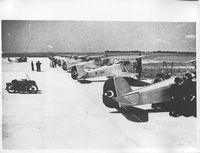
Nu.D-36 Training Aircraft (picryl)
The design and production of the Nu.D-36 were carried out in the modern aircraft factory founded by Nuri Demirağ in Yeşilköy in 1936. The aircraft was developed by a team of local engineers and technicians, who studied contemporary European examples and created an original design.
The design plans of the Nu.D-36 were prepared by Selahattin Reşit Alan, one of Türkiye’s first aircraft engineers. The aircraft was developed with a focus on aerodynamic efficiency, lightweight construction, and ease of maintenance.
The first prototype was completed in 1936, and test flights were successfully conducted at Yeşilköy Airport. Parameters such as stability, maneuverability, and fuel consumption were evaluated during the tests, and the results confirmed the Nu.D-36’s suitability as a training aircraft. The production process of the Nu.D-36 also laid the foundation for the development of more advanced models such as the Nu.D-38.
In a test flight conducted in 1938, lead engineer Selahattin Reşit Alan, who was also piloting the aircraft, encountered an unexpected obstacle while attempting to land at Eskişehir İnönü Airfield. Due to a trench dug on the runway to prevent animal entry, the aircraft crashed, and Alan tragically lost his life. Following the incident, the Turkish Aeronautical Association (THK) attributed the accident to structural faults in the aircraft and suspended the procurement process. Nuri Demirağ contested this accusation in court and won the case. However, THK still did not purchase the aircraft, and new legal regulations were introduced that restricted Demirağ from exporting his aircraft. Consequently, the factory, unable to receive new orders, was forced to cease aircraft production in 1944. In the following period, the facility shifted its focus to limited-scale metal component manufacturing.
The primary goal of producing the Nu.D-36 was to develop a reliable and economical aircraft platform with domestic capabilities for both civilian and military pilot training. The aircraft was designed as a lightweight, durable, and easily controllable model to safely conduct flight training for young pilots and to support the spread of aviation. By reducing foreign dependency, the project aimed to strengthen national civil and defense aviation sectors. Additionally, aircraft such as the Nu.D-36 contributed to the development of technical human resources in the aviation industry by enhancing local manufacturing capabilities.

Acrobatic Manuever of Nu.D-36 (Nuri Demirdağ Website)
The design of the Nu.D-36 prioritized safety for beginner pilots, suitability for light sport flights, balance, and cost-effectiveness. The aircraft was constructed using a wood frame covered with fabric, which helped keep production costs low and simplified maintenance. The cockpit featured a tandem seating arrangement for two people, allowing both the instructor and student to fly simultaneously.
At its core, the aircraft was powered by a 45-horsepower Walter Mikron engine, a reliable model widely used in light aircraft of the era. Capable of reaching a maximum speed of approximately 160 km/h and offering a range of around 480 km, the Nu.D-36 was ideal for training and short-range civilian missions. It featured fixed landing gear, contributing to its simple and durable design.
With an empty weight of around 650 kilograms, the aircraft demonstrated positive performance in initial flight tests, especially in parameters such as stability, ease of control, and fuel economy—fulfilling all requirements for a training aircraft. It was used at Nuri Demirağ’s aviation school for pilot training. Functionality, cost-efficiency, and national capability were central considerations in its design.
Nu.D-36 was one of the first aircraft fully designed and produced domestically in Türkiye using national engineering resources. Nuri Demirağ's view of aviation as a national cause inspired the development of this aircraft. However, due to a decline in state support for aviation and political pressures, domestic projects like the Nu.D-36 never achieved widespread production.
The closure of the factory and the discontinuation of its projects significantly hampered the development of Türkiye’s domestic aviation industry for many years. Nonetheless, the Nu.D-36 remains a powerful symbol of early Turkish engineering achievements and national ambition in aviation.
Kurt, Emin. “The Story of the Fighter Aircraft Designed at Nuri Demirağ's Factory in Istanbul and Tested in Germany.” Osmanlı Bilimi Araştırmaları (Studies in Ottoman Science) 22, no. 1 (2021): 215–218. Accessed July 26, 2025. https://dergipark.org.tr/tr/download/article-file/1400270
Nuri Demirdağ. “Photographs.” Nuri Demirdağ Official Website. Accessed July 26, 2025. http://www.nuridemirag.com/fotograf.html.
Picryl. “Nuri Demirdağ Nu.D.36 – A Black and White Photo of a Small Plane.” Picryl. Accessed July 26, 2025. https://picryl.com/media/nuri-demirag-nud36-83b03f.
Yavuz, İsmail. “Demirağ'ın Uçakları 1936–1944.” Bilim ve Teknik Dergisi 46, no. 794 (2013): 64–68. Accessed July 14, 2025. Access Adress.
Yılmaz, Celali. “NURİ DEMİRAĞ UÇAK FABRİKASI.” Büyük İstanbul Tarihi, vol. 6. Accessed July 26, 2025. https://istanbultarihi.ist/214-nuri-demirag-ucak-fabrikasi.


Origin(s) | Türkiye | ||||||||
|---|---|---|---|---|---|---|---|---|---|
Manufacturer(s) | Nuri Demirağ Aircraft Factory | ||||||||
Aircraft Type(s) | Training and sport aircraft | ||||||||
Designer | Selahattin Reşit Alan (Chief Engineer) Engineering team of Nuri Demirağ Aircraft Factory | ||||||||
First Flight(s) | 1936 Yeşilköy Airfield | ||||||||
Empty Weight | ~650 kg | ||||||||
Wingspan | 9.74 m | ||||||||
Length(s) | 7.3 m | ||||||||
Height(s) | 2.44 m | ||||||||
Wing Area | 21.8 m² | ||||||||
Engine(s) | 150 horsepower Walter Gemma I radial engine | ||||||||
Structural Features | Tandem seating arrangement (student + instructor) Fixed landing gear Fabric-covered airframe Wooden fuselage | ||||||||
Development Process and Historical Background
Purpose of Production
Design and Technical Specifications
Historical Significance and Legacy
This article was created with the support of artificial intelligence.