+2 More

Location | Istanbul Vezirhan Street Fatih District | ||||||||
|---|---|---|---|---|---|---|---|---|---|
Construction Date(s) | 1748–1755 | ||||||||
Patrons | Sultan Mahmud I (Initiated),Sultan Osman III (Completed) | ||||||||
Architect(s) | Mustafa Ağa and Assistant Simeon (Simon) Kalfa | ||||||||
Style | Ottoman Baroque Style | ||||||||
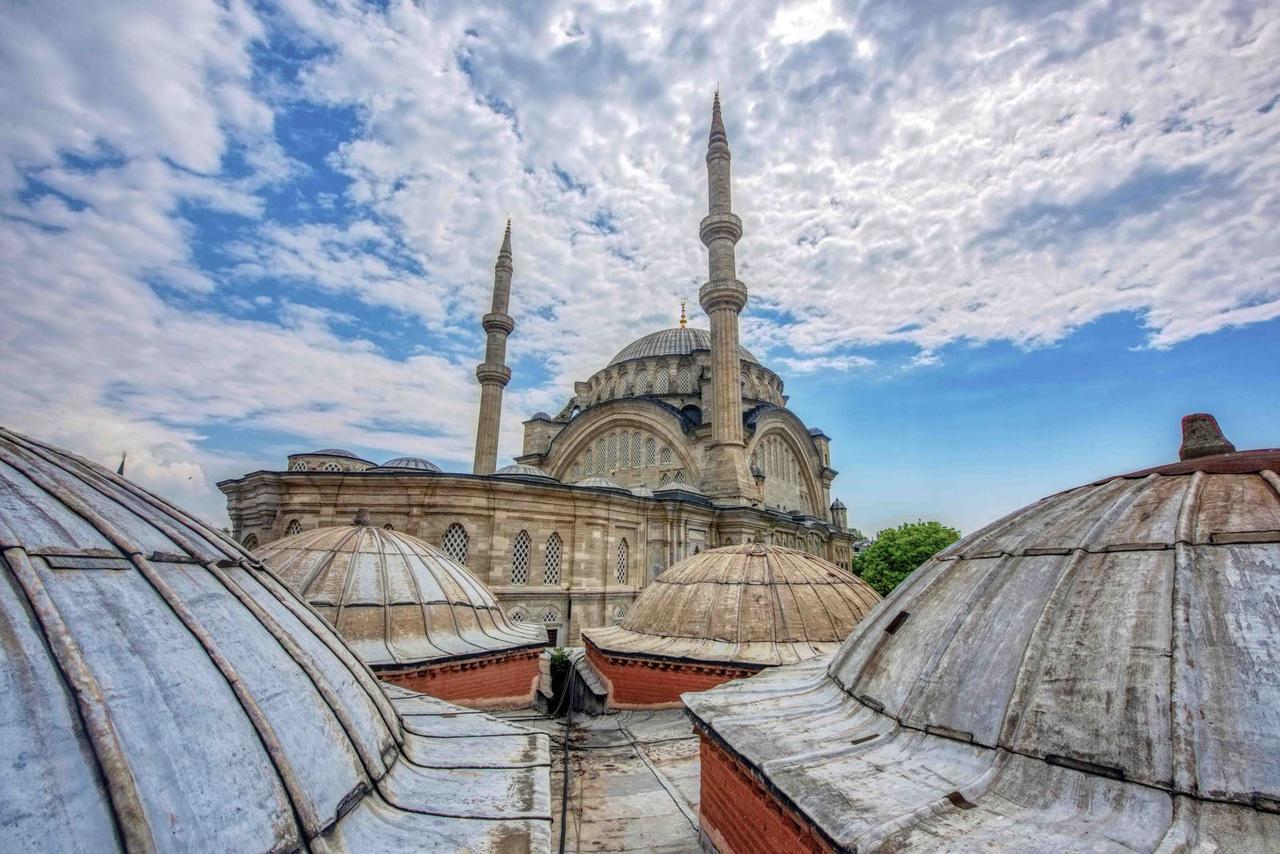
Nuruosmaniye Mosque is a mosque built in the 18th century and considered one of the most important works of the Ottoman Westernization period. The word “Nuruosmaniye” means “the light of the Ottomans.” Nuruosmaniye Mosque is located in Istanbul’s Nuruosmaniye district (Molla Fenari Neighborhood), on Vezirhan Street. In the place where the mosque now stands, there used to be the masjid of Fatıma Hatun. The construction initiated by Sultan Mahmud I in 1748 was halted upon his death; it was then completed in 1755 by his brother Sultan Osman III. The architect of the mosque was Mustafa Ağa, and his assistant was Simeon (Simon) Kalfa.
%252Fnuri_4.jpg&w=1280&q=75)
Exterior View of Nuruosmaniye Mosque (Anadolu Ajansı)
Nuruosmaniye Mosque is located within a large complex consisting of a madrasa, an imaret (soup kitchen), a library, a mausoleum, a sebil (public water dispenser), a timekeeper’s room (muvakkithane), a fountain, an imperial pavilion, and shops. The courtyard of the complex can be entered from the west through Çarşıkapı Nuruosmaniye Street, and from the east through Vezirhan Street. To the south of the mosque are the madrasa and imaret, while to the north are the mosque, library, mausoleum, and imperial pavilion.

Mosque Entrance Gate (Photo: Melahat Pamuk)
The mosque’s plan consists of a square prayer hall, a polygonal apse-like mihrab projection to the south, and a semi-oval courtyard to the north. The prayer hall is covered with a single dome of 25 meters in diameter. This dome rests on four large arches. The semi-oval courtyard represents one of the first examples in which Western Baroque influences were reflected in mosque plans in 18th-century Ottoman architecture. The portico of the courtyard is covered with 14 domes resting on 12 columns.
The mosque interior is illuminated by 174 windows, allowing abundant light into the space. The windows are of plasterwork and arranged in the Baroque style. Along the base of the dome arches, Surah al-Fath is inscribed in a band. The external inscriptions of the mosque belong to calligrapher Yedikulelizâde Seyyid Abdülhalim. The monumental interior inscriptions (celi scripts) were made by Bursalı illuminator Ali Ağa and Kâtipzâde Mehmed Refi Efendi.

Interior of Nuruosmaniye Mosque (Photo: Melahat Pamuk)
Above the main entrance gate is the muezzin’s gallery, while side galleries are placed laterally, and to the left of the mihrab lies the imperial loge decorated with gilded ornaments. The mosque also draws attention with its excellent acoustics; on either side of the mihrab, rotating balance columns were placed to maintain sound harmony. The mosque has two stone minarets, each designed with two balconies. In the mausoleum are buried Şehsuvar Sultan, the mother of Sultan Osman III, and some princes.
The portal gates of the mosque, while showing the continuity of the Ottoman monumental portal (taçkapı) tradition, are also examples where Baroque influences are strongly present. The prayer hall north portal, and the courtyard’s northeast and southwest portals, although adhering to traditional layout, are decorated not with muqarnas fillings but entirely with Western-inspired motifs. Shells, acanthus leaves, “S” and “C” curves, pearl strings, and fruit depictions are striking features of these decorations. The monumental appearance of the Classical period was replaced by an approach emphasizing aesthetics and ornamentation. In this respect, Nuruosmaniye Mosque directly influenced the portal designs of subsequent imperial mosques built in the second half of the 18th century.

Inner Courtyard Portal of Nuruosmaniye Mosque (Photo: Melahat Pamuk)
Nuruosmaniye Mosque is one of the most powerful examples of Ottoman calligraphy and ornamentation arts of the 18th century. During its construction, leading calligraphers, illuminators, and artisans of the period were employed, making the building not only a work of architecture but also a work of art.
Along the band where the dome arches join the walls, Surah al-Fath is written in celi sülüs script. This band inscription adds both visual richness and depth of meaning to the mosque interior. The Quranic verses on the exterior facades were inscribed by Yedikulelizâde Seyyid Abdülhalim. The inscription above the main entrance and the verses on the outer side of the central gate are the work of the famous calligrapher of the period, Rasim Efendi. Among the inscriptions on the inner courtyard gates and portal gates are also the signatures of calligraphers such as Mumcuzâde Muhammed bin Ahmed and Fahreddin Yahya.
The interior ornamentation of the mosque stands out with examples where calligraphy and decoration are combined. Especially the monumental celi scripts were executed by the renowned illuminators Bursalı Ali Ağa and Kâtipzâde Mehmed Refi Efendi. These artists decorated the surroundings of the inscriptions with gilded ornaments, blending them with Baroque-style motifs. Thus, Ottoman traditional calligraphy was practiced alongside Western Baroque style.

Mosque Dome Ornamentation (Photo: Melahat Pamuk)
The inscriptions on the portal gates also complete the aesthetic integrity of the mosque. On the northern portal of the prayer hall is verse 4:103 of the Qur’an, while on the southwestern portal are verses 29:45 and 38:50. On the inner courtyard gates, inscriptions include Quranic verses along with information about the patrons. In the inscriptions, celi sülüs was generally preferred, and gold gilding was applied on the frames and the letters. This practice both enhanced readability and added magnificence to the architectural decoration.
At Nuruosmaniye Mosque, calligraphy, ornamentation, and architectural elements are considered as a single complementary whole. While traditional calligraphic art ensured the continuity of Ottoman aesthetic understanding, the Baroque motifs reflected the innovative spirit of the Westernization period. In this respect, the mosque is not only significant in Ottoman architecture but also a turning point in the history of calligraphy and ornamentation.

General View of the Mosque Dome (Photo: Melahat Pamuk)
Anadolu Ajansı. “Osmanlı’nın İlk Barok Mimari Eseri ‘Nuruosmaniye’.” Anadolu Ajansı, 10 Eylül 2018. Accessed September 15, 2025. https://www.aa.com.tr/tr/kultur-sanat/osmanlinin-ilk-barok-mimari-eseri-nuruosmaniye/1251074
Fatih Kaymakamlığı. “Nuruosmaniye Camii.” Accessed September 15, 2025. http://www.fatih.gov.tr/nuruosmaniye-camii
Kültür ve Turizm Bakanlığı. “Nuruosmaniye Camii - İstanbul.” Kültür Portalı. Accessed September 15, 2025. https://www.kulturportali.gov.tr/turkiye/istanbul/gezilecekyer/nuruosmaniye-camii
İnce, Kasım & Ekmekci, Mustafa. “Nuruosmaniye Camisi Taçkapıları.” Sanat Tarihi Dergisi 30, no. 1 (2021): 497-535. Accessed September 15, 2025. https://doi.org/10.29135/std.854357
Location | Istanbul Vezirhan Street Fatih District | ||||||||
|---|---|---|---|---|---|---|---|---|---|
Construction Date(s) | 1748–1755 | ||||||||
Patrons | Sultan Mahmud I (Initiated),Sultan Osman III (Completed) | ||||||||
Architect(s) | Mustafa Ağa and Assistant Simeon (Simon) Kalfa | ||||||||
Style | Ottoman Baroque Style | ||||||||
No Discussion Added Yet
Start discussion for "Nuruosmaniye Mosque" article
Complex
Architectural Features
Portal Gates (Taçkapılar)
Art and Calligraphy (Sanat ve Hat)
This article was created with the support of artificial intelligence.