Type of Geographical Indication | Protected Geographical Indication | ||||||||
|---|---|---|---|---|---|---|---|---|---|
Registration Number | 269 | ||||||||
Registration Date | December 15, 2017 | ||||||||
Product / Product Group(s) | Processed and Unprocessed Fruits and Mushrooms Vegetables | ||||||||
Province(s) | Ordu | ||||||||
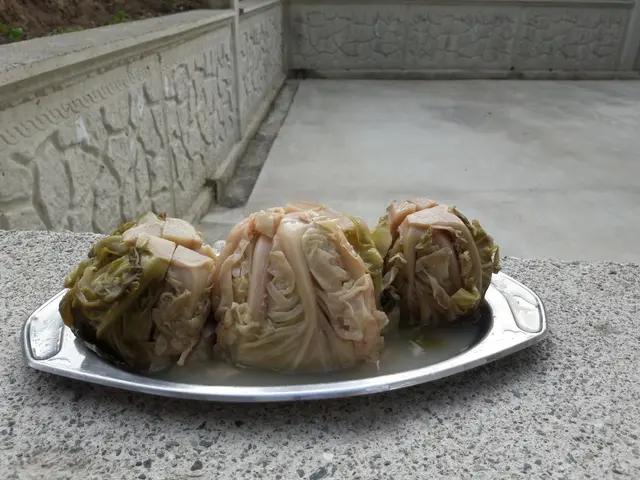
Ordu yayla pancarı turşusu is a traditional pickle variety made from white head cabbages grown in the Yokuşdibi town and the Turnalık and Çambaşı plateaus of Kabadüz district in Ordu province, Türkiye. Protected under a geographical indication with a Mahreç İşareti, it was registered on December 15, 2017, under the Industrial Property Law No. 6769.
The white head cabbage, locally known as “dürme” or “pancar,” matures during the summer months. It typically weighs 250–750 grams, with tightly packed heads and crisp, textured leaves. Grown in cold climatic conditions, the cabbage develops increased firmness and crispness, imparting a distinctive texture and aroma to the pickle.
Ordu yayla pancarı turşusu is prepared by filling plastic barrels with coarsely sliced cabbage heads, saltwater, and garlic. The pickle is matured for approximately two months in a cool, dark environment. It can be consumed plain or sautéed with onions. For sautéing, the pickle is lightly rinsed, finely chopped onions are fried in oil, and the pickle is added and cooked for a few more minutes.
The chemical composition of the product includes an ash content of 4–10%, cellulose of 0.79–1.12%, crude protein of 0.80–2.25%, and salt content of 4.00–9.80%.
Seeds are sown in March in seedling beds on the plateaus. After about 35 days, when the seedlings reach 15–20 cm in height, they are transplanted to fields in May with 40x40 cm spacing. The cabbages are harvested 90–120 days after planting, stripped of their outer leaves, washed, sliced, and prepared for pickling. The yield per hectare ranges from 1,000–1,500 kg.
The quality of water and salt used in pickling is critical to the success of the fermentation process. The water must be free of hardness, lime, and foreign flavors. The salt concentration is set at 3–4%, with rock salt or lake salt typically preferred.
Ordu yayla pancarı turşusu can only be produced using cabbages grown in the Yokuşdibi town (1,250 m elevation), Turnalık plateau (1,600 m), and Çambaşı plateau (1,800 m) of Kabadüz district, Ordu province, including their surrounding hamlets. These elevations and climatic conditions are fundamental to the product’s distinctive characteristics.
Compliance with the specifications outlined in the geographical indication certificate is monitored by a three-member commission consisting of experts from the Ordu Provincial Directorate of Agriculture and Forestry, Ordu University Faculty of Agriculture, and Ordu Food Control Laboratory Directorate. Inspections are conducted at least once a year, with additional inspections required within one month in case of complaints. The commission may seek expert support from public or private institutions and is authorized to pursue legal actions when necessary.
Türk Patent ve Marka Kurumu. "Ordu Yayla Pancarı Turşusu / Ordu Dürme Turşusu." Coğrafi İşaretler Portalı. Accessed October 25, 2025. https://ci.turkpatent.gov.tr/cografi-isaretler/detay/38108.
Türk Patent ve Marka Kurumu. Ordu Yayla Pancarı Turşusu (Ordu Dürme Turşusu): Coğrafi İşaret Sicil Belgesi, Tescil No: 269. Accessed October 25, 2025. https://ci.turkpatent.gov.tr/Files/GeographicalSigns/22d84e2d-bf21-44e0-8a96-ae9562f3ddb3.pdf.

Type of Geographical Indication | Protected Geographical Indication | ||||||||
|---|---|---|---|---|---|---|---|---|---|
Registration Number | 269 | ||||||||
Registration Date | December 15, 2017 | ||||||||
Product / Product Group(s) | Processed and Unprocessed Fruits and Mushrooms Vegetables | ||||||||
Province(s) | Ordu | ||||||||
No Discussion Added Yet
Start discussion for "Ordu Yayla Pancarı Turşusu / Ordu Dürme Turşusu" article
Product Characteristics
Preparation
Geographical Boundary and Production Conditions
Inspection
This article was created with the support of artificial intelligence.