+2 More


Organ Donation Week is observed annually in Türkiye from November 3 to 9. The purpose of the week is to highlight the importance of organ and tissue donation, raise public awareness, and increase donation rates for patients awaiting transplants. In Türkiye, the number of patients whose treatment is possible only through transplantation due to organ failure continues to rise, yet organ donation rates remain relatively low. This situation underscores the need to increase donations and improve organ transplantation services.
In Türkiye, "Organ Donation Week" is observed annually from November 3 to 9. The primary purpose of the week is to highlight the importance of organ and tissue donation, raise public awareness, and increase donation rates for patients awaiting transplants. The number of patients whose treatment is possible only through transplantation due to organ failure continues to rise in the country, yet organ donation rates remain low. This situation necessitates increasing organ donations and improving transplantation services.
Organ Donation Week aims to support the treatment of patients with organ failure, raise awareness about organ donation in society, and increase donation rates. Another goal of the week is to enhance the sense of responsibility toward organ donation among all segments of society, particularly young people, and to cultivate awareness about it. Organ donation is of vital importance for saving the lives of patients whose treatment is possible only through transplantation.
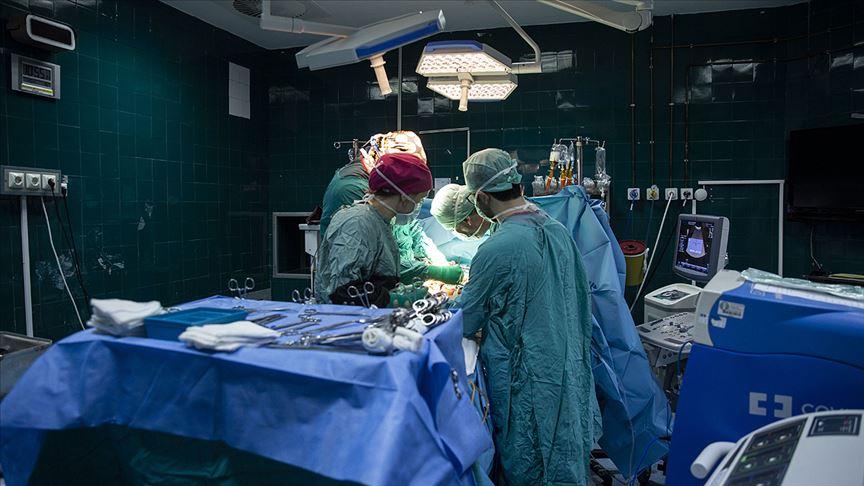
Operation (Anadolu Ajansı)
During Organ Donation Week, provincial health directorates and hospitals in Türkiye organize educational programs, informative presentations, and booths. Citizens are provided with information about the organ donation process, and those willing to donate are guided accordingly. These initiatives aim to foster organ donation awareness across all segments of society and instill positive attitudes in younger generations. Donating an organ not only saves a life but also strengthens solidarity and health consciousness in the community. Considering the gap between the need for organs and the likelihood of donation, the importance of donation becomes even more evident.
Organ transplantation is the procedure of replacing a non-functioning organ with a healthy organ obtained from a living donor or a cadaver. Transplants can be performed either from living donor to recipient or from cadaver to recipient. In Türkiye, living donor transplants are more common, whereas cadaveric donation rates, especially in Central and Inner Anatolia, remain insufficient. Organ donation is defined as the act of permitting one’s organs and tissues to be used for the treatment of other patients, either during life or after death, and formally documenting this decision. Any individual over 18 years old with full mental capacity can donate organs and tissues.
Organ donation can only be performed from individuals who have been declared brain dead. Brain death is a definitive condition in which the entire brain, cerebellum, and vital centers irreversibly lose function, resulting in death. It should not be confused with coma or a vegetative state, as some brain functions may continue, and the patient can survive for a period with medical support. The diagnosis of brain death is made following tests conducted by at least two specialist physicians and communicated to the family. Family consent is required for organ donation, regardless of whether the donor has an organ donation card; without consent, organs and tissues cannot be harvested.
The main transplantable organs include the kidney, liver, pancreas, heart, lung, and small intestine. Transplantable tissues include the cornea, bone, bone marrow, tendon, heart valve, skin, face, scalp, and extremities. These organs and tissues can be used for transplantation if suitability criteria are met.
In Türkiye, organ and tissue donation is regulated under Law No. 2238, “The Acquisition, Storage, Transplantation and Transfer of Organs and Tissues”. According to the law, if a person has not officially or in writing stated in a will that they are donating their entire body or tissues for treatment, diagnosis, or scientific purposes, or if they have not expressed this wish in the presence of two witnesses, organs and tissues may be taken from the deceased with the consent of their spouse, adult children, mother or father, or one of their siblings, in that order; if none of these exist, then with the consent of any relative present. Unless a will to the contrary is presented, tissues that do not alter the body, such as the cornea, may be taken. If the deceased stated during their lifetime that they were against the removal of organs or tissues after death, then organs and tissues cannot be taken.【1】
Erkılıç, İlhami. “Beyin Ölümlerinden Yüzde 40'lık Bağış Karaciğer Nakli Bekleyen Hastaları Kurtarmaya Yetiyor.” Anadolu Ajansı, March 3, 2020. Accessed October 25, 2025. https://www.aa.com.tr/tr/saglik/beyin-olumlerinden-yuzde-40lik-bagis-karaciger-nakli-bekleyen-hastalari-kurtarmaya-yetiyor/1752705
Kayseri İl Sağlık Müdürlüğü Yahyalı Devlet Hastanesi. “3-9 Kasım Organ ve Doku Bağışı Haftası.” January 31, 2023. Accessed October 25, 2025. https://yahyalidh.saglik.gov.tr/TR-864741/3-9-kasim-organ-ve-doku-bagisi-haftasi.html
T. C. Sağlık Bakanlığı Kırıkkale İl Sağlık Müdürlüğü. “3-9 Kasım Organ Bağışı Haftası.” November 7, 2024. Accessed October 25, 2025. https://kirikkaleism.saglik.gov.tr/TR-327419/3-9-kasim-organ-bagisi-haftasi.html#:~:text=Bilindi%C4%9Fi%20%C3%BCzere%2C%20her%20y%C4%B1l%203,ve%20stant%20kurma%20%C3%A7al%C4%B1%C5%9Fmalar%C4%B1%20d%C3%BCzenledik
T. C. Sağlık Bakanlığı. “Her Bağış Yeni Bir Hayattır.” Accessed October 25, 2025. https://www.saglik.gov.tr/TR-2635/her-bagis-yeni-bir-hayattir.html#:~:text=%C3%9Clkemizde%20her%20y%C4%B1l%203%2D9,Organ%20Ba%C4%9F%C4%B1%C5%9F%C4%B1%20Haftas%C4%B1'%20olarak%20kutlanmaktad%C4%B1r
Yıldız, Ayşe. “Dizi ve Filmlerde İşlenen Doğru Senaryolar Organ Bağışını Artırıyor.” Anadolu Ajansı, January 11, 2024. Accessed October 25, 2025. https://www.aa.com.tr/tr/saglik/dizi-ve-filmlerde-islenen-dogru-senaryolar-organ-bagisini-artiriyor/3105753
[1]
T. C. Sağlık Bakanlığı. “Her Bağış Yeni Bir Hayattır.” Accessed October 25, 2025. https://www.saglik.gov.tr/TR-2635/her-bagis-yeni-bir-hayattir.html#:~:text=%C3%9Clkemizde%20her%20y%C4%B1l%203%2D9,Organ%20Ba%C4%9F%C4%B1%C5%9F%C4%B1%20Haftas%C4%B1'%20olarak%20kutlanmaktad%C4%B1r

No Discussion Added Yet
Start discussion for "Organ Donation Week" article
History
Purpose and Significance
Organ Donation and Public Awareness
Definition of Organ Transplantation and Donation
Brain Death and Organ Transplantation Practices
Organs and Tissues That Can Be Donated
Legal Framework
This article was created with the support of artificial intelligence.