
+2 More

Category | Multirole Combat Aircraft | ||||||||
|---|---|---|---|---|---|---|---|---|---|
Origin(s) | United Kingdom Germany Italy (Panavia Aircraft GmbH) | ||||||||
Engine(s) | Two Turbo-Union RB199 turbofan engines | ||||||||
Crew | 2 | ||||||||
First Flight(s) | 14 August 1974 | ||||||||
Maximum Speed | Mach 2.2 (approximately 2,400 km/h) | ||||||||
Wingspan | 8.6 m (maximum sweep) — 13.91 m (minimum sweep) | ||||||||
Maximum Weapons Load | 8,165 kg (18,000 lbs) | ||||||||
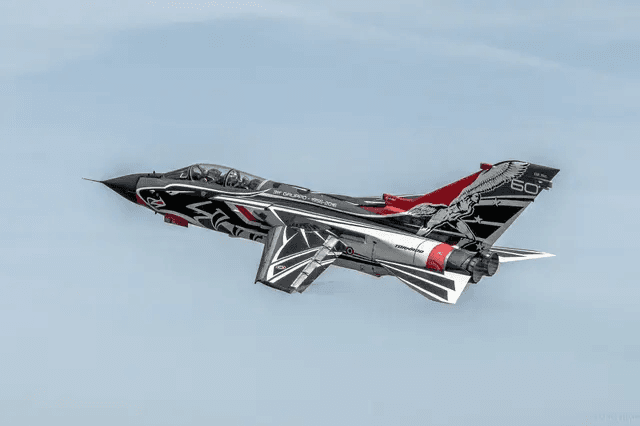
The Panavia Tornado is a twin-engine, swing-wing multirole combat aircraft developed and manufactured by the Panavia Aircraft GmbH consortium, formed by the United Kingdom, West Germany, and Italy. It stood out during the Cold War era, particularly for its capability to operate at high speed at low altitude. The prototype made its maiden flight in 1974, and it entered service in 1979–1980.

Panavia Tornado (Robert Sullivan)
The development of the Tornado began in 1968 when the three nations launched a joint project for a supersonic, low-altitude aircraft. Production was carried out with a division of labor among the consortium partners: the front fuselage and tail assembly were assigned to the United Kingdom, the center fuselage to West Germany, and the wings to Italy.
Panavia Tornado (Haci Productions)
The Tornado's multirole concept allowed for the development of several variants optimized for different missions.

Panavia Tornado (John Quine)
The Tornado took part in Operation Desert Storm in 1991. It conducted low-altitude attacks targeting enemy air bases and subsequently performed medium-altitude bombing missions. The aircraft has undergone various modernizations throughout its long service life, but over time, it has been replaced in countries like the United Kingdom and Germany by more modern aircraft such as the Eurofighter Typhoon.

Category | Multirole Combat Aircraft | ||||||||
|---|---|---|---|---|---|---|---|---|---|
Origin(s) | United Kingdom Germany Italy (Panavia Aircraft GmbH) | ||||||||
Engine(s) | Two Turbo-Union RB199 turbofan engines | ||||||||
Crew | 2 | ||||||||
First Flight(s) | 14 August 1974 | ||||||||
Maximum Speed | Mach 2.2 (approximately 2,400 km/h) | ||||||||
Wingspan | 8.6 m (maximum sweep) — 13.91 m (minimum sweep) | ||||||||
Maximum Weapons Load | 8,165 kg (18,000 lbs) | ||||||||
Development and Desing Features
Variants and Operational History
This article was created with the support of artificial intelligence.