

+2 More


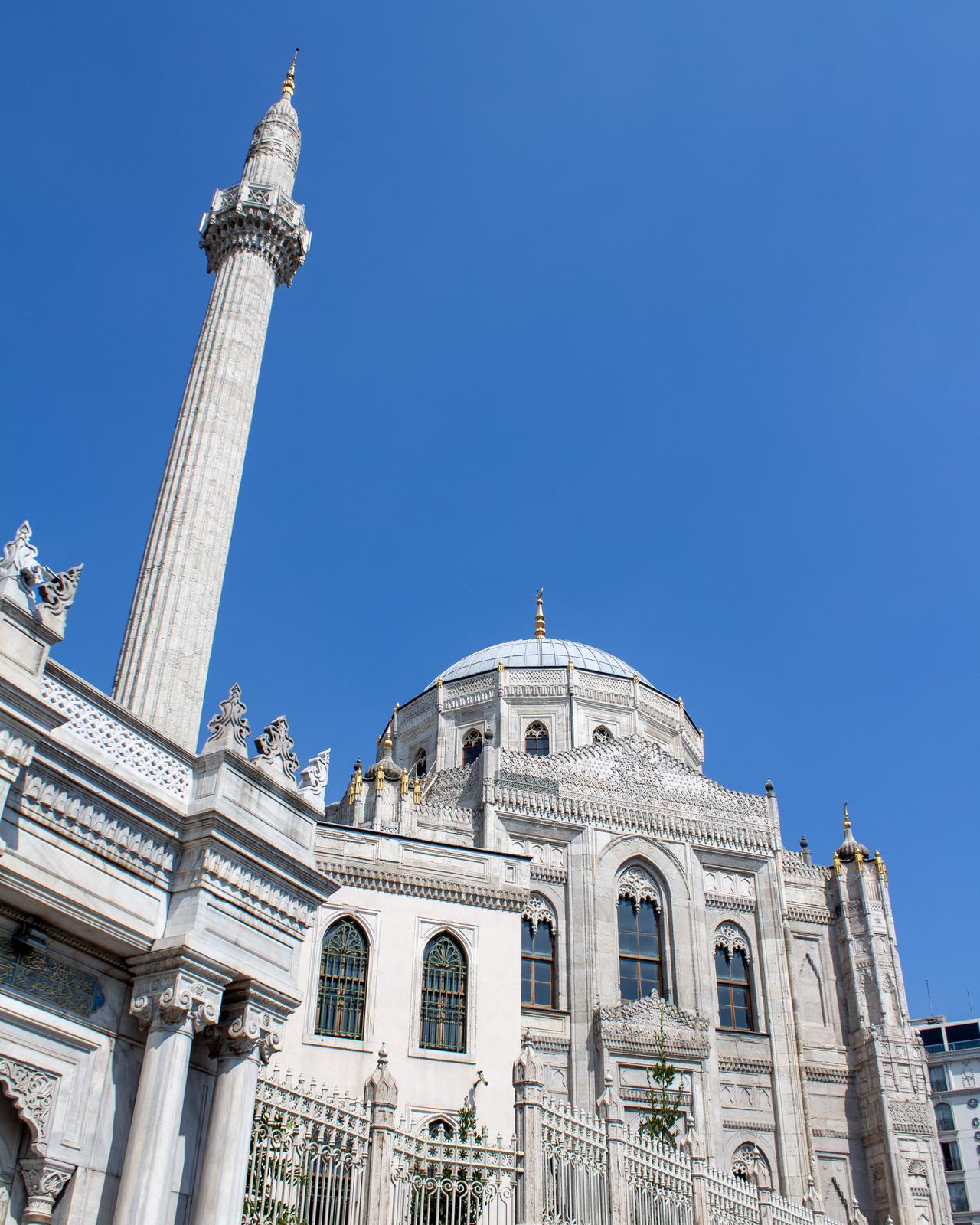
Photo: Melahat Pamuk
Pertevniyal Valide Sultan Mosque is an Ottoman mosque from the 19th century located in Istanbul’s Fatih district, in Aksaray Square, in Gureba Hüseyin Ağa Neighborhood. The structure was commissioned by Pertevniyal Valide Sultan, the wife of Sultan Mahmud II and the mother of Sultan Abdülaziz, and was built between 1869 and 1871.
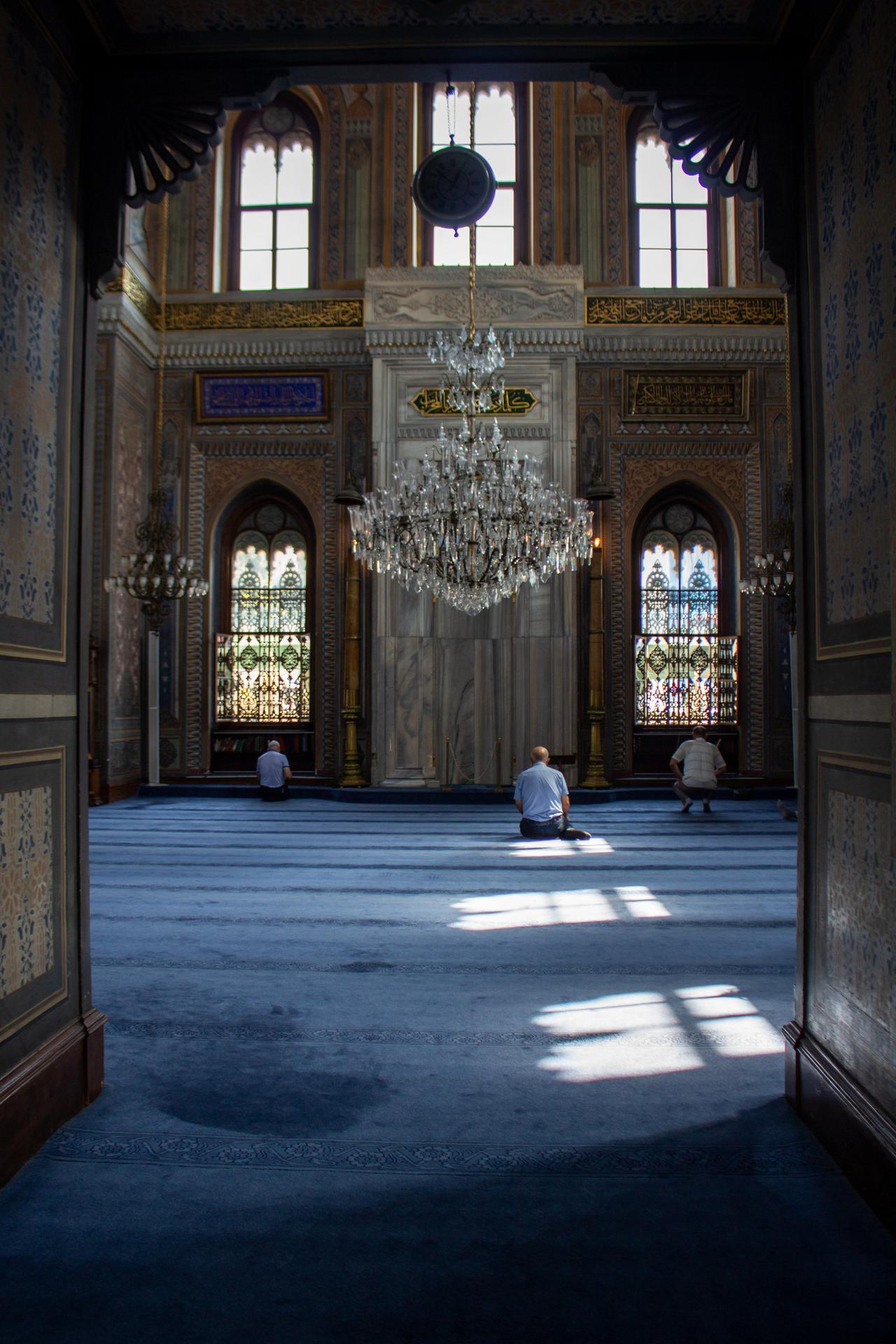
Interior of the Mosque (Photo: Melahat Pamuk)
In the place where the mosque now stands, there previously existed a structure built in 1768 by Hacı Mustafa Efendi, known as “Hacı Mustafa Efendi Mosque” or “Katip Mosque.” This mosque had fallen into ruin and was demolished, and in its place the Pertevniyal Valide Sultan Complex was constructed.
The construction of the complex began on 28 Cemaziyelahir 1285 (October 16, 1868) and was completed on 16 Shawwal 1287 (January 9, 1871). The construction took a total of 121 weeks, and the expenses were covered by the foundation revenues of the Valide Sultan. Construction registers (1867–1871) preserved in the Topkapı Palace Archives provide detailed information about this period.
The complex consisted of the mosque along with a school, mausoleum, mausoleum keeper’s room, library, timekeeper’s room, police station, six fountains, and seven shops.
The construction superintendent was Hüseyin Bey, his assistant was Hüsrev Bey, the clerk was Sâmi Efendi, and the foundation administrator was Bogos Bey (later Mihran Bey). The foremanship and architectural works were undertaken by Sarkis Balyan, who collaborated in the project with its owners Agop and Bedros Balyan, motif designer Oseb Bey, and other artisans. According to some sources, an Italian named Montani Efendi, who is mentioned as the architect, is also confirmed through archival documents to have taken part in the project.
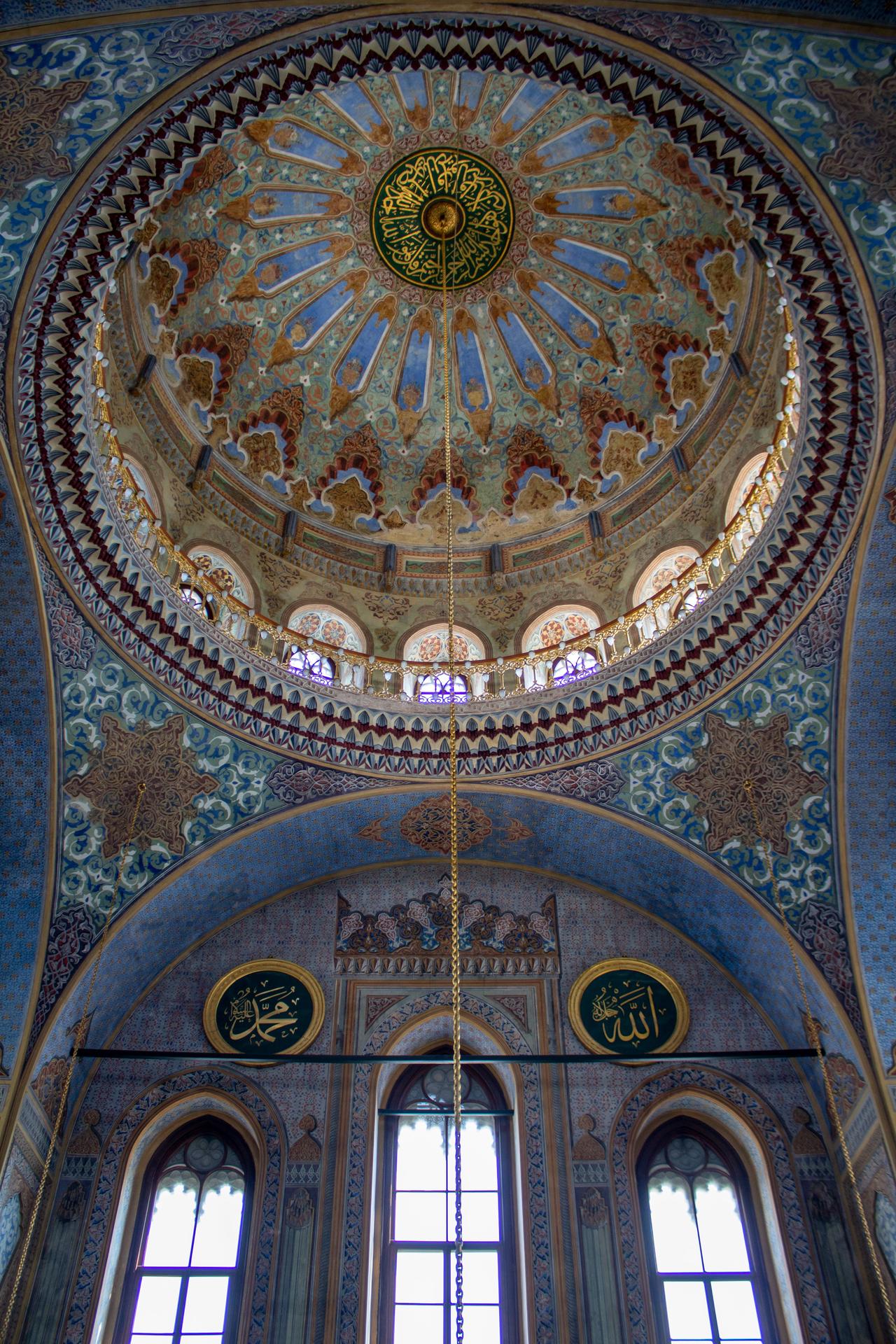
Dome and Wall Decorations of the Mosque (Photo: Melahat Pamuk)
The mosque has a prayer hall area of approximately 1,212 m². The prayer hall is covered with a 10-meter pendentive dome; the dome is 16-sided. At the four corners of the mosque, there are towers reminiscent of Indian architecture. On the northern side stands the imperial pavilion and the associated loge.
The style of the building, in an eclectic manner, brings together Gothic, Indian, Ottoman, and European architectural elements. On the facades, triangular pediments, palmette and rumi motifs, neo-Gothic arches, and finely carved stone decorations stand out.
The courtyard is accessible through three entrance gates: the east, west, and north gates. The west gate bears the tughra of Sultan Abdülaziz and is enriched with vegetal reliefs. The facade windows are formed with tall pointed arches and are filled with Gothic-inspired stone lattices.

Courtyard Gate (Photo: Melahat Pamuk)
The prayer hall is richly adorned with painted decorations and calligraphic friezes. Along the walls runs a double row of muqarnas-carved marble bands, above which extends a monumental inscription frieze of Surah al-Mulk written in celi sülüs script. In the center of the dome is a script medallion, and on the pendentives star motifs are found. The mihrab follows the classical form, decorated with muqarnas and noted for its simplicity. The minbar, made of marble, combines classical elements and attracts attention with its dome-shaped spire. The preacher’s pulpit has an octagonal plan.

Interior Decorations of the Mosque (Photo: Melahat Pamuk)
The mosque has two minarets located on the northern facade, at the corners of the imperial pavilion. The minarets, each with a single balcony, fluted shafts, and stone spires, are notable. One of them was restored by the General Directorate of Foundations in 1988.
TC Fatih Kaymakamlığı. “Pertevniyal Valide Sultan Camii”. Accessed September 15, 2025. http://www.fatih.gov.tr/pertevniyal-valide-sultan-camii
Türkiye Diyanet Vakfı İslâm Ansiklopedisi. "Pertevniyal Valide Sultan Külliyesi". Accessed September 15, 2025. https://islamansiklopedisi.org.tr/pertevniyal-valide-sultan-kulliyesi
Verdön, İrem ve Ahmet Ersen. “Aksaray, Pertevniyal Valide Sultan Camii: Doğal Taş Cephelerin Konservasyon Projelerinin Hazırlanması Ve Yapılan Uygulamalar”. Restorasyon Ve Konservasyon Çalışmaları Dergisi, no. 3 (Eylül 2009): 3-21. Accessed September 15, 2025. https://dergipark.org.tr/en/pub/restorasyon/issue/48680/619301


Photo: Melahat Pamuk
No Discussion Added Yet
Start discussion for "Pertevniyal Valide Sultan Mosque" article
History
Architect and Execution
Architectural Features
General Plan
Facade and Ornamentation
Interior
Minarets
This article was created with the support of artificial intelligence.

