

+2 More

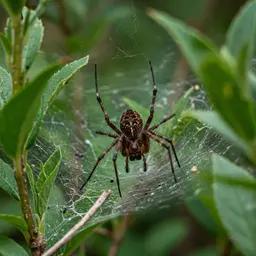
Phoneutria Fera
Scientific Name(s) | Phoneutria Fera | ||||||||
|---|---|---|---|---|---|---|---|---|---|
Family | Ctenidae | ||||||||
Distribution(s) | Suriname Guyana Ecuador Peru Colombia Brazil | ||||||||
Habitat | Tropical Rainforests | ||||||||
Activity Pattern | Nocturnal | ||||||||
Diet(s) | Insects Other Spiders Small Vertebrates | ||||||||
Venom Characteristics | Proteolytic Enzymes Neurotoxic Peptides | ||||||||
Pharmacological Potential | Potential Use in the Treatment of Neurological Disorders | ||||||||
Phoneutria fera is a species of spider belonging to the Ctenidae family, found in the tropical forests of South America. This species is particularly present in countries such as Brazil, Colombia, Peru, Ecuador, Guyana, and Suriname, and is a member of the Phoneutria genus, commonly known as "wandering spiders." P. fera is known for producing a potent neurotoxic venom, which makes it notable in both ecological and pharmacological studies. Behaviorally, it is aggressive and an active hunter; these traits make it both an important predator in natural ecosystems and a potential risk factor for human health.
Phoneutria fera is a medium-sized spider, with a body length typically ranging between 3 and 5 cm. Its leg span can reach up to 13 to 15 cm. The body is usually brown-toned, with distinct patterns on the prosoma (anterior body) and opisthosoma (posterior body). These patterns enhance its camouflage abilities and provide advantages during hunting. Additionally, there are whitish-yellow lateral bands on the front of the prosoma; this feature helps distinguish P. fera from other species. A noticeable sexual dimorphism is present, with females generally being larger than males.
Phoneutria fera belongs to the order Araneae and the family Ctenidae. This family includes fast-moving, actively hunting spiders. The genus Phoneutria is commonly found in the tropical regions of South America and draws attention due to its medical importance. P. fera was first described by Perty in 1833 and shares morphological and behavioral similarities with other members of its genus. However, genetic and morphological analyses have revealed distinct features that differentiate P. fera from other species.
Phoneutria fera is distributed in the northern regions of South America, particularly within the Amazon Basin. The species is naturally found in Brazil, Colombia, Peru, Ecuador, Guyana, and Suriname. Tropical rainforests are their primary habitats. These environments, characterized by high humidity, dense vegetation, and abundant prey sources, fulfill the species' ecological requirements.
P. fera is active both at ground level and within vegetation. Juveniles typically spend more time in the foliage, while adults are more active on the forest floor. Being nocturnal, P. fera hunts primarily at night. It captures prey through ambush and neutralizes it with a swift attack. Its diet includes insects, other spiders, and small vertebrates. This broad prey range reinforces the species' role as a predator in the ecosystem.

Phoneutria Fera Nutrition (Created by Artificial Intelligence)
The venom of Phoneutria fera contains various peptides with neurotoxic effects. These toxins primarily target sodium, potassium, and calcium ion channels, thereby disrupting neural transmission. This venom composition allows the species to immobilize its prey rapidly. Additionally, the venom includes enzymes such as proteolytic enzymes and hyaluronidase, which facilitate the diffusion of the venom through tissue.
Bites from P. fera can cause a range of symptoms in humans. These may include localized pain, edema, muscle spasms, sweating, tachycardia, and hypertension. In rare cases, more severe systemic effects can occur. However, fatalities resulting from P. fera bites are extremely rare. Treatment is generally symptomatic, involving pain management and supportive care. In some cases, antivenoms may be administered as part of the therapeutic approach.
The venom components of P. fera are being explored as potential therapeutic agents in pharmacological research. In particular, the toxins that target ion channels are considered promising candidates for the treatment of neurological disorders. As such, the venom of P. fera is of significant interest in the fields of biotechnology and pharmaceutical development.
Brovedani, V., Sosa, S., Poli, M., Forino, M., Varello, K., Tubaro, A., & Pelin, M. (2016). A revisited hemolytic assay for palytoxin detection: Limitations for its quantitation in mussels. Toxicon, 119, 225–233. Accessed May 26, 2025. https://doi.org/10.1016/j.toxicon.2016.06.013.
Escoubas, P. (2006). Mass spectrometry in toxinology: A 21st-century technology for the study of biopolymers from venoms. Toxicon, 47(6), 609–613. Accessed May 26, 2025. https://doi.org/10.1016/j.toxicon.2006.01.013.
Hu, S., Zhang, H., & Yang, Y. (2021). A New Species of Aporia (Lepidoptera: Pieridae) from Northwest Yunnan, China with Taxonomic Notes on Its Similar Sympatric Taxa. Zootaxa, 4963(1). Accessed May 26, 2025. https://doi.org/10.11646/zootaxa.4963.1.1.
Torres-Sánchez, M. P., & Gasnier, T. R. (2010). Patterns of abundance, habitat use and body size structure of Phoneutria reidyi and P. fera (Araneae: Ctenidae) in a Central Amazonian rainforest. In The Journal of Arachnology (Vol. 38, pp. 433–440) [Journal-article]. Accessed May 26, 2025. https://www.americanarachnology.org/journal-joa/joa-all-articles/article/download/arac-38-03-433.pdf.

Phoneutria Fera
Scientific Name(s) | Phoneutria Fera | ||||||||
|---|---|---|---|---|---|---|---|---|---|
Family | Ctenidae | ||||||||
Distribution(s) | Suriname Guyana Ecuador Peru Colombia Brazil | ||||||||
Habitat | Tropical Rainforests | ||||||||
Activity Pattern | Nocturnal | ||||||||
Diet(s) | Insects Other Spiders Small Vertebrates | ||||||||
Venom Characteristics | Proteolytic Enzymes Neurotoxic Peptides | ||||||||
Pharmacological Potential | Potential Use in the Treatment of Neurological Disorders | ||||||||
No Discussion Added Yet
Start discussion for "Phoneutria Fera Spider" article
Morphology and Taxonomy
General Morphological Characteristics
Taxonomic Classification
Habitat and Ecology
Geographical Distribution
Habitat Use and Behavior
Venom and Medical Significance
Venom Composition
Medical Effects and Treatment
Pharmacological Potential
This article was created with the support of artificial intelligence.