

+2 More

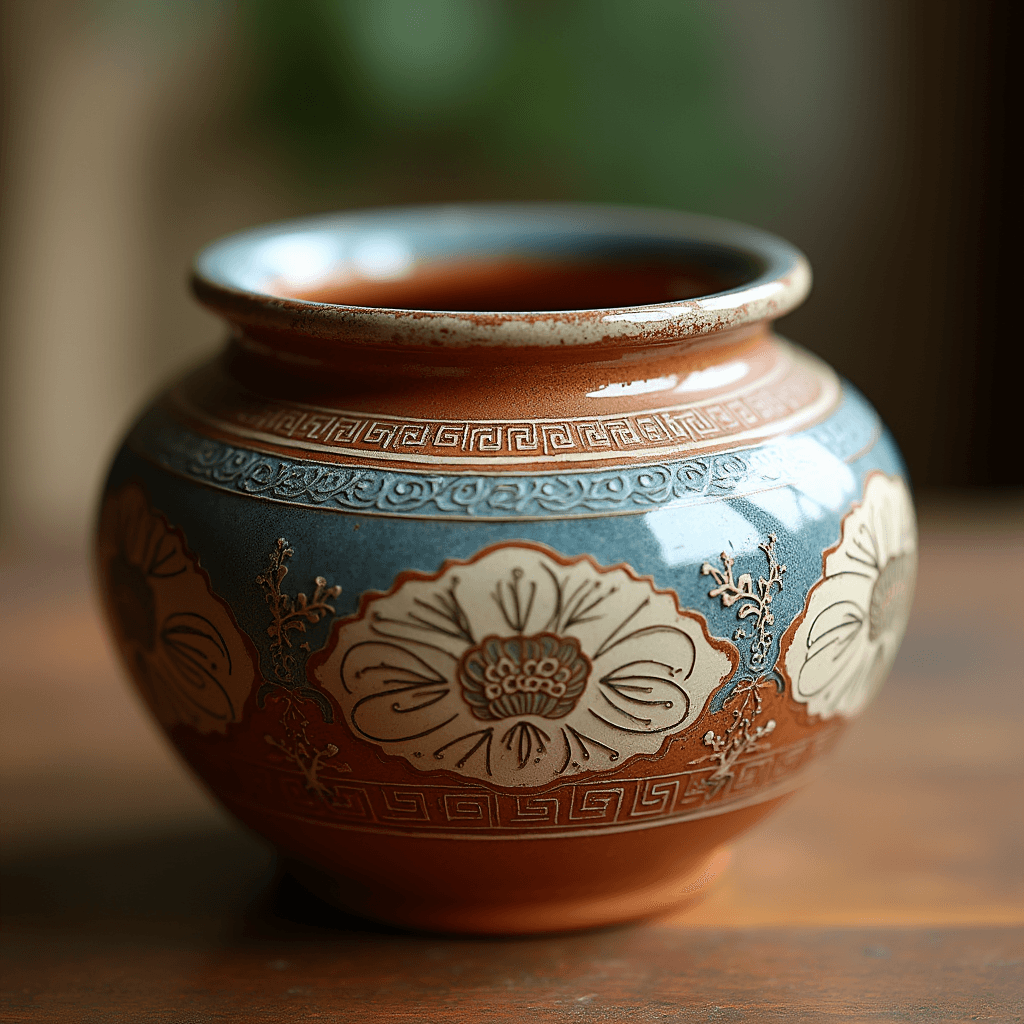
Pottery refers to ceramic vessels made primarily from clay and similar natural materials, produced for both everyday use and artistic purposes. As one of the oldest handicrafts in human history, pottery holds in many cultures, both for its functional and aesthetic aspects. Pottery is typically crafted for various purposes, including storing water and food, cooking, and use in religious rituals.
Generated by artificial intelligence.
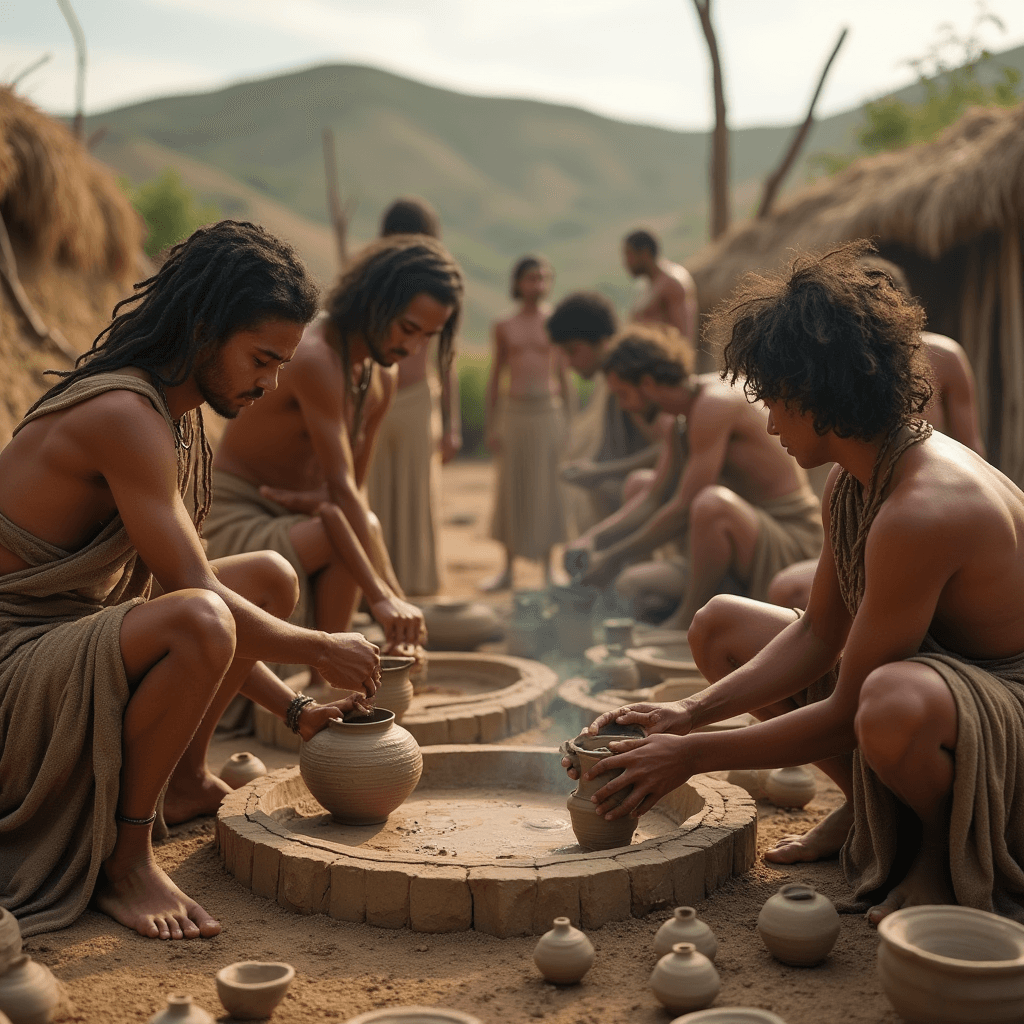
Pottery making is considered one of the oldest crafts in human history and developed alongside the transition of humans to a settled lifestyle. The earliest examples of pottery date back to the Neolithic Age, around 10,000 BCE. During this period, with the advent of agriculture and animal husbandry, human communities required longer-term food storage, leading to the production of fired clay vessels. The majority of the earliest pottery pieces were handmade and shaped using simple techniques. Initially, people molded a mixture of clay and mud with their hands to create vessels, which were then sun-dried or fired in open flames to harden. The wall thickness and shapes of these early ceramics varied across regions, yet the fundamental production principles remained similar.
Pottery produced during the Neolithic period was primarily functional and generally unadorned. However, some early pottery pieces featured decorative elements such as surface incisions, reliefs, and simple geometric patterns. The raw materials used in pottery production varied depending on geographical location. For example, in some regions, pottery had a reddish hue due to high iron content, while in others, it was lighter in tone. Over time, pottery-making became more advanced, and different techniques emerged in various regions. In some parts of Eurasia, it is known that organic coatings were applied to the inner surfaces of pottery to make them more durable. Additionally, some societies used stone tools to shape their ceramics and controlled firing temperatures to produce more resilient ceramic products.
Generated by artificial intelligence.
During ancient times, pottery evolved in different civilizations and became a crucial craft, serving both functional and artistic purposes. Pottery-making played a significant role not only in daily life but also in religious rituals, burial practices, and trade in major civilizations such as Ancient Egypt, Mesopotamia, China, and Anatolia.
In Ancient Egypt, pottery was a widely practiced craft used across various social classes. Egyptians produced large-scale pottery, primarily for storing water and grain. These vessels were typically made from red and brown clay and were decorated with simple geometric patterns. Additionally, burial customs and funerary traditions significantly influenced the development of Egyptian pottery. Elaborately decorated ceramic vessels found in pharaohs' tombs provide insights into the artistic sensibilities of the period.
In Mesopotamia, pottery progressed in parallel with the development of writing. The Sumerians used pottery not only for daily needs but also for storing commercial records. Sumerian and Babylonian pottery was often accompanied by clay tablets inscribed with writing, serving as archives and storage tools. Furthermore, with the advancement of the potter's wheel in Mesopotamia, ceramic vessels became more symmetrical and aesthetically refined.
In China, pottery laid the foundation for porcelain production, which would later have a significant global impact. From the Han Dynasty onward, ceramic techniques advanced, reaching their peak during the Tang and Song Dynasties. Chinese porcelain is renowned for its delicate structure, durability, and artistic embellishments. The famous blue-and-white porcelains are among the finest examples of China's excellence in ceramics. The Chinese were among the first to develop techniques for glazing pottery and firing it at high temperatures.
In Anatolia, pottery was sustained by various civilizations throughout history. During the Hittite, Phrygian, and Urartian periods, pottery production evolved both artistically and functionally. Phrygian ceramics are notable for their red and black decorative elements, while Hittite pottery included ritual vessels dedicated to deities and large grain storage jars. By the Hellenistic period, pottery became more sophisticated, featuring detailed ornamentation and refined craftsmanship.
During the Middle Ages, pottery underwent significant developments in Europe, Asia, and the Middle East. Pottery during this period served both daily and artistic or religious purposes. In medieval Europe, ceramic production, influenced by Roman traditions, became more aesthetic with the introduction of Gothic and Renaissance art styles.
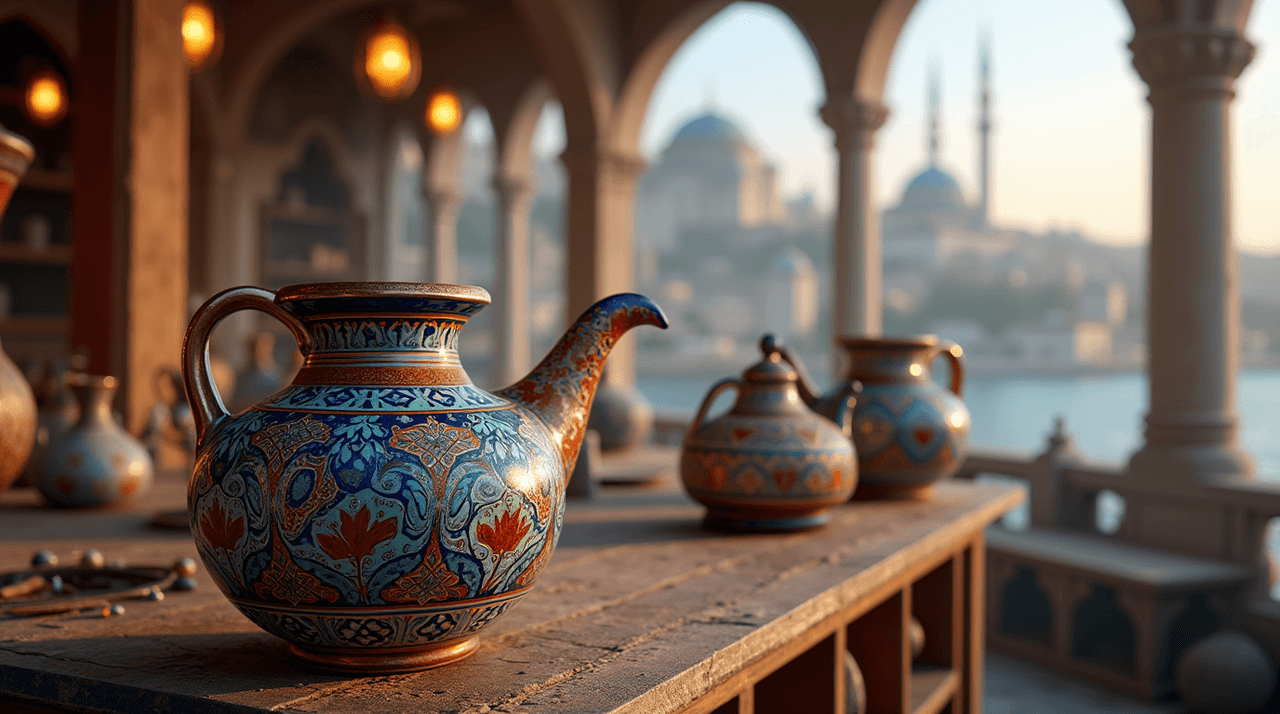
During this time, glazing techniques improved, making ceramics more durable and water-resistant. In Spain and Italy, Islamic ceramic art had a profound impact, leading to the widespread use of blue-and-white motifs in pottery. Ceramic production techniques that had advanced in China and the Islamic world were exported to Europe, influencing the continent’s approach to pottery. In Central Asia and Anatolia, Seljuk and Ottoman pottery stood out for its advanced motifs, unique forms, and specialized production techniques.
Seljuk pottery saw significant advancements between the 11th and 13th centuries. Pottery from this period was often glazed in turquoise, cobalt blue, and green, and decorated with geometric patterns, floral motifs, and Kufic inscriptions. The Minai technique, widely used in Seljuk art, allowed for multi-layered decorative designs. The Seljuks also integrated ceramic art into architecture, using mosaic tiles and ceramic panels to embellish mosques, madrasas, and palaces.
Generated by artificial intelligence.
During the Ottoman period, pottery reached an even higher level, with significant advancements in centers such as İznik, Kütahya, and Çanakkale. From the 15th century onward, ceramics produced in İznik gained recognition for their high-quality white clay and glossy glazed surfaces. Ottoman ceramics and tiles were typically adorned with red, blue, green, and turquoise hues, featuring floral, foliage, and Hatayi designs. By the 16th century, Ottoman ceramic art had reached its peak, with tiles from this period decorating monumental structures such as Topkapı Palace and Süleymaniye Mosque.
The Ottomans developed various techniques, including underglaze painting, luster technique, and drip glazing. In underglaze painting, designs were applied to the pottery before firing, then covered with a transparent glaze and fired at high temperatures. The luster technique, on the other hand, involved using metallic oxides to create gold or bronze reflections. Çanakkale ceramics represented a different branch of Ottoman pottery, specializing in everyday household items, large water jars, and decorative ceramic figurines.
With the Industrial Revolution, pottery production underwent significant transformations. Mass production began with mechanization, and pottery-making became an industrial process. In England, the emergence of industrial ceramics laid the foundation for large-scale production methods. Handmade pottery was gradually replaced by standardized machine-made ceramics fired in large kilns. During this period, materials such as porcelain and bone china became widely used, increasing the durability of ceramic products.
Today, pottery remains relevant in both traditional handicrafts and contemporary design. Artists and craftsmen continue to merge ceramic production with artistic expression, creating unique works. Additionally, with technological advancements, 3D printing techniques have introduced new possibilities in ceramic production, making the design process more flexible. Pottery remains an essential craft and production field, preserving its functionality and aesthetic significance across different cultures.
The most commonly used material in pottery production is clay. The type of clay determines the durability and appearance of the pottery. Different types of clay include red clay, white clay, and porcelain clay. The type of clay used directly affects the firing temperature and final quality of the pottery. When selecting clay, its mineral composition must be considered. Clays with high iron oxide content turn red or brown when fired, while those with lower iron content take on lighter or white tones. For example, white clay and kaolin are preferred in porcelain production, whereas red clays with high iron content are commonly used in traditional pottery-making.
Various techniques are used in pottery production to create different forms. The shaping stage is one of the most crucial steps in pottery-making, as the method used directly affects the functionality, aesthetic appearance, and durability of the pottery. Numerous shaping techniques have been developed, ranging from traditional handmade methods to modern mass production techniques. These techniques support both the artistic and functional aspects of pottery-making.
One of the oldest and most fundamental methods is hand-shaping. In this technique, no mechanical tools are used, and the clay is shaped entirely by hand. One of the most common hand-shaping techniques is the pinching method. In this technique, a small ball of clay is formed and pinched inward with the fingers to create a shape. It is generally preferred for small bowls, cups, and decorative objects. Another method, the coiling technique, involves rolling the clay into long strips or coils, which are stacked on top of one another to form the walls of the pottery. The surface is then smoothed to achieve the final shape. This technique was commonly used in antiquity to produce large storage jars and water vessels. The slab method, on the other hand, involves rolling the clay into flat sheets that are cut into desired shapes. The edges are joined to create boxes, vases, or decorative ceramics, making this technique particularly suitable for geometric forms.
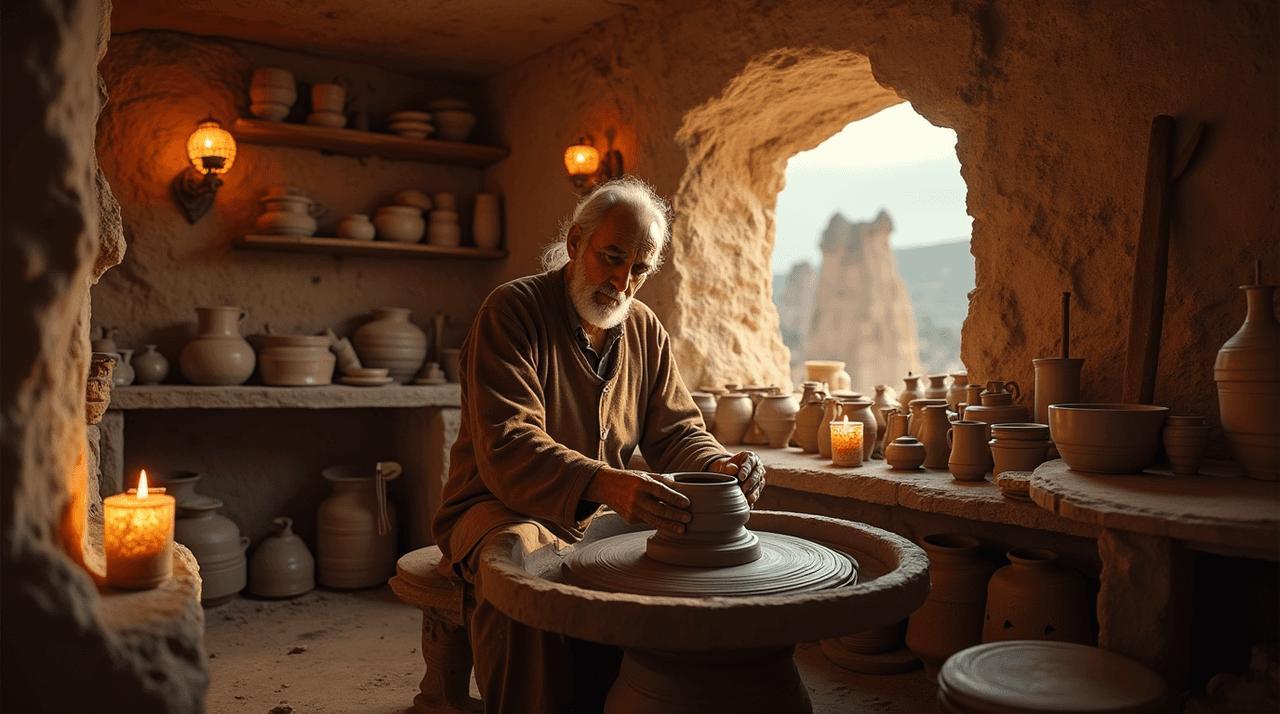
For more symmetrical and precise forms, the potter’s wheel technique became a significant advancement in pottery-making. This method, believed to have been developed in ancient Mesopotamia, remains widely used today. Before using the wheel, the clay is kneaded to remove air bubbles, a process that is crucial to preventing cracks during firing. The clay is then placed in the center of the spinning wheel and shaped into a balanced form by hand. During the shaping process, the speed of the wheel is adjusted to achieve various designs, defining fine details and edges. Once shaping is complete, the pottery is carefully removed from the wheel, and its surface is smoothed before being left to dry. The potter’s wheel is particularly suitable for mass production, but it is also frequently used in the creation of intricate artistic ceramics.
One of the most important techniques that enables mass production in modern pottery-making is molding. In this method, pre-prepared molds are filled with clay to achieve a specific form. The slip casting technique involves pouring liquid clay into plaster molds, where the plaster absorbs moisture, causing the clay to harden. Once the mold is opened, the ceramic form is removed and refined. In press molding, the clay is pressed into metal or plaster molds, making it ideal for producing uniform, highly detailed ceramic pieces. Hand molding, on the other hand, involves pressing the clay into pre-made molds, a technique commonly used to create embossed or textured surfaces. Molding techniques save time in large-scale industrial ceramic production while allowing for the precision manufacturing of standardized products.
Generated by artificial intelligence.
After shaping, pottery must first be slowly dried before being carefully fired in a kiln to harden. This process allows for the complete evaporation of moisture from the clay, increasing the durability of the ceramics. Rapid drying or sudden temperature changes pose a risk of cracking or deformation, so it is crucial to carefully control ambient temperature and humidity during the drying phase. Pottery fired in an open flame is typically more porous and fragile, but depending on the type of wood used in the firing process, natural color variations may appear on the surface.
Pottery fired at lower temperatures (900-1100°C) is more porous and lightweight, while high-temperature firings (1200-1300°C) produce denser, glassy ceramics. In glazed ceramics, achieving the correct firing temperature is critical to ensuring that the glaze melts properly, creating a smooth, glossy surface.
Glazing involves applying a glass-like coating to the surface of the pottery, making it waterproof and more durable. At the same time, glazing smooths the surface, enhancing usability and giving the pottery a glossy or matte appearance. Glazes are typically composed of silica, metal oxides, and various minerals. The glazing process can be applied before or during firing, using techniques such as dipping, spraying, or brushing. During firing, the glaze melts at high temperatures, bonding to the surface and forming a glass-like layer. Glazing also allows for color variations, enabling the creation of ceramics in different shades and levels of glossiness.
The decoration process defines the visual identity of the pottery and enhances its artistic value. Various techniques are used for decoration, including incising, painting, stamping, and embossing. In incising, patterns and motifs are carved into the surface before the clay fully dries. This technique is often combined with sgraffito, where different-colored clay layers are used to create contrasting designs. The painting method can be applied before firing or during glazing, using natural mineral pigments that produce long-lasting, vibrant colors. Stamping involves pressing custom-made seals or molds onto the surface to imprint patterns. In embossing, three-dimensional designs are added to the clay by hand or using molds, giving the pottery a textured and sculptural appearance.
In traditional pottery, decoration is not only an aesthetic element but also a reflection of cultural identity. Throughout history, pottery has displayed artistic styles, beliefs, and daily life unique to the societies that created them. For example, Ottoman tile art frequently featured tulip and carnation motifs, Seljuk pottery incorporated geometric designs, and Chinese porcelain was often decorated with dragon figures. Pottery decoration has historically served as both an artistic expression and a testament to craftsmanship.
İzmir İl Kültür ve Turizm Müdürlüğü. “Çömlekçilik.” T.C. Kültür ve Turizm Bakanlığı, Erişim 25 Şubat 2025. https://izmir.ktb.gov.tr/TR-91165/comlekcilik.html.
Britannica. “Drying, Turning, and Firing.” Encyclopedia Britannica. Erişim 25 Şubat 2025. https://www.britannica.com/art/pottery/Drying-turning-and-firing.
Crown, Patricia L. “Life Histories of Pots and Potters: Situating the Individual in Archaeology.” American Antiquity 72, no. 4 (2007): 677-690.
Foster, George M. “The Potter’s Wheel: An Analysis of Idea and Artifact in Invention.” Southwestern Journal of Anthropology 15, no. 2 (1959): 99-119.
Z-Koşay, Hamit, and A. Ülkü. “Anadolu’da İptidai Çanak-Çömlekçilik.” Türk Etnografya Dergisi no. 56 (1962): 89-93.
Yalgtn, R. (1940). ÇOK İPTİDAÎ ÇÖMLEKÇİLİK. Türk Arkeoloji Dergisi, (4), 193-202.

Historical Development
Early Periods
Antiquity and the Development Process
Medieval and Modern Periods
Pottery Production Process
Raw Material Selection
Shaping Techniques
Firing Process
Glazing and Decoration
This article was created with the support of artificial intelligence.