+1 More

Pütürge (District)
Province(s) | Malatya | ||||||||
|---|---|---|---|---|---|---|---|---|---|
Population | 13.318 | ||||||||
Elevation(s) | 1.250 meters | ||||||||
Surface Area | 1.181 km² | ||||||||
District Governor | Tunahan NAS | ||||||||
Mayor(s) | Mikail SÜLÜK | ||||||||
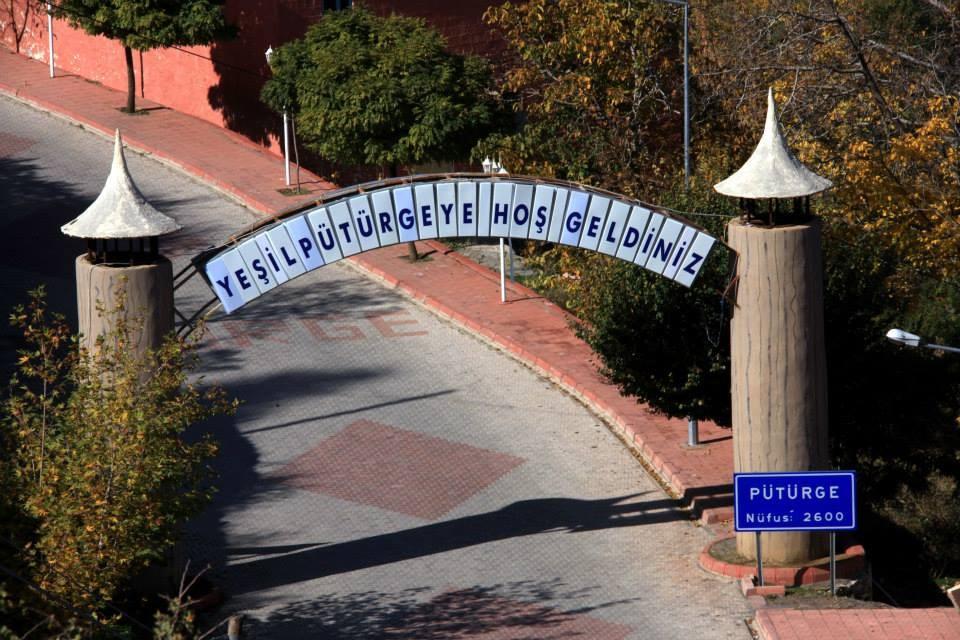
Pütürge is a district located in the Southeastern part of Malatya province in the Eastern Anatolia Region of Türkiye. With a surface area of 1,181 km², Pütürge lies at an altitude of 1,250 meters above sea level. As of 2024, its population is 13,318. The district is approximately 74 kilometers from the provincial center.
Pütürge borders Malatya city center and Kale district to the north, Doğanyol to the east, Kâhta and Gerger districts of Adıyaman to the south and southeast, and Sincik to the southwest. The geography of the district consists of the valley of the Şiro Stream, which flows into the Euphrates River, and the steep and high mountainous areas surrounding this valley. As flat lands are nearly absent, agricultural activities are generally carried out on slopes.

Pütürge District (Governorate of Malatya)
Pütürge has a Mediterranean-Continental transitional climate. The average annual temperature is 12.4°C, with July being the warmest month (25.7°C) and January the coldest (-0.5°C). Altitude differences over short distances range between 1,000 and 1,500 meters, and slope gradients exceed 30%. These features have led to a scattered pattern of settlement and economic activities.
The history of settlement in Pütürge dates back to prehistoric times. The area has been influenced by various civilizations throughout history, including the Hittites, Assyrians, Urartians, Persians, Seleucids, and the Kingdom of Commagene. The Mount Nemrut Monuments, built during the Commagene period and listed as a UNESCO World Heritage Site, reflect the historical significance of the district. During the Roman era, the cities of Barzala and Juliopolis are known to have existed in this region.
In the Middle Ages, the region came under the rule of the Byzantine Empire, followed by the Abbasids, Hamdanids, and Seljuks. It remained under the control of the Dulkadirids for a long time before being incorporated into the Ottoman Empire in 1515 during the reign of Sultan Selim I. Known historically as “Şüre” or “Şiro,” the settlement was renamed “Pütürge” in 1892 and designated as a district center. According to a widely known account, much of the population originally descended from the Samanoğulları who migrated from Kütahya, followed later by the Kopuzoğulları.
Throughout history, especially during the rural crises of the 16th century in Anatolia, Pütürge became a refuge and settlement area for populations seeking shelter in mountainous regions. Ottoman tax registers from 1519 recorded 586 households, a figure which rose to 1,928 households by 1560. This increase indicates that the district remained an attractive settlement area even during periods of crisis.
Today, Pütürge comprises one municipality, one township (Tepehan), 62 villages, and 325 hamlets. As of 2024, the population is 13,318, reflecting a low density compared to the overall population of Malatya province. Most settlements in the district are located in mountainous and high-altitude areas, forming small, scattered village types.

Pütürge District (Governorate of Malatya)
The primary economic activities in the district are agriculture, livestock breeding, and beekeeping. Due to the rugged terrain, agriculture is mostly practiced on sloping lands. Both small and large livestock breeding are widespread. Traditional beekeeping is also an important source of income.
In addition to Turkish, Kurdish and Zazaki are spoken in Pütürge. While the majority of the population is Sunni Muslim, Alevi communities are also found in some of the villages. The district exhibits a rural lifestyle based on tradition and community solidarity.
The district is home to many historically and culturally significant sites and natural areas, including:
Situated along historic caravan routes, Pütürge also hosts remains of Seljuk-era caravanserais, especially in villages such as Tepehan, Yandere, and Yazıca.

Şiro Stream Valley (Governorate of Malatya)
Pütürge District Governorship. Local Administrations. Accessed July 2, 2025. http://www.puturge.gov.tr/mahalli-idareler#.
Republic of Türkiye Malatya Governorship. “Pütürge.” malatya.gov.tr. Accessed July 1, 2025. http://www.malatya.gov.tr/puturge.
Republic of Türkiye Ministry of Culture and Tourism. “Pütürge.” Malatya Provincial Directorate of Culture and Tourism. Accessed July 1, 2025. https://malatya.ktb.gov.tr/TR-58279/puturge.html.
Republic of Türkiye Pütürge Municipality. “Pütürge.” puturge.bel.tr. Accessed July 1, 2025. http://www.puturge.bel.tr/?page=P%C3%9CT%C3%9CRGE&content=P%C3%BCt%C3%BCrge&id=61.
Göçer, Mehmet. “The Population Characteristics of Pütürge District.” Fırat University Journal of Social Sciences 29, no. 1 (2019): 283–299. https://dergipark.org.tr/tr/download/article-file/715467.
Pütürge (District)
Province(s) | Malatya | ||||||||
|---|---|---|---|---|---|---|---|---|---|
Population | 13.318 | ||||||||
Elevation(s) | 1.250 meters | ||||||||
Surface Area | 1.181 km² | ||||||||
District Governor | Tunahan NAS | ||||||||
Mayor(s) | Mikail SÜLÜK | ||||||||
Climate and Natural Structure
History
Administrative Structure and Population
Economy and Livelihood
Language and Belief
Cultural and Historical Sites
This article was created with the support of artificial intelligence.