


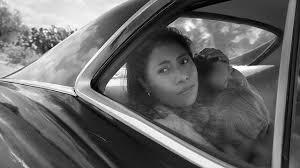
Roma (Film)
Director(s) | Alfonso Cuarón | ||||||||
|---|---|---|---|---|---|---|---|---|---|
Screenplay(s) | Alfonso Cuarón | ||||||||
Year of Production | 2018 | ||||||||
Country | Mexico | ||||||||
Language(s) | Mixtec Spanish | ||||||||
Runtime | 2h 15min | ||||||||
Genre | Period Drama | ||||||||
Color/Format | Black and White | ||||||||
Release Date(s) | August 31 2018 (Netflix) 2018 (Venice Film Festival) December 14 | ||||||||
Main Cast | Yalitza Aparicio (Cleo) Marina de Tavira (Sofía) Fernando Grediaga (Antonio) Jorge Antonio Guerrero (Fermín) Marco Graf (Toño) | ||||||||
Roma is a period film written and directed by Alfonso Cuarón, shot in black and white, and set in 1970s Mexico. The film explores themes of class, gender, ethnicity, and political change through the daily life of Cleo, a domestic worker for a middle-class family living in a neighborhood in Mexico City. Incorporating autobiographical elements, the film transforms into a cinematic act of memory inspired by Cuarón’s childhood.
Roma follows Cleo, an Indigenous domestic worker for a middle-class family in the Colonia Roma district of Mexico City between 1970 and 1971. Cleo helps raise the family’s children alongside their mother, Sofía, and handles the household chores. The film centers on Cleo’s quiet acts of sacrifice, the social discrimination she faces, the dynamics between employer and employee, and her traumas. It also depicts the shifting family dynamics following the father’s departure and Cleo’s own emotional and physical transformation during this time. Cleo’s pregnancy, abandonment, and the traumatic birth she experiences are presented as representations of class- and gender-based oppression. Political events—particularly the 1971 Corpus Christi Massacre—touch the characters’ lives indirectly and highlight the historical atmosphere of the era.
The narrative is built around layered themes such as social class divisions, femininity, postcolonial Mexican society, and historical trauma. Cleo’s silent presence reflects the invisibility of structural inequality. Throughout the film, Cleo is a “shadow figure”—inside the home, yet not truly part of it.
Cuarón’s camera adopts an observational and objective style; long takes avoid dramatizing the characters’ emotional shifts. These choices reinforce a sense of representational realism by keeping the viewer in a spectator role. The film also conveys the effects of political turmoil on everyday life in indirect ways. A particularly powerful scene shows protestors being shot at the hospital where Cleo gives birth, illustrating how personal stories intersect with political violence. The control of class, ethnicity, and the female body are represented as an interwoven system of oppression.
Roma Movie Trailer (YouTube)
Directed by Alfonso Cuarón, Roma was financed and distributed by Netflix. It premiered at the Venice Film Festival in 2018. The screenplay was also written by Cuarón, who additionally served as the cinematographer. The film was shot digitally in black and white, using natural sounds and ambient noise carefully edited during post-production. It was filmed in Spanish and Mixtec.
Roma sparked discussion about the distribution power of digital platforms in the film industry. It emerged as one of the first “prestige art films” released by a streaming service.
The film ignited cultural debate by making visible the historically overlooked labor of Indigenous domestic workers in Latin America. It opened new conversations around class, ethnicity, and women’s rights in both Mexico and the international public sphere. Yalitza Aparicio’s Oscar nomination as an Indigenous woman drew renewed attention to issues of representation in cinema.
Awards Won:
Nominations:
IMDb. “Roma (2018) – Full Cast & Crew.” Accessed May 11, 2025. https://www.imdb.com/title/tt6155172/
MUBI. Roma (2018). Accessed June 25, 2025. https://mubi.com/tr/tr/films/roma-2017.
Netflix. “Roma – Official Synopsis and Release Info.” Accessed May 11, 2025. https://www.netflix.com/tr/title/80240715
YouTube. “ROMA | Official Trailer [HD] | Netflix.” Accessed May 11, 2025. https://www.youtube.com/watch?v=6BS27ngZtxg

Roma (Film)
Director(s) | Alfonso Cuarón | ||||||||
|---|---|---|---|---|---|---|---|---|---|
Screenplay(s) | Alfonso Cuarón | ||||||||
Year of Production | 2018 | ||||||||
Country | Mexico | ||||||||
Language(s) | Mixtec Spanish | ||||||||
Runtime | 2h 15min | ||||||||
Genre | Period Drama | ||||||||
Color/Format | Black and White | ||||||||
Release Date(s) | August 31 2018 (Netflix) 2018 (Venice Film Festival) December 14 | ||||||||
Main Cast | Yalitza Aparicio (Cleo) Marina de Tavira (Sofía) Fernando Grediaga (Antonio) Jorge Antonio Guerrero (Fermín) Marco Graf (Toño) | ||||||||
Plot
Thematic Structure
Production and Release Information
Cast
Release and Cultural Impact
Awards and Nominations
This article was created with the support of artificial intelligence.
