

+1 More

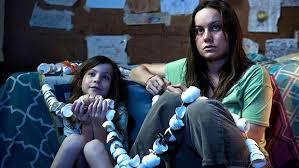
Room (Film)
Genre | Drama | ||||||||
|---|---|---|---|---|---|---|---|---|---|
Director(s) | Lenny Abrahamson | ||||||||
Lead Actors | Brie Larson Jacob Tremblay Joan Allen William H. Macy | ||||||||
Runtime | 118 minutes | ||||||||
Language(s) | English | ||||||||
IMDb Rating | 8.1 | ||||||||
Release Date(s) | October 16 2015 | ||||||||
Room is a dramatic film that explores the effects of physical and psychological captivity through the eyes of a child imprisoned in a small room with his mother. The film is divided into two main parts: the first depicts life under captivity within a confined space, while the second focuses on the complex emotions brought about by transitioning into freedom. Told from the perspective of five-year-old Jack, the narrative addresses themes such as trauma, attachment, and social adaptation through the limited perception of a child’s mind.
The film revolves around themes of post-traumatic life, mother-child relationships, psychological entrapment, and freedom. Room not only presents physical captivity but also delves into the dynamics of psychological attachment and the formation of personal identity. The tension between Joy’s (Jack’s mother) coping mechanisms in the face of trauma and Jack’s developmental needs forms the core of the dramatic structure. The film portrays the “room” not merely as a physical space but as a mode of existence. The cognitive and emotional transformation of a child encountering the real world for the first time offers a unique take on classic narratives of liberation.
Room - Film Trailer (Youtube)
The film is adapted from Emma Donoghue’s 2010 novel of the same name, with the screenplay also written by Donoghue. It was directed by Lenny Abrahamson and produced by Ed Guiney, David Gross, Andrew Lowe, and Emma Donoghue. The music was composed by Stephen Rennicks, with cinematography by Danny Cohen.
Room was co-produced by Element Pictures, No Trace Camping, and Film4 Productions. It premiered at the Telluride Film Festival on September 4, 2015. Distributed by A24, it had a limited theatrical release in the United States on October 16, 2015. The film has a runtime of 118 minutes and is classified as a drama.
The film has been widely discussed in academic circles, particularly in the contexts of post-traumatic psychological adaptation, child development, and parenting. The first half, set in a confined space, explores social exclusion, while the second half addresses the process of resocialization. The subjective dimension of the narrative is emphasized through Jack’s unique language and perceptual world.
Due to its child-centered narrative structure, Room has been examined in fields such as social work, psychology, and studies on domestic violence. It has also been analyzed in terms of media and cultural representation. The film sparked particular debate around themes such as motherhood, child safety, and post-trauma care systems.
Academy Awards (2016):
BAFTA Awards:
Golden Globe Awards:
Produced with a budget of approximately $13 million, Room grossed around $36 million worldwide. Despite its limited release as an independent film, its visibility during international festivals and the awards season significantly contributed to its commercial performance.
Box Office Mojo. “Room (2015).” Accessed May 7, 2025. https://www.boxofficemojo.com/title/tt3170832/
Fragman Dünyası. "Gizli Dünya (Room) | Türkçe Altyazılı Fragman." Fragman Dünyası YouTube Channel. Accessed May 7, 2025. https://www.youtube.com/watch?v=fh1UADuwOkA
IMDb. “Room (2015) – Full Cast & Crew.” Accessed May 7, 2025. https://www.imdb.com/title/tt3170832/
MUBI. Room – Awards. Accessed June 25, 2025. https://mubi.com/tr/films/room/awards.
Rotten Tomatoes. “Room (2015).” Accessed May 7, 2025. https://www.rottentomatoes.com/m/room_2015

Room (Film)
Genre | Drama | ||||||||
|---|---|---|---|---|---|---|---|---|---|
Director(s) | Lenny Abrahamson | ||||||||
Lead Actors | Brie Larson Jacob Tremblay Joan Allen William H. Macy | ||||||||
Runtime | 118 minutes | ||||||||
Language(s) | English | ||||||||
IMDb Rating | 8.1 | ||||||||
Release Date(s) | October 16 2015 | ||||||||
Thematic Structure
Production and Release Information
Cast
Reception and International Impact
Awards
Box Office Performance
