

Type of Geographical Indication | Protected Designation of Origin | ||||||||
|---|---|---|---|---|---|---|---|---|---|
Registration Number | 100 | ||||||||
Registration Date | 3 September 2008 | ||||||||
Product / Product Group(s) | Fruits | ||||||||
Province(s) | Manisa | ||||||||
Applicant/Registrant(s) | Salihli District | ||||||||
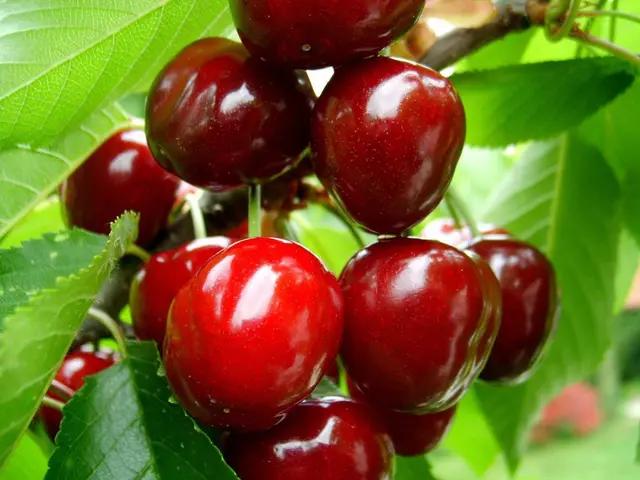
Salihli cherry, scientifically named Prunus avium L., is a cherry variety grown in Salihli district of Manisa province, Türkiye. It blooms and ripens later than other varieties. On 3 September 2008, it was registered as a geographical indication under the “Protected Designation of Origin” category by the Turkish Patent Institute. This registration was based on an application submitted on 11 August 2006 and was enacted under Decree Law No. 555 on the Protected Designation of Origin.
Salihli cherry belongs to the kingdom of plants, division Spermatophyta (seed plants), class Angiospermae (flowering plants), order Rosales, family Rosaceae, and genus Prunus. In literature, it is also referred to by names such as Allahdeyen, 0900 Ziraat, and Akşehir Napolyonu. This variety was identified in Allahdeyen village of Salihli by studies of the Aegean Agricultural Research Institute and was registered under the clone name “0900-ziraat” by the Ministry of Agriculture and Rural Affairs. It has been cultivated in this village since 1945. Although it may be known by different names in other regions of Turkey, it is recognized as “Salihli Cherry” in İzmir and Manisa provinces.
The most notable characteristics of Salihli cherry are:
These features distinguish Salihli cherry from other regional varieties.
Salihli cherries are mainly grown in Salihli district and its surrounding settlements. According to 2001 data, there were 15,400 cherry trees in Salihli, producing 385 tons of fruit. Because its genetic makeup is heterozygous, propagation by seeds would alter its varietal traits; therefore, vegetative propagation, especially grafting, is required. Common rootstocks used include P. avium L. (Wild cherry), P. mahaleb L. (Mahaleb), and clones such as F12-1, SL64, Colt, Maxima-14, Gisela 5 and 6.
Salihli cherry grows in a temperate climate. It produces high-quality fruit in regions with cool and humid summers. It can withstand winter temperatures down to -20°C. The mountains and foothills of Salihli provide suitable climatic conditions. Its late flowering prevents damage from late spring frosts, but extreme heat and strong winds during flowering can negatively affect pollination and fertilization.
The production and marketing of Salihli cherry are monitored every six months by a five-member commission consisting of representatives from Ege University Faculty of Agriculture, Salihli Municipality, Salihli Chamber of Agriculture, Salihli Chamber of Tradesmen, and Manisa Agricultural Engineering. Inspections are conducted free of charge.
The geographical indication is displayed on product packaging as “Salihli Cherry.” The fruit is sold in crates in wholesale markets, and in cellophane or transparent plastic containers in retail shops. Packaging sizes range from 0.5 kg to 10 kg and include product name, production and expiration dates, serial number, content, storage conditions, origin mark, and producer information.
Türk Patent ve Marka Kurumu. "Salihli Kirazı." Coğrafi İşaretler Portalı. Accessed October 25, 2025. https://ci.turkpatent.gov.tr/cografi-isaretler/detay/37974
Türk Patent ve Marka Kurumu. “Salihli Kirazı Coğrafi İşaret Sicil Belgesi.” Coğrafi İşaretler Portalı. Accessed October 25, 2025. https://ci.turkpatent.gov.tr/Files/GeographicalSigns/100.pdf

Type of Geographical Indication | Protected Designation of Origin | ||||||||
|---|---|---|---|---|---|---|---|---|---|
Registration Number | 100 | ||||||||
Registration Date | 3 September 2008 | ||||||||
Product / Product Group(s) | Fruits | ||||||||
Province(s) | Manisa | ||||||||
Applicant/Registrant(s) | Salihli District | ||||||||
Botanical Classification and Origin
Distinctive Features
Cultivation Area and Method
Climate and Growing Conditions
Inspection and Usage
This article was created with the support of artificial intelligence.